
Russ & Daughters: How a Pushcart Became a NYC Institution
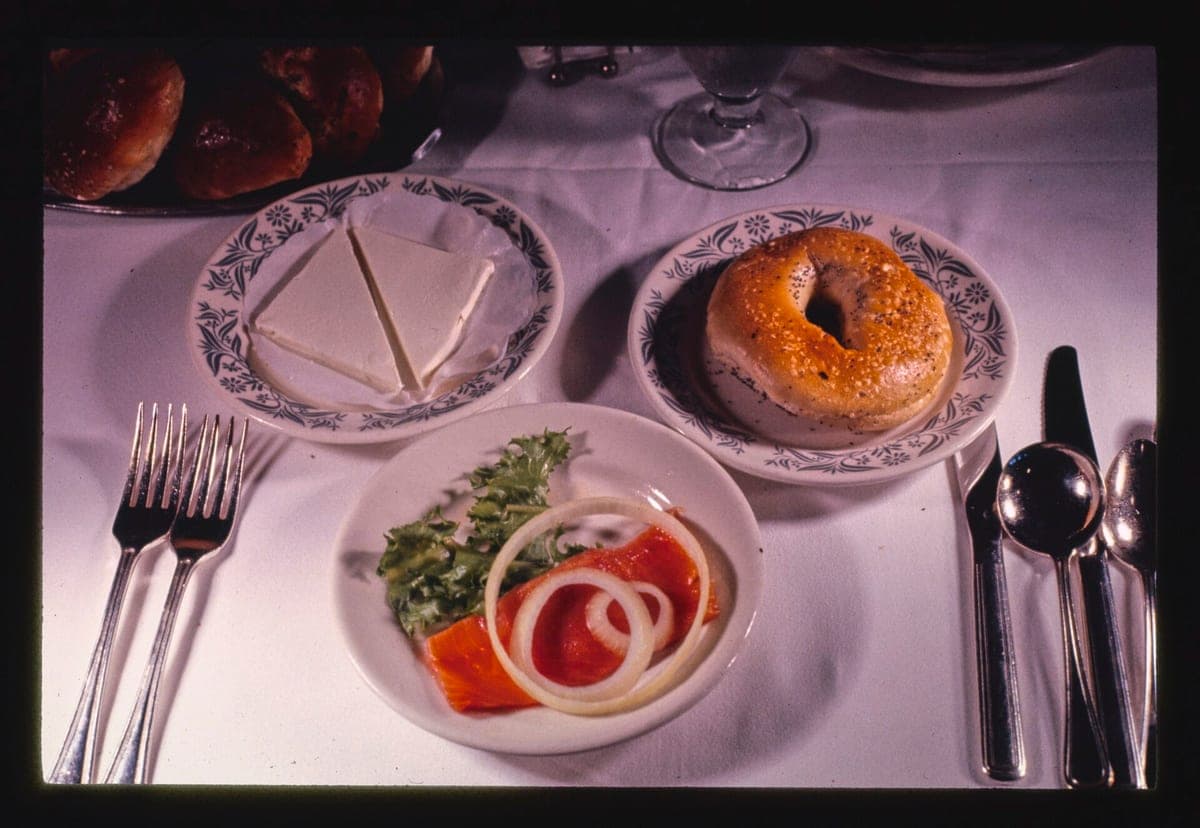
Joel Russ arrived in Manhattan around 1905 with nothing resembling a business plan. He was a Jewish immigrant from Strzyżów, a small town in what's now southeastern Poland, and his first job in America was carrying Polish mushrooms on his own shoulders, block after block, selling them to anyone on the Lower East Side willing to stop. Eventually he saved enough to buy a pushcart. He added pickled herring to the mushrooms. That was the entire operation: one man, one cart, one immigrant neighborhood hungry for the tastes it had left behind.
Nobody carrying mushrooms on his shoulders in 1905 was thinking about the next hundred and twenty years. But the store Joel Russ eventually opened is still standing, still family-run, and still selling the same category of food it started with. And the reason it survived isn't the herring. It's what happened when he put his daughters' names on the door.
What "appetizing" even means, and why it needed its own word
If you didn't grow up around it, the word "appetizing" sounds like a description, not a category. On the Lower East Side, it was a category: a specific, load-bearing piece of American Jewish food culture that most of the country has never had a name for.
Here's the short version: a deli sells meat. An appetizing store sells everything you'd eat with a bagel that isn't meat, because kashrut keeps meat and dairy apart, and a bagel loaded with cream cheese and smoked salmon needs its own entirely separate shop from the one selling pastrami. Appetizing stores carried smoked and cured fish, cream cheese and other dairy spreads, pickled vegetables, dried fruit, olives, halvah: the whole savory, salty, dairy-adjacent universe that turns a bagel into a meal. It's a category so specific to a particular immigrant community solving a particular religious-and-practical problem that English never generated an ordinary word for it. Jewish New York just built the word "appetizing" a new job.
By the time Joel Russ opened his first storefront, this was already a crowded field. New York City had appetizing shops in nearly every neighborhood with a Jewish immigrant population; at one count, the Lower East Side alone supported roughly thirty of them at the same time. Russ wasn't inventing a business. He was trying to survive in one of the most competitive small-retail categories in the entire city.
1914, Orchard Street, and the decision that changed everything
In 1914, Russ took the leap from pushcart to storefront, opening J. Russ International Appetizers on Orchard Street, right in the thick of the Lower East Side's densest immigrant blocks. In 1920 he moved half a mile east to 179 Houston Street, the address the store still occupies today, over a century later.
The turning point wasn't a recipe or a location, though. It was 1933, when Russ made his three daughters, Hattie, Anne, and Ida, full partners in the business and renamed it Russ & Daughters. That's not a small gesture dressed up as a big one. It's understood to be the first American business to use "& Daughters" in its name, at a moment when "& Sons" was the unquestioned default for every family enterprise in the country, and when women, especially immigrant women, were rarely handed ownership stakes in anything with their names attached.
Think about what that decision actually required. It wasn't a marketing choice; appetizing stores in 1933 weren't thinking about branding the way modern retail does. It was Joel Russ looking at who had actually built the business alongside him, and deciding the sign out front should tell the truth about that. Hattie, Anne, and Ida weren't honorary partners. They ran the counter, learned to cut lox paper-thin, managed inventory, and kept the store alive through the Depression, through World War II rationing, through the decades when Jewish immigrant enclaves slowly emptied out of the Lower East Side as families moved to the outer boroughs and the suburbs.
Surviving the neighborhood's disappearance
That last part matters more than it sounds. Most of the roughly thirty appetizing stores that once shared the Lower East Side with Russ & Daughters are gone. So is most of the immigrant Jewish population that supported them; by the middle of the twentieth century, the neighborhood that had been the beating heart of Jewish New York was emptying into Brooklyn, the Bronx, Long Island, and beyond. A business built entirely around a hyperlocal immigrant clientele should have folded along with its customer base. Appetizing, as a retail category, mostly did.
Russ & Daughters didn't, and the reason is worth sitting with: the family kept running the store as a family, generation after generation, refusing to sell the name or franchise the format, even as the neighborhood around them turned over completely. Today it's a fourth-generation operation, still owned and run by Joel Russ's descendants, still slicing salmon by hand at the same Houston Street counter. It outlived the entire ecosystem of businesses that once surrounded it, not by chasing a new customer base, but by being stubbornly, specifically itself long enough for the city to rediscover it.
The cousins who took over in 2009
The fourth generation didn't inherit the store by accident, and it didn't inherit it quietly, either. In 2009, Niki Russ Federman and her first cousin Josh Russ Tupper took the business over from Niki's father, Mark Russ Federman, who had run it as the third generation before them. That's four consecutive generations of the same family, actively running the same store, a genealogical streak that very few American retail businesses of any kind can claim, let alone one built around a food category that mostly stopped existing everywhere else in the country decades ago.
Federman and Tupper didn't just maintain the original Houston Street shop, either. They expanded it, deliberately and carefully, in ways that kept the family's fingerprints on every new piece. They opened Russ & Daughters Cafe a few blocks away, a full sit-down restaurant built around the same appetizing menu. They opened a second café inside the Jewish Museum on the Upper East Side, putting smoked fish and bagels inside a building otherwise dedicated to art and history. Most recently, they opened Russ & Daughters Brooklyn, which houses a bakery and the operation's nationwide shipping center, meaning a store that started with one man carrying mushrooms on his shoulders now ships its smoked salmon to customers who will never set foot on Houston Street at all.
None of that expansion diluted the original shop's identity, which is the harder trick. Plenty of century-old family businesses that attempt this kind of growth end up flattening themselves into a generic version of what made them special in the first place. Russ & Daughters instead used the expansion to put more people in front of the original product: hand-sliced, still cut by people who trained under the previous generation, still sold under the name Joel Russ chose for his daughters in 1933.
That kind of expansion also meant the family had to make a real, ongoing decision about what "authentic" actually requires. It would have been easy, and probably more profitable in the short term, to franchise the name, license it to a supermarket chain, or sell the whole operation to a private equity firm looking for a heritage brand to package and scale. Federman and Tupper chose the slower, harder version instead: open new locations themselves, train new staff themselves, and keep the actual descendants of Joel Russ in the room making the decisions. That choice is the entire reason the name still means something today instead of becoming another acquired legacy brand quietly manufactured somewhere else and sold under a familiar logo.
The bagel's other half
It's worth saying plainly what Russ & Daughters actually preserved, because it's easy to take for granted now that "bagels and lox" is a completely normalized part of American food culture, sold in supermarket delis from coast to coast. That normalization happened because of stores like this one, not the other way around.
A bagel is bread. What turns it into the specific, recognizable American Jewish dish people picture (the cream cheese, the smoked salmon, maybe capers and thin-sliced red onion) is entirely the appetizing store's contribution, developed over decades by families like the Russes who specialized in curing, smoking, and slicing fish to a standard that most home cooks, and most delis, never attempted. Nova, belly lox, sable, whitefish salad, herring in cream sauce: each one represents a specific curing or smoking tradition, refined by immigrant families who'd learned fish preservation in Eastern Europe and adapted it to what was available in New York's markets.
None of that shows up if you just think of "bagel and lox" as a menu item. It shows up when you understand that an entire retail category, appetizing, existed specifically to perfect that one combination and the dozen others like it, and that almost all of the businesses that built the category are gone except for a small handful that refused to close.
What the name on the door still means
There's a reason the "& Daughters" detail keeps getting told and retold, more than ninety years after Joel Russ made the decision. It wasn't performative in 1933; there was no audience to perform for, no press release, just a sign painter and a storefront on a street full of competing appetizing shops. It was a factual correction: these are the people who run this store, so their names go on it.
That kind of plain-spoken correctness, naming the thing accurately instead of defaulting to convention, is a small thing that ages very well. It's the same instinct behind a lot of what gets called heritage now: not a grand gesture, just somebody refusing to paper over the truth of who actually did the work. Kosher Couture didn't invent that idea, but we've built a whole brand around admiring it, which is part of why a hundred-and-ten-year-old appetizing store on Houston Street still feels like it's making a relevant point.
Where the story points next
If you want to see the throughline, it runs straight from Joel Russ's pushcart to the Lower East Side's other great immigrant industry: the garment trade a few blocks away, where an entirely different set of Jewish families were solving the same basic problem, turning a skill from the old country into something that could support a family in the new one, with fabric instead of fish. Same neighborhood, same decade, same instinct to build something that would outlast the immigrant generation that started it. Some of those families' names eventually ended up on department stores and, later, on fashion labels most Americans recognize without knowing the history behind them, a story that deserves its own telling.
Russ & Daughters, meanwhile, just keeps slicing. The knife skills are still taught the same way, hand to hand, inside the family, the way Joel Russ presumably taught Hattie, Anne, and Ida almost a century ago. It's a short list of American businesses that can say the exact same family has run the exact same storefront on the exact same street for more than a hundred years, in a neighborhood that has changed around them almost beyond recognition. That's not nostalgia. That's just what happens when three sisters get their names put on the door and decide to earn it, every single day, for four generations running.
A short glossary, if the appetizing counter is new to you
- Lox — salmon cured in a salt brine, no smoking involved; the saltiest, most traditional of the bunch.
- Nova — salmon that's been cured and then cold-smoked, milder and less salty than lox.
- Belly lox — cut from the fattier belly of the salmon, richer than either of the above.
- Sable — smoked black cod, buttery and rich, a favorite among people who grew up with an appetizing counter nearby.
- Whitefish salad — smoked whitefish flaked and mixed into a mayonnaise-based salad, a bagel topping in its own right.
Next time someone hands you a bagel loaded with any of the above, you're not just eating breakfast. You're eating the surviving edge of an entire retail category that a family of immigrant sisters helped keep alive, one hand-sliced piece at a time.
For more on the Lower East Side's other great immigrant institution, see our walking tour of the Yiddish theater district a few blocks north. And if the deli side of the counter is more your speed, we've made the case for Los Angeles's pastrami supremacy. Kosher Couture contains multitudes.


