
What Is Tashlich? The Rosh Hashanah Water Ritual
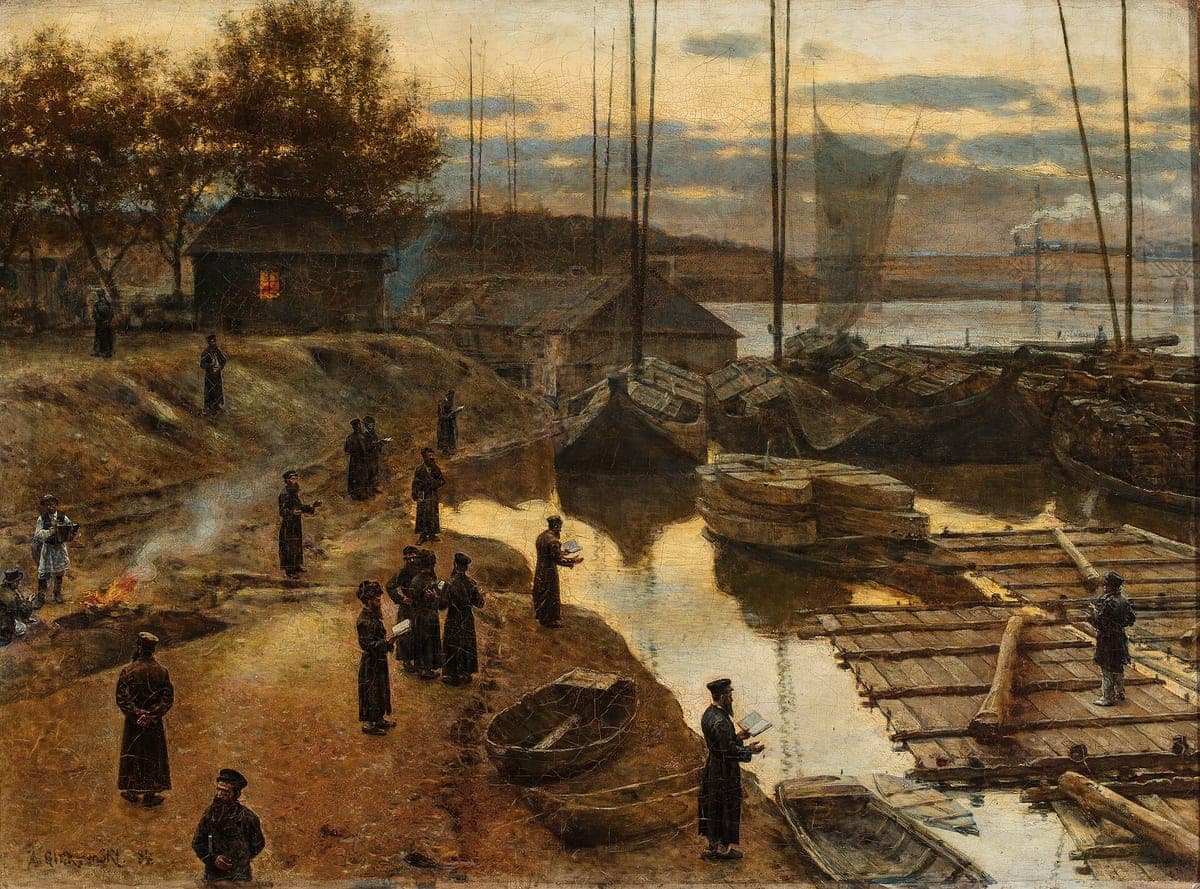
Tashlich is the Rosh Hashanah custom of walking to a body of flowing water — a river, lake, or sea — and symbolically casting away the past year's wrongdoings, traditionally by reciting verses from the prophet Micah and shaking out breadcrumbs or pebbles from your pockets. It's typically observed on the afternoon of the first day of Rosh Hashanah, and it's one of the most quietly beloved, least understood customs on the Jewish calendar.
What Does "Tashlich" Actually Mean?
Tashlich (תַּשְׁלִיךְ) is Hebrew for "you will cast" or "you will throw" — a verb pulled directly from its biblical source text, the closing verses of the Book of Micah. The name isn't a metaphor invented later to describe the ritual; it's lifted word-for-word from the passage worshippers recite while performing it, which is a fairly rare thing in Jewish custom. Most holiday rituals get named after the object involved (a shofar, a sukkah, a seder plate). Tashlich is named after the verb itself — the act of casting, not the water, the bread, or the day.
That's a useful clue to what the ritual is actually about. Tashlich was never really about the water. It's a physical, outdoor, slightly theatrical way of making an abstract idea — letting go of the past year's mistakes — into something a body can actually carry out. You walk somewhere. You say words. You empty your pockets. And then you walk home a little lighter, at least in theory.
Where Does Tashlich Come From?
The biblical source is Micah 7:18–20, the closing lines of a short prophetic book, which end on a note of divine mercy: God is described as one who "will again have compassion upon us; He will subdue our iniquities," and — the line that gives the custom its name — "You will cast all their sins into the depths of the sea." Micah is describing God's forgiveness in that verse, not instructing anyone to go stand by a river. The ritual came later, built around the image.
The earliest documented source for Tashlich as an actual practice is the Maharil, Rabbi Yaakov Moelin, a fourteenth- and fifteenth-century German rabbinic authority whose writings on custom shaped a huge swath of Ashkenazi practice. The Maharil describes communities going to rivers or lakes after the Rosh Hashanah meal specifically to recite Micah's closing verses, and he connects the custom to the story of the Binding of Isaac (the Akeidah), a central theme of the Rosh Hashanah liturgy — one tradition holds that Abraham, on his way to the akeidah, was tested by a river that rose to block his path, and that walking toward water on Rosh Hashanah echoes that same willingness to keep moving forward despite obstacles.
Tashlich started as an Ashkenazi custom, but it didn't stay that way. The sixteenth-century kabbalist Rabbi Isaac Luria, known as the Arizal, was instrumental in spreading the practice into Sephardic and Mizrahi communities as well, and today it's observed — with some regional variation — across essentially the entire spectrum of Jewish practice, from Modern Orthodox to Reform to secular-cultural households that mostly show up for the walk.
How Is Tashlich Actually Performed?
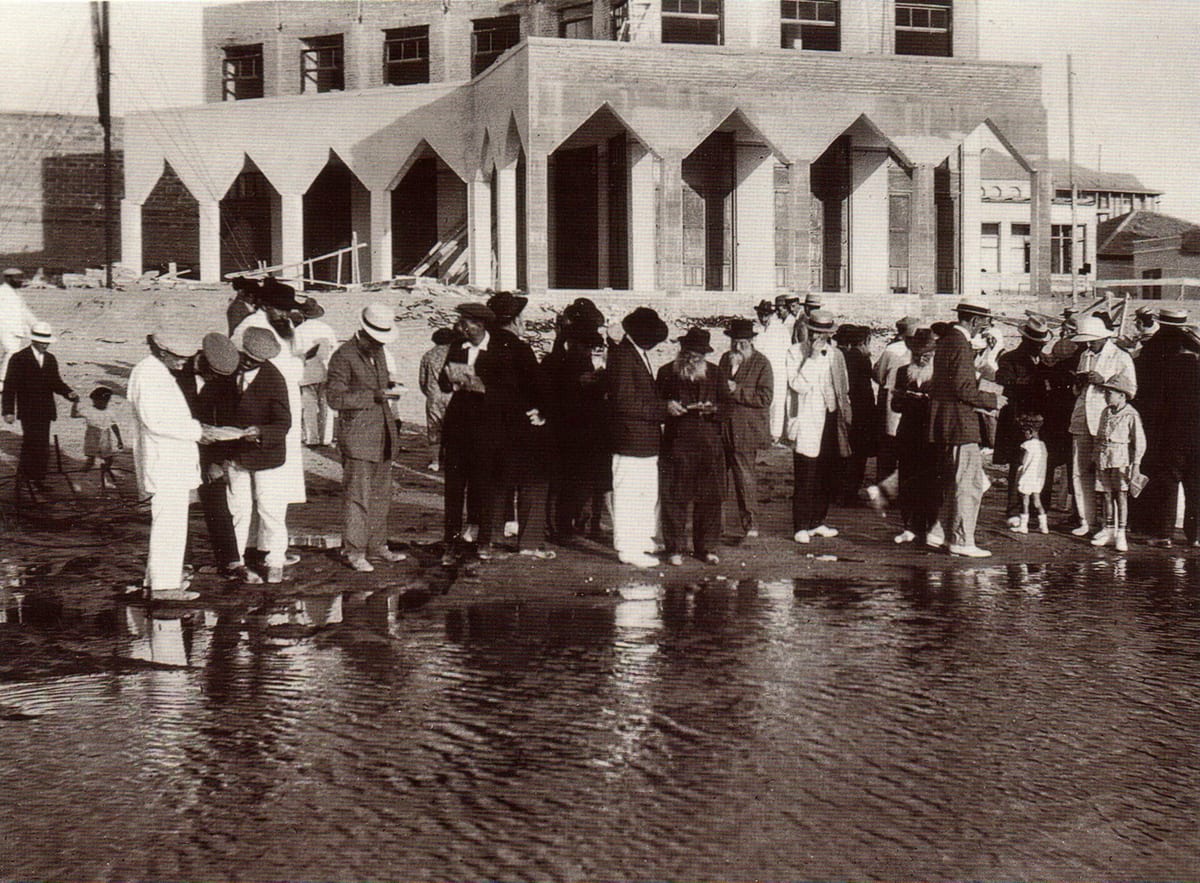 Photo: Shimon Korbman, Wikimedia Commons (Public domain)
The mechanics are simple enough that it's genuinely a ritual anyone can do without preparation. On the afternoon of the first day of Rosh Hashanah — or the second day, if the first falls on Shabbat, since carrying and certain other activities are restricted on Shabbat itself — families and communities walk together to a natural body of flowing water. A river or stream with visible current is the traditional first choice, since flowing water carries an obvious symbolic pull ("carrying away" the old year), but a lake, pond, or ocean shoreline works when a river isn't available, and plenty of communities without any large body of water nearby have made do with a decorative pond, a canal, or even a large fountain.
Once there, participants recite the Tashlich liturgy, which centers on the Micah verses along with additional psalms and supplications that vary by prayer-book tradition. Then comes the part most people actually remember: shaking out pockets, or tossing small pieces of bread, breadcrumbs, or pebbles into the water, as a physical stand-in for "casting away" the year's transgressions. It's brief — most communities are in and out within twenty or thirty minutes — and it's often genuinely festive, especially with children involved, who tend to treat the whole thing as an unusually sanctioned excuse to throw bread at ducks.
Bread, Pebbles, or Lint? What Actually Gets Tossed
Bread is the traditional object of choice, largely because it's cheap, available, and satisfyingly crumbles into a lot of small pieces — useful when a ritual is meant to represent all of a year's accumulated wrongdoing, not just one tidy transgression. But bread has picked up two real practical objections over the years, and increasing numbers of communities have moved on to other options.
The first is straightforward ecology: dumping large quantities of bread into ponds and rivers, especially in dense urban parks, isn't great for water quality or for the fish and waterfowl that end up overfed on human food. The principle of bal tashchit — the Jewish prohibition on wasteful destruction — gets invoked here too, since discarding food specifically to throw it away sits uneasily with a tradition that treats food as something not to be wasted. The second is more technical: some halachic authorities have raised concerns about feeding bread to non-kosher fish, since doing so can be read as deriving benefit from, or actively caring for, a non-kosher creature in a way some poskim would rather avoid.
The practical result is that plenty of communities today use pebbles, small stones, or plain lint from a pocket instead of bread — none of which changes the ritual's meaning in the slightest, since the object was always symbolic rather than literal. If you show up to Tashlich and someone hands you a small stone instead of a crust of challah, that's not an improvised shortcut; it's an increasingly mainstream and, if anything, more halachically careful version of the same custom.
Why a Body of Water, Specifically?
Water carries a cluster of meanings in the Tashlich tradition, and most communities lean on more than one at once. The most obvious is the "casting away" image itself — water that visibly flows and moves reinforces the idea of the old year's mistakes being carried off rather than sitting stagnant. A second, older layer of symbolism involves fish: several classical commentators note that fish have no eyelids, and their eyes never appear to close, which became a folk image for God's constant, unblinking awareness and judgment — fitting for a ten-day stretch of the calendar that's explicitly about being seen and evaluated. A third reading treats water more simply, as the site of return to something elemental and pre-verbal — walking somewhere outdoors, near moving water, at the very start of a new year, before the more formal introspection of Yom Kippur begins in earnest.
| Quick Tashlich Facts | |
|---|---|
| Hebrew meaning | "You will cast" |
| Biblical source | Micah 7:18–20 |
| Earliest documented practice | Maharil (Rabbi Yaakov Moelin), 14th–15th century Germany |
| When observed | Afternoon of the first day of Rosh Hashanah (second day if the first is Shabbat) |
| Where performed | A river, lake, sea, or other body of flowing water |
| What's tossed | Traditionally bread crumbs; increasingly pebbles, stones, or lint |
| Spread to Sephardic practice via | Rabbi Isaac Luria (the Arizal), 16th century |
What Do You Actually Say at Tashlich?
Most prayer books built for the High Holidays include a short Tashlich liturgy as an insert or appendix, and it's worth having a copy in hand or on a phone rather than relying on memory. The core is Micah 7:18–20, usually recited in full, often surrounded by additional psalms — Psalm 118 and Psalm 130 appear frequently — along with a set of supplications asking for a good, sweet, and forgiven year ahead. None of it requires Hebrew fluency to participate meaningfully; most communities read the English alongside the Hebrew, and more than a few families just talk through what they're hoping to leave behind before tossing their crumbs, which is arguably closer to the point than reciting the text with perfect pronunciation.
Tashlich as a Family and Community Ritual
Part of what's kept Tashlich so durable, even among Jews who don't attend synagogue regularly the rest of the year, is that it doesn't require a building, a rabbi, or much Hebrew literacy to feel complete. It's outdoors, it's short, it's participatory in a way that's genuinely accessible to small children, and it gives an abstract, heavy idea — a year's worth of accumulated regret — a concrete five-minute action to hold onto. Plenty of communities turn it into a genuinely social event: a walk to the water after the festive Rosh Hashanah meal, apple cake still on people's breath, kids racing ahead to claim the best spot by the water's edge.
That combination — solemn purpose, casual delivery — is a pattern that shows up constantly in Jewish culture, and it's more or less the whole premise behind Kosher Couture. Chutzpah is in our DNA precisely because Jewish tradition has never demanded a choice between taking something seriously and being able to laugh, walk, and toss bread at ducks along the way. If you're building a wardrobe around the same instinct — heritage worn daily, not reserved for the most solemn hour of the year — Kosher Couture's collections run in that same spirit. And if Tashlich has you thinking about the year ahead in bigger terms than a walk to the river, it's worth remembering that 10% of Kosher Couture's net profits go to Jewish community charities as a standing part of how the business runs, not a seasonal gesture.
For more on the holiday Tashlich belongs to, see our guide to what Rosh Hashanah actually celebrates, and for the ten days that follow it, our piece on the Ten Days of Repentance walks through what happens between Rosh Hashanah and Yom Kippur.
Frequently Asked Questions
Is Tashlich a commandment from the Torah? No, Tashlich is a minhag, a custom, not a biblical commandment. It developed from the closing verses of Micah and is first documented as a practice in the writings of the Maharil in the fourteenth or fifteenth century — relatively late by the standards of Jewish ritual, though it's now observed across nearly the entire spectrum of Jewish practice.
Do I have to go to a river specifically, or can any water work? Flowing water like a river or stream is the traditional first choice because of the "carrying away" imagery, but a lake, pond, sea, or other natural body of water is accepted where a river isn't available. Some communities without easy access to natural water have used decorative ponds or fountains.
What if Rosh Hashanah falls on Shabbat? Tashlich is moved to the second day of Rosh Hashanah, since carrying items like bread and certain other elements of the custom aren't appropriate on Shabbat itself.
Why do people throw bread instead of just saying the words? The physical act of tossing something — traditionally bread, now often pebbles or lint — gives an abstract idea a concrete action to hold onto. It's not required by the text of the ritual, which is really just the recitation of Micah's verses, but it's become close to universal in practice because it makes the moment feel complete.
Is it disrespectful to feed the bread to fish or ducks while doing Tashlich? Some halachic authorities specifically caution against this, partly due to concerns about deriving benefit from non-kosher fish and partly due to bal tashchit, the prohibition on wasteful destruction. It's one of the main reasons many communities have shifted to pebbles or stones instead of bread.
Tashlich lasts a few minutes and asks almost nothing of you beyond showing up, and that's exactly the point — some of the most durable Jewish customs are the ones simple enough to survive on their own, generation after generation, with nothing more than a river and a willingness to let go of something.


