What Is Simchat Torah? Meaning, Hakafot & Why We Dance
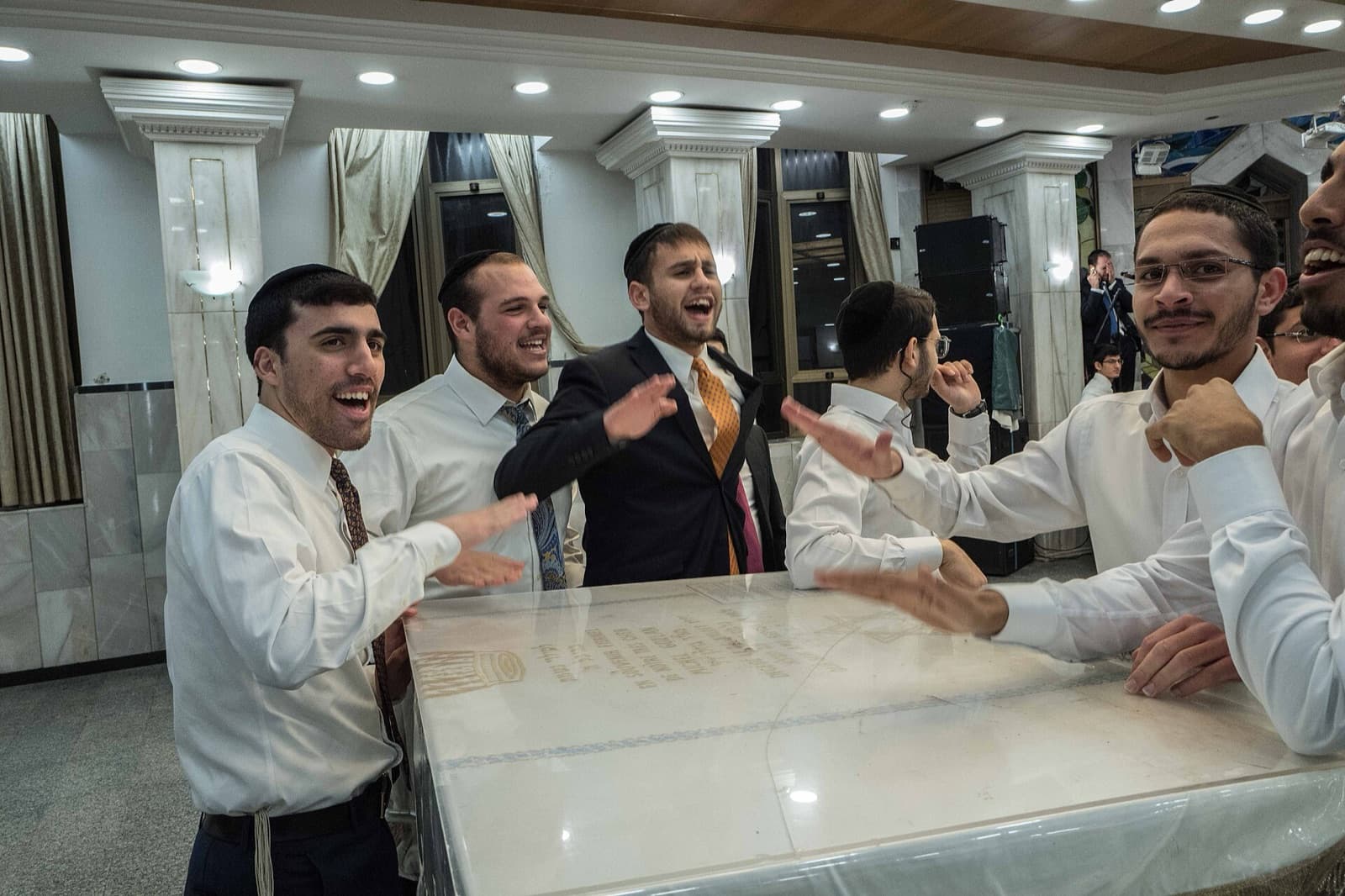
Simchat Torah (שִׂמְחַת תּוֹרָה, "rejoicing of the Torah") is the holiday when Jewish communities finish the yearly cycle of Torah readings and start it again on the spot. It comes right at the end of Sukkot, and it's celebrated with hakafot: every Torah scroll comes out of the ark and gets carried around the synagogue in circuits of singing and dancing, a few weeks after the most solemn days of the year.
What Does "Simchat Torah" Mean?
Simchah means joy, and Torah is the Torah, so Simchat Torah is "the joy of the Torah" or "rejoicing in the Torah." Most Jewish holidays remember something that happened once: an exodus, a rescue, a harvest. Simchat Torah celebrates something that keeps happening. A community finishes a book together, and then picks it right back up.
The occasion for all that joy is concrete. On Simchat Torah, communities that read the Torah on the annual cycle reach the final portion, Vezot Haberakhah, the close of Deuteronomy, with Moses's last blessing to the tribes of Israel and his death on Mount Nebo: "Never again did there arise in Israel a prophet like Moses" (Deuteronomy 34:10). Then, without pausing for breath, the reading rolls back to Bereshit: "In the beginning, God created the heavens and the earth" (Genesis 1:1). The last words and the first words of the Torah are read back to back, in the same service.
Is Simchat Torah the Same as Shemini Atzeret?
Sort of, depending on where you are. Shemini Atzeret, "the eighth day of assembly," is a festival the Torah itself commands, right after the seven days of Sukkot (Leviticus 23:36). Rashi explains it with a parable of a king who hosts his children for a feast, and when it's time for them to leave says: stay one more day, "it is so hard for me to part with you" (Rashi on Leviticus 23:36).
Simchat Torah isn't named in the Torah at all. It grew up later around the day the Torah reading was completed, and that day landed on the calendar right next to Shemini Atzeret.
| Where You Are | How the Two Line Up |
|---|---|
| Israel, and most Reform congregations | Shemini Atzeret and Simchat Torah are one day |
| Diaspora communities that keep two festival days | Shemini Atzeret is day one; Simchat Torah is day two |
As My Jewish Learning puts it, in Israel and most Reform congregations the Simchat Torah celebrations happen on Shemini Atzeret itself, while in the diaspora Shemini Atzeret is followed directly by a second special day, Simchat Torah. Either way, the mood is the same: this is the loosest, happiest day of the whole fall holiday stretch.
When Is Simchat Torah?
Simchat Torah falls at the end of the Hebrew month of Tishrei: on the 22nd in Israel, and on the 23rd in the diaspora. Like every Jewish holiday, it begins at sundown the evening before. Tishrei is the busiest month on the Jewish calendar, opening with Rosh Hashanah and moving through Yom Kippur and Sukkot before this last, joyful exhale. Because the Hebrew calendar is lunisolar, the secular date moves from year to year, but it always lands in late September or October. (For the whole season in one place, see our High Holidays page.)
By the time it arrives, a community has been in holiday mode for most of a month: praying, fasting, reflecting, building a sukkah and eating in it. Simchat Torah is the release. It's less a quiet coda than a full-volume finale.
What Are Hakafot, and Why Do We Dance With the Torah?
The signature ritual is hakafot (הַקָּפוֹת, "circuits"). The synagogue takes every Torah scroll it owns out of the ark, and the congregation carries them around the sanctuary in seven circuits, with singing, clapping, and dancing. My Jewish Learning describes the seven evening hakafot as "performed with joy and accompanied by drinking, singing and dancing." Many congregations keep going well past seven, and the dancing regularly spills into the aisles, the lobby, and the street.
This is one of the few moments in synagogue life when decorum takes a back seat on purpose. People who would never dance in a sanctuary find themselves in a circle holding a heavy, beloved scroll like a dance partner. The point is plain: the Torah belongs to everyone, and on this night you say so with your feet.
The dancing as we know it is younger than you might think. According to the scholar Rabbi Reuven Hammer, hakafot in their modern form originated in Safed in the sixteenth century (Hakafot), and early customs varied in how many circuits they made before seven became standard. Some diaspora communities, including Chabad and some Sephardi congregations, also hold hakafot on the night of Shemini Atzeret, so they dance on both nights.
Where Did Simchat Torah Come From?
Simchat Torah has no biblical origin. It grew out of a practical question: how often should the whole Torah be read in public?
The Talmud already lists the readings: on the second day of Shemini Atzeret in the diaspora, the congregation reads Vezot Haberakhah to the end of the Torah (Megillah 31a). But not everyone finished the Torah every year. Communities in the Land of Israel read it over roughly three years, while Babylonian communities read it in one. The annual cycle gradually won out. By the twelfth century, Maimonides wrote that "the common custom throughout all Israel is to complete [the reading of] the Torah in one year," adding that some finished it over three years, though that custom was not widespread (Mishneh Torah, Prayer 13:1).
The holiday as a holiday took shape in Babylonia during the Geonic period, roughly the 800s to the 1000s, which is when it picked up its name and its celebratory character (Exploring Judaism). A fixed day to finish the book together turned into its own festival, complete with liturgy, honors, and, eventually, dancing.
Why Do Kids Wave Flags on Simchat Torah?
Simchat Torah is famously a kids' holiday. Children march in the hakafot waving flags (degalim, דגלים), often riding on shoulders to see the scrolls go by. The custom is Ashkenazi, and it's often linked to the banners of the twelve tribes camped in the wilderness. Exploring Judaism notes that children parading with flags on Simchat Torah is first recorded in 1672, and it already looked established then.
In earlier generations, flags were often topped with a hollowed-out apple holding a candle. Chabad.org offers meanings for each piece: the flag as allegiance to the Torah, the candle as the Torah's light, and the apple possibly going back to an old custom of tossing treats to children. The same article notes that rabbis later discouraged the candles, both as a fire hazard and because of festival-law concerns. Whatever the history, the flags work. They give kids something to hold and a reason to march, and they help make Simchat Torah the loudest, sweetest, most candy-filled night on the synagogue calendar.
What Torah Portions Are Read on Simchat Torah?
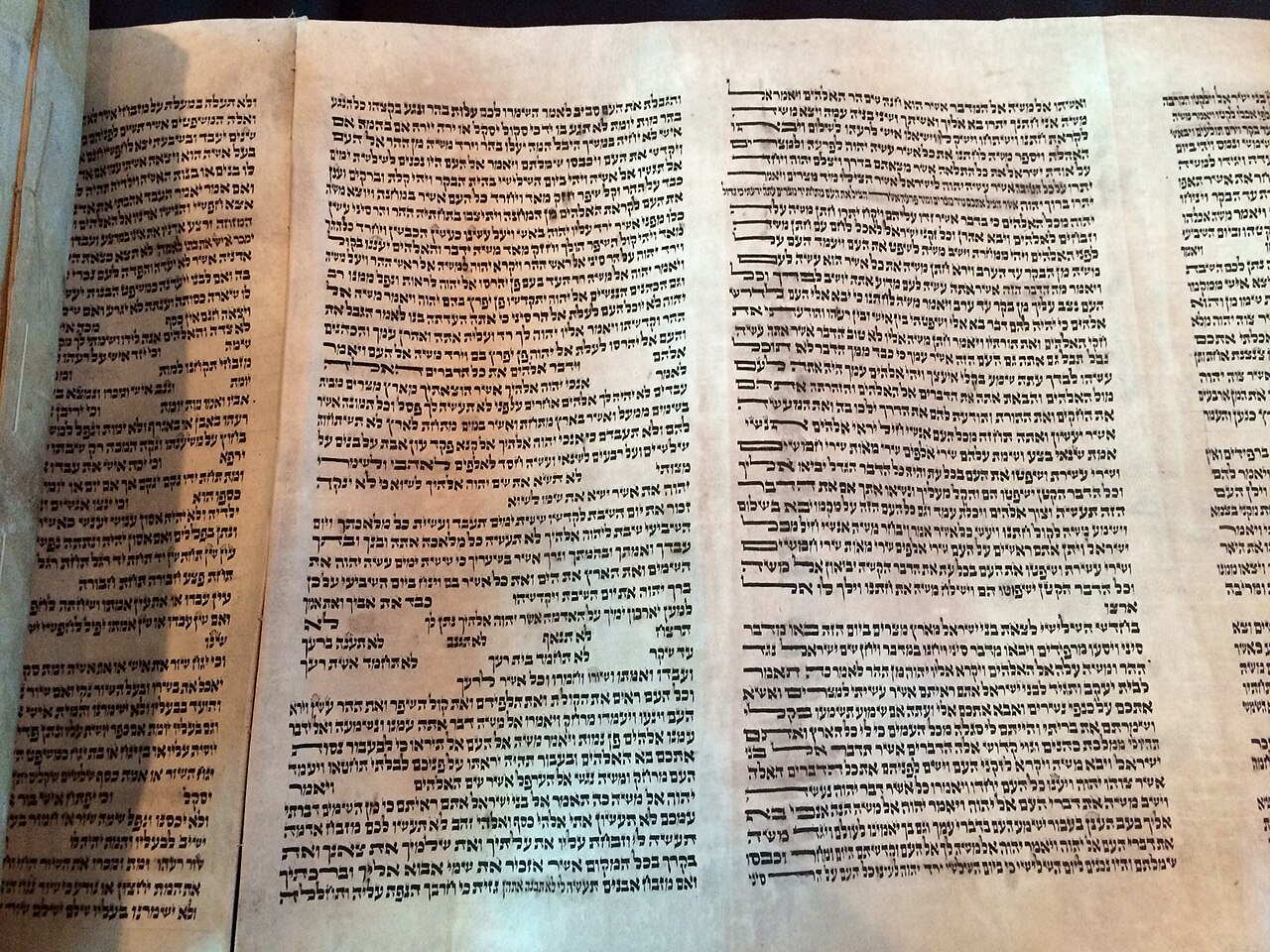 Photo: Jacob Gucker, Wikimedia Commons (CC0)
Two readings, back to back:
- Vezot Haberakhah (Deuteronomy 33 to 34): the Torah's final portion, with Moses's blessing for each tribe and the account of his death on Mount Nebo, looking out over a land he would not enter.
- Bereshit (Genesis 1:1 to 2:3): the opening of the Torah and the story of creation, read immediately after.
The honors are part of the fun. According to My Jewish Learning, on Simchat Torah "everyone in the congregation receives an aliyah," so individuals and whole groups get called up. The last aliyah of Deuteronomy goes to the chatan Torah or kallat Torah ("groom" or "bride" of the Torah), and the first reading of Genesis to the chatan Bereshit or kallat Bereshit, both honors usually given to people of distinction in the community.
Then there's Kol HaNe'arim, "all the children." A respected member of the community is called up together with every child present, a large tallit is spread over their heads like a canopy, and they say the blessings together. Then the whole congregation blesses the children with the blessing Jacob gave his grandchildren.
Why Does the Reading Cycle Restart Immediately?
This is the detail that gives the holiday its meaning: there's no gap. The moment Vezot Haberakhah ends, Bereshit begins.
The message is one the tradition returns to again and again. You never really finish the Torah. Completing it isn't a box to check. It's a doorway straight back into the beginning, and you walk through it carrying a year of living, learning, and holidays that will make Genesis read differently than it did last time. It's a built-in argument against coasting.
What Foods Are Traditional for Simchat Torah?
Simchat Torah doesn't have one signature food the way Rosh Hashanah has apples and honey, but it's a full festival day (yom tov), so it comes with festive meals and kiddush like any major holiday.
The best-known food custom is stuffed cabbage. Chabad.org describes it as a family custom rather than a universal one, and gives a few charming reasons: two cabbage rolls side by side look like rolled-up Torah scrolls, and the Hebrew word for cabbage, keruv, shares its letters with baruch, "blessed," fitting for a day full of blessings. Some families serve it a day earlier, on Hoshana Rabbah, instead.
How Do Different Communities Celebrate?
Simchat Torah looks different from shul to shul, and that variety is half the pleasure. Some synagogues throw their biggest hakafot on the eve of the holiday, dancing late into the night; others save the peak for the morning. Sephardi and Mizrahi communities bring their own melodies and piyyutim (liturgical poems). Chabad is known for taking hakafot outdoors, and college Hillels and big urban congregations alike sometimes move the dancing into gyms and community halls just to fit everyone.
In Israel, there's a second round. Because the holiday itself is kept as a full festival day, the celebration with live music comes after it ends: on the night after Simchat Torah, in a custom called hakafot shniyot ("second hakafot"), people take Torah scrolls into the streets and dance again. The custom traces back to Rabbi Isaac Luria in Safed and has spread across Israel and beyond (Hakafot).
In Israel, the holiday also carries a newer weight. October 7, 2023, the day of the Hamas attack on southern Israel, fell on Shemini Atzeret and Simchat Torah. Since then, for many Israelis and Jews around the world, the day holds grief alongside its joy, and the dancing goes on.
Frequently Asked Questions
Is Simchat Torah a work-restricted holiday?
Yes. Simchat Torah is a full festival day (yom tov). In Israel it's the same day as Shemini Atzeret; in the diaspora it's the second day of Shemini Atzeret. The same restrictions that apply on the first days of Sukkot apply, alongside festive meals and synagogue services.
Do you need to be religious to celebrate Simchat Torah?
Not at all. Simchat Torah is one of the most welcoming days on the calendar. The dancing, flags, and singing are built for joining in at any level of observance, which is why so many communities open their hakafot to everyone.
What's the difference between Simchat Torah and Shavuot?
Both celebrate the Torah, from different angles. Shavuot, in late spring, marks the giving of the Torah at Mount Sinai. Simchat Torah, in the fall, celebrates finishing the yearly cycle of reading it aloud and starting again.
Why are children called to the Torah on Simchat Torah?
In the custom of Kol HaNe'arim ("all the children"), an adult honoree is called up together with all the children present, under a large tallit, and the congregation then blesses them with Jacob's blessing for his grandchildren. It puts the next generation right under the Torah, literally, instead of watching from the seats.
What do people say to each other on Simchat Torah?
"Chag sameach," "happy holiday," works for Simchat Torah as it does for any Jewish festival. You may also hear the Yiddish "gut yontif." Mostly, though, you'll just hear singing.
However your community marks it, Simchat Torah makes the case that a book worth reading is worth dancing about. If that kind of joyful, text-loving pride is your speed, browse Kosher Couture for everyday ways to wear it, and catch up on the holiday that leads right into this one in our guide to what Sukkot actually celebrates.


