
What Is Sukkot? The Sukkah, the Four Species & the Meaning
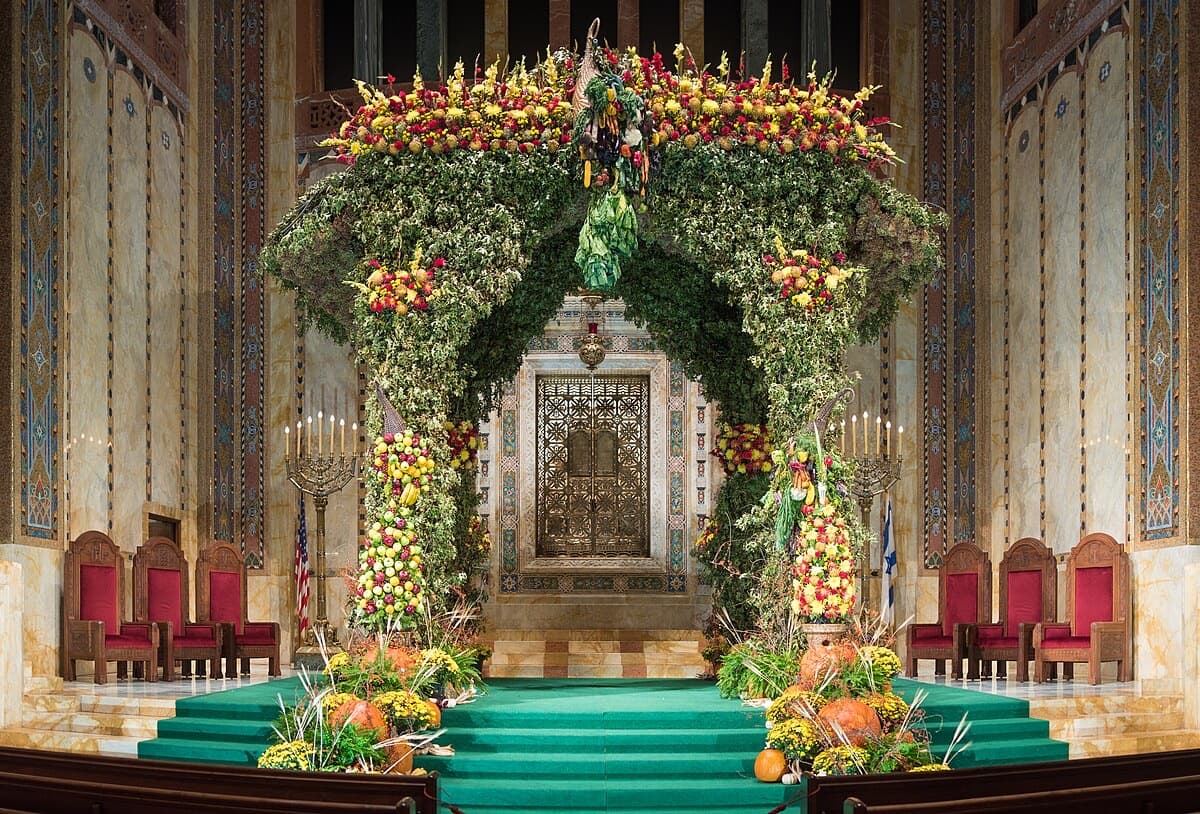
Sukkot is a seven-day Jewish festival, beginning five days after Yom Kippur, that commemorates the temporary shelters the Israelites lived in during the Exodus from Egypt. Leviticus 23:42 instructs that "all citizens in Israel shall dwell in booths," and the holiday's two central practices — building and eating meals in a sukkah, and blessing the "four species" of lulav and etrog — turn that ancient memory into something you can build, hold, and taste every year.
What Does "Sukkot" Mean, and Why a Hut?
Sukkot (סֻכּוֹת) is the plural of sukkah, a temporary hut or booth. The Torah's own explanation, given in Leviticus 23:42-43, is refreshingly direct: "You shall live in booths seven days... in order that future generations may know that I made the Israelite people live in booths when I brought them out of the land of Egypt." It's a holiday built entirely around a piece of architecture — flimsy, temporary, open to the sky — that's meant to recreate the physical vulnerability of forty years of wandering, on purpose, once a year, even for people who otherwise live in perfectly secure homes.
That vulnerability is the point. Sukkot asks you to trade a sturdy roof for a few branches and see what that does to your sense of security. Commentators across the centuries have debated whether the "booths" the Torah refers to were literal huts or a poetic reference to the miraculous clouds of glory that tradition holds sheltered the Israelites in the wilderness — but either reading lands on the same lesson: real protection was never really about the structure.
When Is Sukkot, and How Long Does It Last?
Sukkot begins on the fifteenth of Tishrei, five days after Yom Kippur, and runs seven days in total, landing it firmly in the same September-to-October window as Rosh Hashanah and Yom Kippur. The first two days (one in Israel) are full holidays with the same restrictions on work as Shabbat; the remaining intermediate days, called Chol HaMoed, are semi-festive — work is generally permitted, but the sukkah and its rituals continue throughout. The festival closes with Shemini Atzeret ("the Eighth Day of Assembly"), technically its own separate holiday tacked onto the end, followed immediately by Simchat Torah ("Rejoicing in the Torah"), which marks the completion of the year-long cycle of public Torah reading and the moment the scroll is rolled back to Genesis to start again.
What Is a Sukkah, and What Are the Rules for Building One?
A sukkah is a temporary structure with at least three walls and a roof made of schach — organic material like bamboo poles, palm branches, or cut evergreen boughs — laid loosely enough that you can still see stars through the gaps, and thick enough that there's more shade than sun inside during the day. Jewish law (detailed extensively in the Talmudic tractate Sukkah) gets remarkably specific about size, height, and materials, but the underlying spirit is simple: it has to feel deliberately temporary, not like a real house wearing a costume.
These days, plenty of families skip the DIY lumber-and-tarp approach entirely and buy pre-fabricated sukkah kits — PVC or aluminum frames with canvas walls that fold flat for storage between years — which has made building one dramatically more accessible for people without a backyard full of scrap wood or serious carpentry skills. The schach roofing still has to be organic and unattached to the frame, but the walls themselves have no such restriction, which is exactly why the kit industry exists at all.
Once it's built, the mitzvah is to treat the sukkah as your primary living space for the week — eating meals there, and in observant communities, sleeping there too, weather and circumstance permitting. Families often decorate the inside with hanging fruit, paper chains, kids' artwork, and strings of gourds, turning what could read as a bare, provisional structure into one of the most personal and joyful spaces in the entire Jewish calendar. Building one with neighbors, hosting guests inside it, and passing decorations down from a previous year are all such deeply loved customs that "sukkah envy" is a real, if unofficial, seasonal phenomenon in a lot of Jewish neighborhoods.
What Are the Four Species, and How Are They Used?
Alongside the sukkah, the other defining Sukkot ritual involves four specific plants named directly in Leviticus 23:40: "the product of goodly trees, branches of palm trees, boughs of leafy trees, and willows of the brook." Jewish tradition identifies these as:
| Hebrew Name | Plant | What It Represents |
|---|---|---|
| Etrog | Citron (a lemon-like citrus fruit) | Has both taste and fragrance |
| Lulav | Palm frond | Has taste (dates) but no fragrance |
| Hadas | Myrtle branches (three) | Has fragrance but no taste |
| Aravah | Willow branches (two) | Has neither taste nor fragrance |
The lulav, hadas, and aravah are bound together into a single unit, also often loosely called "the lulav," and held alongside the etrog while reciting a blessing each morning of the festival (except Shabbat). The four are then waved gently in six directions — east, south, west, north, up, and down — symbolizing, in one widely taught explanation, that no direction is void of the divine presence. A well-known midrash frames the four species as a metaphor for four types of Jews, ranging from those with both "learning and good deeds" to those with neither, brought together and bound into one unit regardless — a pointed statement that the holiday's joy is meant to include everyone, not just the most observant in the room.
Why Is Sukkot Called "The Season of Our Joy"?
In Jewish liturgy, Sukkot carries the nickname Zman Simchateinu, "the time of our joy" — a striking label for a holiday that follows directly on the heels of Yom Kippur's fasting and solemnity. That emotional whiplash is intentional. Having just been, in the liturgy's own imagery, "sealed" for the year on Yom Kippur, Sukkot arrives as an outpouring of relief and gratitude, historically tied to the fall harvest in the land of Israel as well. The Book of Nehemiah (8:14-17) describes the ancient Israelites rediscovering this commandment after returning from Babylonian exile and building sukkot "on their roofs, in their courtyards" throughout Jerusalem, resulting in what the text calls "very great joy," unmatched since the days of Joshua. It's one of the oldest recorded moments of a Jewish community rebuilding a tradition almost from scratch — and finding real joy waiting on the other side of that effort.
In ancient times, Sukkot's joy reached its peak with the Simchat Beit HaShoeivah, a raucous nightly water-drawing ceremony held in the Temple in Jerusalem, described in the Mishnah (Sukkah 5:1) as so joyous that "one who has not seen the rejoicing at the Place of the Water-Drawing has never seen rejoicing in his life." Modern communities, particularly in Jerusalem and among Hasidic groups, still hold nightly music-and-dancing gatherings during Sukkot in an echo of that ancient celebration.
Who Are the Ushpizin, the Sukkah's Symbolic Guests?
One of the most beautiful customs associated with the sukkah is Ushpizin (Aramaic for "guests"), a kabbalistic tradition, popularized through the Zohar, of symbolically inviting one of seven biblical figures — Abraham, Isaac, Jacob, Moses, Aaron, Joseph, and David — into the sukkah on each of the festival's seven nights. A short liturgical formula names the guest of honor for that evening, and some households set an actual empty chair for them. In recent generations, many communities and families have expanded the practice to include a parallel set of seven biblical women — Sarah, Rebecca, Rachel, Leah, Miriam, Abigail, and Esther among the figures commonly named — restoring a matriarchal presence the original list left out.
Beyond the mystical framing, Ushpizin carries a very practical teaching: a sukkah is not really complete until it's shared. The custom of inviting symbolic ancient guests exists alongside, and is meant to encourage, the very real mitzvah of inviting actual guests — neighbors, family, people without a sukkah of their own — to eat with you during the week. Hospitality, in other words, isn't a side effect of Sukkot. It's close to the whole point.
What Do People Eat During Sukkot?
There's no single "Sukkot menu" the way there is for a Passover seder, but a few food customs recur across communities. Stuffed vegetables — cabbage rolls, stuffed peppers, stuffed grape leaves — show up on many Ashkenazi, Sephardic, and Middle Eastern Jewish tables during the week, playing on the same idea of natural abundance and harvest that the sukkah itself celebrates: a vegetable "stuffed full," echoing a full harvest basket. Hearty soups, stews, and seasonal squash dishes are common too, since Sukkot falls right as autumn produce comes into season in much of the Northern Hemisphere. And because you're eating outdoors, in a semi-exposed structure, for a full week, Sukkot menus tend to lean toward foods that travel well from kitchen to sukkah and hold up if the weather turns — a very practical culinary constraint layered on top of all the symbolism.
Is Sukkot the Origin of the American Thanksgiving?
It's a popular claim, especially in the United States, and there's a real historical thread worth taking seriously, even if the direct line is more folklore than proven fact. Some historians note that the Pilgrims, many of whom were steeped in Hebrew Bible study, would have known the biblical harvest festival of Sukkot and its themes of gratitude for the harvest and shelter after hardship, and some have speculated it may have influenced the framing of the first Thanksgiving. What's certain is the thematic overlap: both holidays center on gathering with family, giving thanks for a harvest, and building or decorating a temporary shared space for a communal meal. Whether or not the Pilgrims were consciously borrowing from Sukkot, it's a genuinely fun parallel to bring up at your own table this season.
Frequently Asked Questions
Do you have to sleep in the sukkah? Jewish law holds that meals, and ideally sleeping, should take place in the sukkah for the full week, weather and personal circumstances permitting. In practice, many people fulfill the mitzvah primarily through meals, especially where climate or living situations make overnight sukkah-sleeping impractical.
What's the difference between Sukkot, Shemini Atzeret, and Simchat Torah? Sukkot is the seven-day festival of the sukkah and the four species. Shemini Atzeret is a distinct one-day holiday immediately following it, without the sukkah or four-species rituals. Simchat Torah, celebrated the same day as Shemini Atzeret outside Israel (a separate day in Israel), marks the completion and restart of the annual Torah reading cycle with dancing and singing.
Can you build a sukkah anywhere? A sukkah needs to be built outdoors, under the open sky rather than under a roof, balcony, or overhanging tree branches, so the schach roofing is the only thing between those inside and the stars. Many people build them on patios, balconies, driveways, or synagogue courtyards.
What is an etrog, and why is it so prized? An etrog is a citron, a fragrant citrus fruit central to the Sukkot four species. Because Jewish law requires it to be unblemished and of high quality, etrogim are often individually inspected and purchased with real care, and a beautiful one is treated almost like a small piece of art for the week.
Why is Sukkot called "the season of our joy"? Sukkot follows immediately after the solemnity of Yom Kippur and, historically, coincided with the fall harvest in the land of Israel, making it a natural release valve for gratitude and celebration after the more serious tone of the preceding holidays.
Who is invited into the sukkah as symbolic guests? The custom of Ushpizin invites one of seven biblical figures — traditionally Abraham, Isaac, Jacob, Moses, Aaron, Joseph, and David, with many households now also naming seven biblical women — into the sukkah on each of its seven nights, alongside whatever real, human guests show up for dinner.
Carry a little bit of that harvest-season joy with you past the holiday — browse Kosher Couture for everyday Jewish pride, or read up on what to wear during the High Holiday season as Tishrei's holidays roll from one into the next.


