
What Does Chai Mean? Why 18 Is Judaism's Luckiest Number
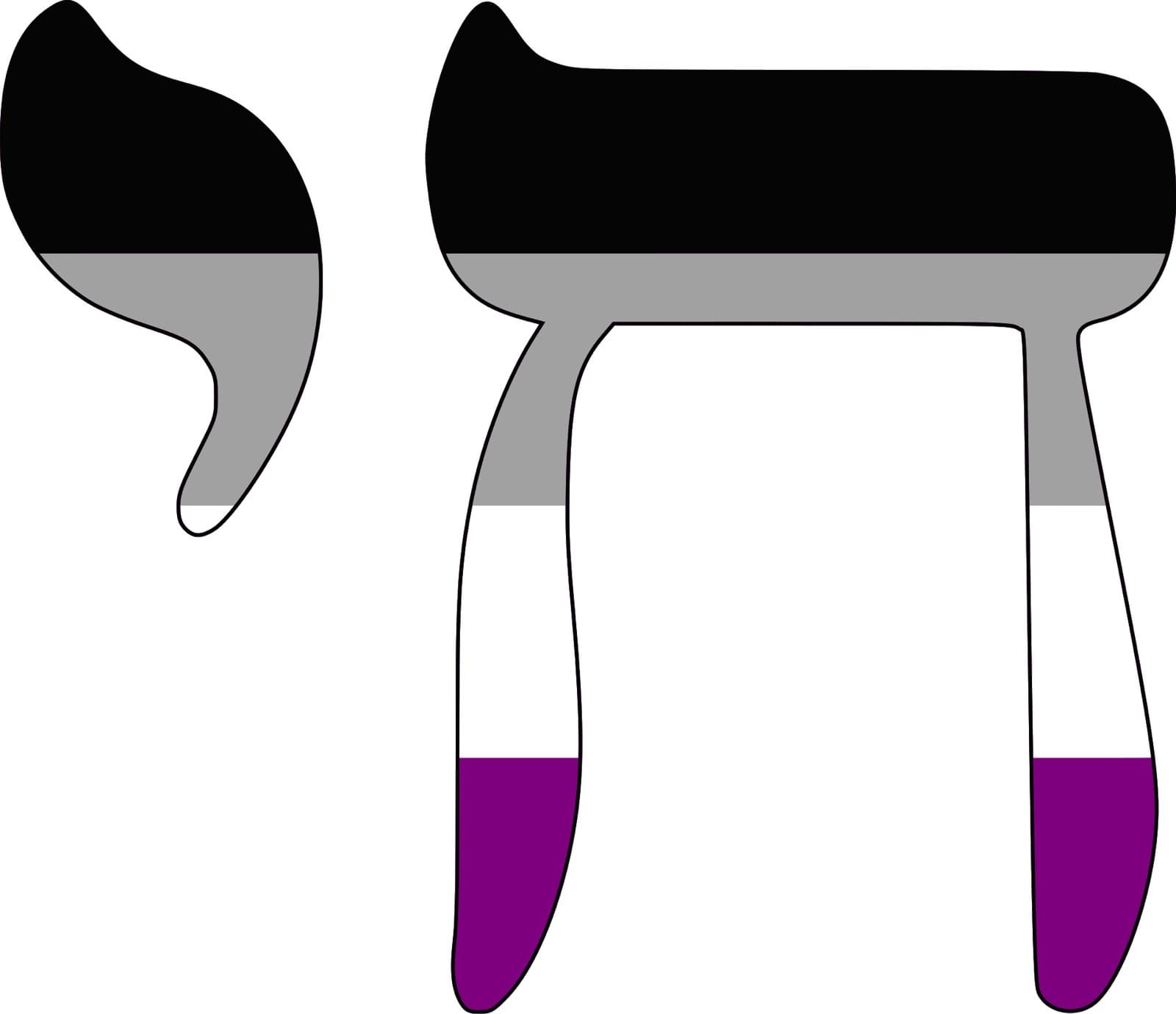
Chai (חי, pronounced KHAI, rhyming with "hi") is the Hebrew word for "life," written with two letters: chet (ח) and yud (י). In gematria (the Jewish tradition of assigning numeric values to Hebrew letters), chet is 8 and yud is 10, so chai equals 18. That single equation is why 18 is Judaism's luckiest number, why wedding checks arrive in odd amounts like $36 and $180, and why the toast is "l'chaim," to life.
Two letters, one word, one number, and somehow an entire worldview. Let's take it apart properly.
Two Letters That Carry a Civilization
Start with the word itself. Chai is about as compact as Hebrew gets: chet, that broad guttural gate of a letter, followed by little yud, the smallest letter in the alphabet. Famously so: when English speakers say something matters "not one iota," they're echoing yud's Greek cousin. Together they spell "alive" or "living."
The word is everywhere in Hebrew once you start looking. Chayim is the plural form, "life," as in the name Chaim, which is literally the word "life" used as a first name, and as in L'chaim!, "to life," the toast. Am Yisrael Chai, "the people of Israel live," has been a defiant anthem for decades and took on renewed force in recent years. The blessing exchanged on Rosh Hashanah asks that you be inscribed in the Sefer HaChaim, the Book of Life. When someone dies, we say they went to chayei olam, eternal life, and we comfort mourners with words about the living.
None of this is coincidence. Judaism is, at its core, a life-oriented tradition. The Torah's own summary instruction, "choose life" (Deuteronomy 30:19), is about as unambiguous as scripture gets. Jewish law permits, in fact requires, breaking nearly any commandment to save a life; the principle is called pikuach nefesh, and it means Shabbat, kosher laws, and fast days all yield when a life is on the line. A tradition with that rule at its center was always going to end up wearing the word "life" as jewelry.
Gematria: How Letters Became Numbers
To understand why chai equals 18, you need one piece of background: Hebrew letters are also numerals. Before Arabic numerals reached the region, Hebrew (like Greek) counted with its alphabet. Aleph is 1, bet is 2, and so on through yud at 10, after which letters jump by tens and then hundreds. Every Hebrew word is therefore also, automatically, a number.
Gematria is the interpretive tradition built on that fact: the practice of finding meaning in the numeric values of words, developed richly in rabbinic literature and later in Kabbalah. Some of it is playful, some of it is profound, and the rabbis themselves ranked it as a garnish rather than a main course of Torah interpretation. But certain equations proved too good to stay on the shelf.
Chai is the most famous one. Chet (ח) = 8. Yud (י) = 10. Chai = 18. And so the number 18 absorbed the meaning of the word: eighteen is life, numerically speaking. From there, the custom wrote itself.
It has good company. The word echad (one) and the word ahavah (love) each add up to 13, a pairing generations of teachers have savored: oneness and love, numerically identical, and together making 26, the value of God's four-letter name. Whether you find that profound or merely charming probably predicts how you feel about crossword puzzles. Either way, chai's 18 is the equation that escaped the study hall and entered the checkbook.
And 18 has a celebrated big sibling: 36, double chai, which Jewish legend links to the lamed-vavniks, the thirty-six hidden righteous people said to exist in every generation, unknown even to themselves, for whose sake the world is sustained. (Lamed is 30, vav is 6.) It's one of Jewish folklore's most beautiful ideas: the world runs on the quiet goodness of people who would never believe they're the ones holding it up. When a gift arrives as double chai, that whole story rides along in the number.
How Do You Write 18 in Hebrew?
The short answer: חי. That's chet (ח, worth 8) plus yud (י, worth 10), the same two letters that spell chai, "life."
There's a second way you'll see it. In standard Hebrew numerals the larger value comes first, so 18 is also written י״ח, yud then chet, with the double tick mark (called gershayim) signaling "this is a number, not a word." That's the form you'll find in plenty of chapter numbers and Hebrew dates.
So why does the chai spelling win whenever 18 is supposed to mean something? Because flipping the order turns a number into a blessing. As one guide to Hebrew numbers puts it, 18 in standard order would be yud-chet, but since those are the letters of the word for life, "instead of י״ח, you may see ח״י." The 18th of the month of Elul is a good example: Chabad and other Hasidic communities celebrate it as Chai Elul, reading the date as the word.
Is י״ח wrong, or avoided? No. Hebrew numerals do have real avoidance rules: 15 and 16 are written ט״ו and ט״ז (9+6 and 9+7) instead of י״ה and י״ו, because those combinations spell forms of God's name (Hebrew numerals). Eighteen isn't one of them. י״ח is perfectly correct; ח״י is the spelling people reach for when they want the number to say "life."
It's also the spelling that belongs on a shirt. Our Chai Fashion collection is built around those two letters, and the Am Yisrael Chai map tee puts the word to work in its proudest phrase: the people of Israel live.
Why Jewish Gifts Come in Multiples of 18
Here's the practical payoff, and the answer to a question every non-Jewish guest at a bar mitzvah has quietly typed into a phone: why is the check for $36?
Because giving in multiples of 18 is giving life. A gift of $18 is one chai. $36 is double chai, twice life. $54 is triple chai, $180 is ten times chai, and at major milestones you'll see $360 or $1,800 from the especially generous. The custom applies to wedding gifts, bar and bat mitzvah gifts, baby gifts, and above all to tzedakah (charitable giving), where donating in chai multiples wraps the donation in a blessing: may this money bring life, and may the giver and receiver both live long.
It's a lovely piece of cultural engineering when you think about it. The same $50 becomes more meaningful at $54. Not because the extra four dollars matter, but because the number now says something. The gift carries a message in its amount, legible to anyone who knows the code. Jewish organizations know it well: donation forms with preset buttons at $18, $36, and $180 are practically a genre.
A related custom: some communities add 18 to a round sum (giving $118 instead of $100) to tuck a chai inside the gift. And when Jews wish someone well on a milestone birthday, the traditional blessing is to live ad meah v'esrim, to 120, Moses's lifespan, which, you'll notice, is also a nice round chai-adjacent construction, though its source is the Torah rather than gematria.
If you're a gift-buyer from outside the tradition wondering whether writing a check for $36 instead of $40 will land: yes. It will land beautifully. It says you know.
L'chaim: The Toast That Explains Everything
Every culture toasts. "Cheers" toasts the drink. "Salud" and "santé" toast health, which is sensible. The Jewish toast skips straight past the beverage and the wellness check and goes for the whole thing: L'chaim. To life. Not to a good year, not to this marriage, not to the deal. To life itself, the entire improbable enterprise.
There's a whole disposition packed into that choice. Jewish history has featured, to put it gently, an above-average number of reasons for pessimism, and the tradition's answer has been to raise a glass to existence anyway. The most famous artistic statement of this is the showstopper "To Life" from Fiddler on the Roof, a song sung by men with very little, toasting everything. That's the register chai lives in: not naive cheerfulness, but stubborn, clear-eyed gratitude. Life, despite. Life, anyway.
Which, we'd argue, is its own quiet form of chutzpah: insisting on joy without asking whose permission.
The Chai Necklace: A Short History of Wearing "Life"
As a worn symbol, the chai pendant is younger than you'd guess. The word is ancient; the fashion is largely a 20th-century phenomenon, spreading through American and European Jewish communities as a warmer, more intimate alternative to the Magen David. Where the six-pointed star reads as the emblem of a people, the chai reads as a personal blessing: less flag, more amulet.
It became a classic gift for exactly the moments its meaning suits: bar and bat mitzvahs, weddings, anniversaries, the birth of a child. Grandparents give chais. That's practically a rule.
And then there's the King. Elvis Presley, in his final years, regularly performed wearing a gold chai necklace. He was fascinated by religious symbols and reportedly joked that he didn't want to miss out on heaven "on a technicality." His diamond-set chai, bought in 1976, remains at Graceland. (Elvis also had documented Jewish ancestry on his mother's side, which turns a piece of trivia into a genuinely touching detail.) When the biggest star in American history wears two Hebrew letters in rhinestone-era Vegas, the symbol has officially arrived.
Today the chai shows up across the whole range: minimalist gold pendants, chunky vintage-style medallions, and, closest to our own heart, printed apparel, where the two letters do their work in bold graphic form. It's the rare religious-adjacent symbol that feels equally right on a chain at a wedding and on a tee at a coffee shop. For the deeper dive into how we think about the symbol, our chai meaning page keeps the short version on file.
No, Not That Chai: A Necessary Word About Tea
We need to talk about the lattes.
If you searched "chai meaning" and arrived here expecting spiced tea, welcome (stay, you'll like it here), but you're holding the other chai. The tea word comes from Hindi and Urdu chai, which traces back through Persian to the Chinese chá, meaning, simply, tea. Which means "chai tea" translates to "tea tea," a redundancy that delights pedants across two hemispheres. That chai rhymes with "pie" and starts with the ch in "chair."
The Hebrew chai is a different word from a different language family, and the pronunciation is the giveaway: that opening chet is the guttural KH sound from deep in the throat, the one in "Bach," or in "l'chaim," or in the little sound your zayde makes before delivering an opinion. KHAI.
So: one chai is a warm drink, the other is the meaning of existence rendered in two letters. Order accordingly. And if you happen to be drinking a chai latte while wearing a chai necklace, you have achieved double chai on a technicality, which we can only respect. That's a 36-point morning.
Chai as a Daily Practice, Not Just a Pendant
Here's the part that keeps the symbol from being mere decoration. Chai isn't only something Jews wear; it's arguably the tradition's operating principle.
Choose life shows up structurally, everywhere. Pikuach nefesh puts the preservation of life above nearly every ritual law. The mourner's Kaddish, recited after a death, contains not one word about death; it praises life and holiness. Shiva, the mourning week, is designed to pull the bereaved back toward the living. Even the Jewish calendar leans this way: festivals of survival outnumber days of grief, and the days of grief themselves end at sundown with a meal.
Wearing a chai, then, is shorthand for a commitment: to notice being alive, to protect life where you can, to toast it even in hard years, especially in hard years. Two letters as a daily orientation. It's a lot of cargo for eighteen's worth of ink, and the word carries it without strain.
Frequently Asked Questions
What does chai mean in Hebrew?
Chai (חי) means "life" or "living." It's spelled with two Hebrew letters, chet and yud, and pronounced KHAI, with the guttural KH of "Bach," rhyming with "hi." It appears throughout Hebrew in words and phrases like chayim (life), L'chaim (to life), and Am Yisrael Chai (the people of Israel live).
Why is 18 a lucky number in Judaism?
Because of gematria, the system in which Hebrew letters double as numbers. Chet equals 8 and yud equals 10, so the word chai, life, adds up to 18. The number inherited the word's meaning, making 18 the numeric symbol of life and the traditional lucky number for gifts and charity.
How do you write 18 in Hebrew?
The meaningful way is חי: chet (ח, 8) plus yud (י, 10), which spells chai, "life." In standard Hebrew numerals, where the larger value comes first, 18 is written י״ח. Both are correct; people often choose the ח״י order when they want the number to carry the blessing of life, as in gifts of $18 or the Hasidic date Chai Elul.
How much money do you give for a bar mitzvah or Jewish wedding?
Custom favors multiples of 18: $36, $54, $72, $108, or $180 are all common, scaled to your relationship and means. The multiple of chai turns the amount itself into a blessing for long life. Any amount given warmly is right; the 18 is the grace note, not the requirement.
Is chai the same as the chai in chai tea?
No, total coincidence. The tea word comes from Hindi via Persian from the Chinese chá (tea), and rhymes with "pie." The Hebrew chai means "life," starts with a guttural KH, and rhymes with "hi." Different languages, different sounds, both excellent.
Who can wear a chai necklace?
Anyone who wears it with respect. The chai isn't a sacred object or a restricted religious item; it's a cultural symbol meaning "life," and it's long been given to and worn by people across every level of Jewish observance, plus more than a few admirers from outside the tradition. Elvis wore one onstage; the bar is open.
If two letters that mean everything sound like your kind of statement piece, our Chai Fashion collection is where we keep them, printed to order, worn to life.