
The NYU Dorm Room Where Def Jam Records Began
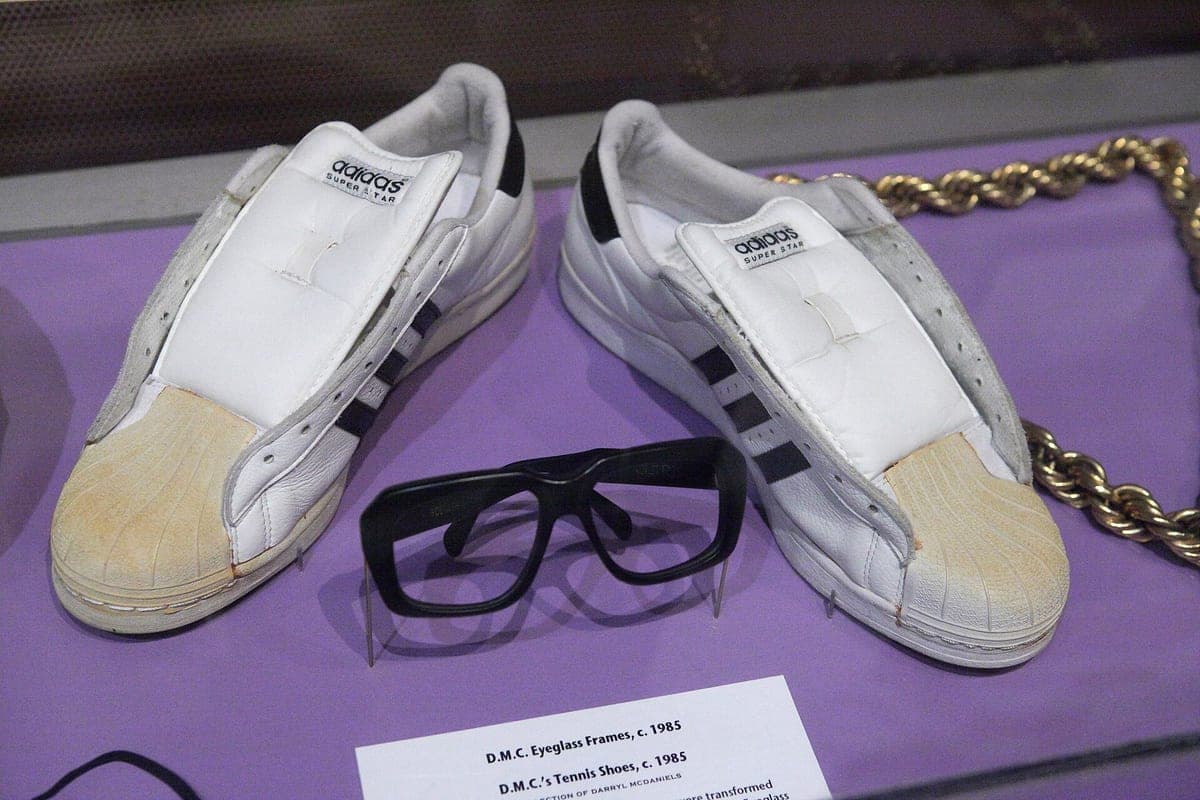
In 1984, a twenty-year-old film student named Rick Rubin was living in Weinstein Hall, an NYU dormitory, running a record label out of his room with a Queens hip-hop promoter named Russell Simmons. Rubin was Jewish, raised in Lido Beach on Long Island. Simmons was Black, from Hollis, Queens, already managing his younger brother Joseph's group, Run-DMC. Between them they built Def Jam Recordings, and the first record they put out under it, LL Cool J's "I Need a Beat," sold about 100,000 copies out of a dorm room.
Kosher Couture tells Jewish culture stories that do not fit neatly into a single lane, and this is one of them. There is already a story on this blog about the Jewish kids at CBGB who helped shape punk rock. This is a different scene, a few years later, a few blocks over, and a completely different sound. It is the story of how a Long Island Jewish teenager became one of the most important producers in the history of hip-hop, and how a trio of downtown kids, two of them Jewish, rode that same label from a hardcore punk band into the first rap group to top the Billboard 200.
From LL Cool J's Demo Tape to a National Anthem for Rap
Def Jam's origin story has a few competing versions, depending on who is telling it: exactly how Rubin and Simmons met is remembered differently by different people in the room at the time, and the label's founding gets dated to either 1983 or 1984 depending on the source. What is not in dispute is what happened next. A sixteen-year-old rapper named LL Cool J mailed in a demo tape that ended up in a box of unsolicited submissions. Adam Horovitz, a teenager who would soon be famous under a different name, pulled the tape out and played it for Rubin. Rubin heard something worth building a label around.
"I Need a Beat" became Def Jam's first official release, catalog number DJ001, produced by Rubin himself. Two years later, Rubin and Simmons worked together on Run-DMC's "Raising Hell," which included "Walk This Way," a collaboration with the rock band Aerosmith that Rubin pushed the group toward almost against their own instincts. Run-DMC did not want to cover a rock song. Rubin heard the guitar riff as raw rhythmic material, closer to a drum break than a song to be respectfully covered, and convinced them to treat it that way. The result became one of the first rap songs to cross fully onto rock radio, and, according to accounts from the session, Rubin was blunt enough to tell Aerosmith's Joe Perry his guitar solo needed work. It stayed in the mix anyway, improved.
Three Kids From Downtown Who Used to Be a Punk Band
The Beastie Boys did not start as a rap group. They started in 1981 as a hardcore band called the Young Aborigines, with a rotating lineup that at one point included a drummer named Kate Schellenbach, who would later go on to found Luscious Jackson after the band left her behind on its way toward hip-hop. Of the three members who eventually stuck, Michael Diamond and Adam Yauch were Jewish. Adam Horovitz, the same teenager who had pulled LL Cool J's tape out of that box, was the son of the Jewish playwright Israel Horovitz and had a Catholic mother, a detail worth getting right rather than flattening into a simpler story.
By 1986, the group Rubin signed to Def Jam had left punk behind almost entirely. He produced their debut album, "Licensed to Ill," released that November. In March 1987 it hit number one on the Billboard 200, the first rap album ever to reach the top of that chart. It eventually sold enough copies to be certified Diamond, ten million units, one of the best-selling hip-hop albums of all time. Three Jewish and half-Jewish downtown kids who had started out screaming into microphones at CBGB-adjacent clubs ended up on top of the pop charts rapping over beats built by a Jewish kid from Long Island who had barely finished college.
The Producer Who Called Himself a Reducer
Rubin's actual sound, the thing that made his records with Run-DMC and the Beastie Boys sound different from everything around them, came down to subtraction. He has described himself less as a producer and more as a reducer, someone who strips a track down until only the essential elements remain, on the theory that fewer competing sounds let each one hit harder. Compared to the lush, live-instrumentation funk and disco samples that dominated a lot of early 1980s hip-hop production, Rubin's records were spare: hard drum machine, a guitar riff, very little else standing in the way of the vocal. That stripped-down approach became one of the defining sonic templates for hip-hop's next decade, well beyond the handful of records Rubin personally touched.
He did not stay at Def Jam long enough to watch that legacy fully unfold from the inside. By 1988, tension had built between Rubin and Simmons, partly over a distribution deal with Columbia Records and partly over the label's direction as it moved toward more mainstream, R&B-inflected rap. Lyor Cohen, the son of Israeli immigrants who had started out working for Simmons and would go on to run Def Jam for years, ascended inside the company around the same time Rubin exited. The Beastie Boys left the label not long after "Licensed to Ill" as well, in their own dispute over royalties and creative control, following almost the same door out that Rubin had just walked through.
A Sound Built Backward, From the Records Rubin Grew Up On
Part of what made Rubin's ear so unusual for hip-hop in 1984 was where it came from. He had grown up on hard rock and heavy metal before he ever picked up hip-hop as a producer, and that background shows in the records he made at Def Jam. Run-DMC had already started fusing rap with rock guitar before Rubin arrived, most notably on "Rock Box," but Rubin pushed the combination further and rougher, treating rap vocals and metal-adjacent guitar as parts of the same instrument rather than two genres awkwardly stitched together. "Walk This Way" was the fullest expression of that instinct, and it worked because Rubin was not trying to make hip-hop friendlier to rock audiences. He was making both genres sound like they had always belonged in the same room.
That same instinct shaped Def Jam's whole early catalog, and it is part of why the label's rise mattered beyond record sales. Hip-hop in the early 1980s was still treated by much of the mainstream music industry as a novelty. A Def Jam record, spare and hard and unmistakably confident, was difficult to file away that easily. LL Cool J kept releasing records for Def Jam for years after his debut, becoming one of the label's signature stars well past the point where Rubin himself had moved on to other genres entirely.
What Came After the Dorm Room
Rubin moved to Los Angeles and founded Def American, later shortened to American Recordings, and spent the following decades producing an almost bewilderingly wide range of artists: Slayer and Danzig in the years right after Def Jam, then later Johnny Cash's late-career American Recordings albums, Tom Petty, Adele, and dozens of others across genres that have nothing to do with hip-hop or the dorm room where he started. The Beastie Boys, for their part, spent the rest of their career proving "Licensed to Ill" was a starting point rather than a ceiling, releasing increasingly ambitious, genre-blending records that critics eventually ranked among the best of their era.
There is a version of chutzpah in all of this that has nothing to do with a punchline. A film student with no formal training in music production decided he understood what a hip-hop record should sound like better than the industry did, and he was right often enough that the industry eventually caught up to him. That is not a small thing to pull off at twenty years old, in a dorm room, with a business partner from a completely different world who happened to share the same instinct for what was about to matter.
None of it erases where the story starts: a Jewish film student with a record player in his NYU dorm room, a Black promoter from Queens who believed in the same artists he did, and a demo tape a Jewish teenager happened to pull out of a box at exactly the right moment. Def Jam is now one of the most recognized labels in music history. It began as three people in Greenwich Village who had no real business succeeding, and did anyway.
For more on the Jewish kids who shaped downtown New York's other loud, fast scene a few years earlier, read our piece on the Jewish kids who basically invented punk rock, and browse Kosher Couture's collections for apparel built by people who think Jewish culture includes every genre it actually touched.
Cover image: Sam Howzit, Wikimedia Commons (CC BY 2.0)


