The Jewish Kids Who Basically Invented Punk Rock
Picture the birth of American punk and you probably picture leather jackets, three chords, and a filthy, beloved club on the Bowery. What you probably don't picture is a Hungarian Holocaust survivors' son on drums, a Conservative bar mitzvah boy from Long Island fronting the band that made it all credible, and a Brooklyn record executive who grew up in an Orthodox home signing half the scene to his label. But that's who actually built it. CBGB, the Ramones, and the whole 1970s New York punk explosion were disproportionately the work of Jewish musicians, managers, and executives, a fact that gets mentioned in passing in most punk histories and deserves a lot more than that.
Line up the founding cast (the bands, the producers, the label heads, the managers) and the pattern holds up on its own. No exaggeration required.
A Club Named for Music It Never Played
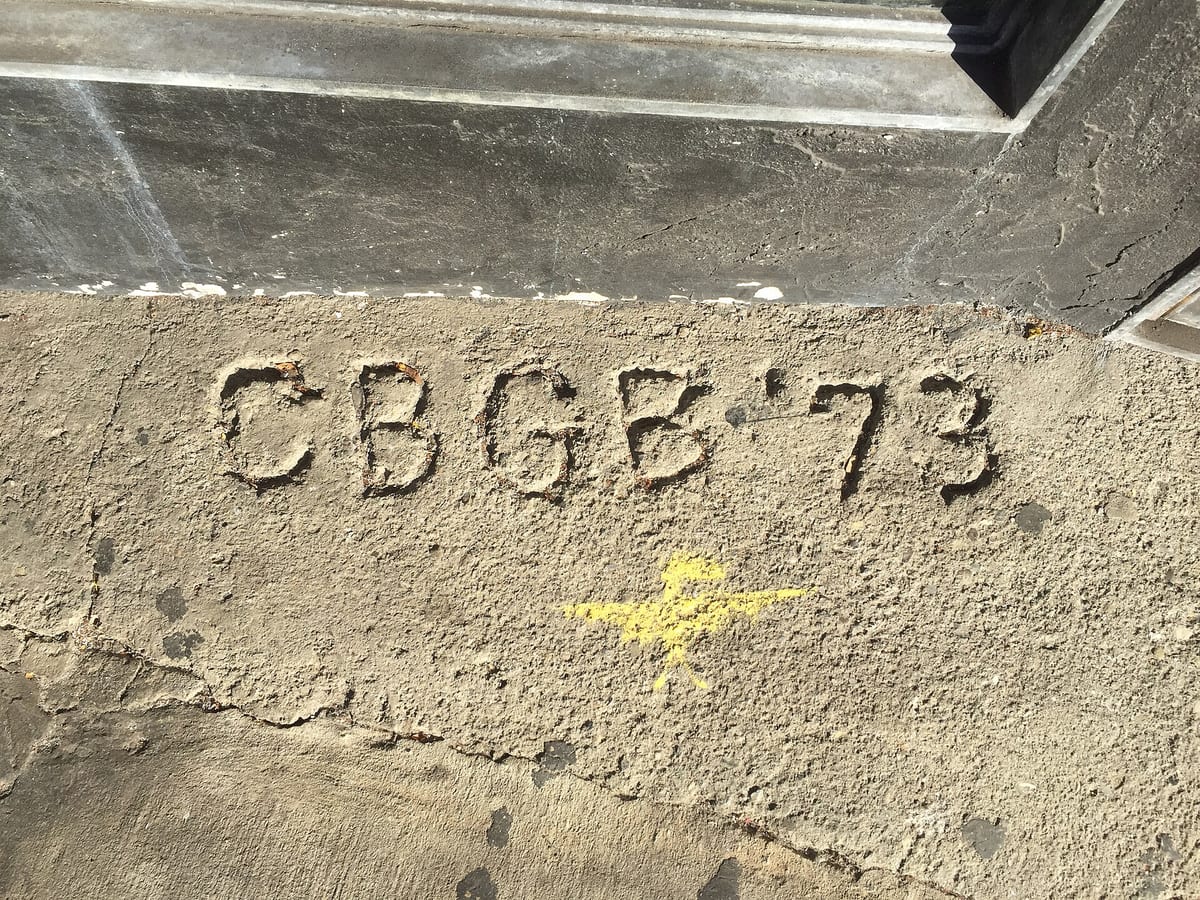 Photo: Leonard J. DeFrancisci, Wikimedia Commons (CC BY-SA 4.0)
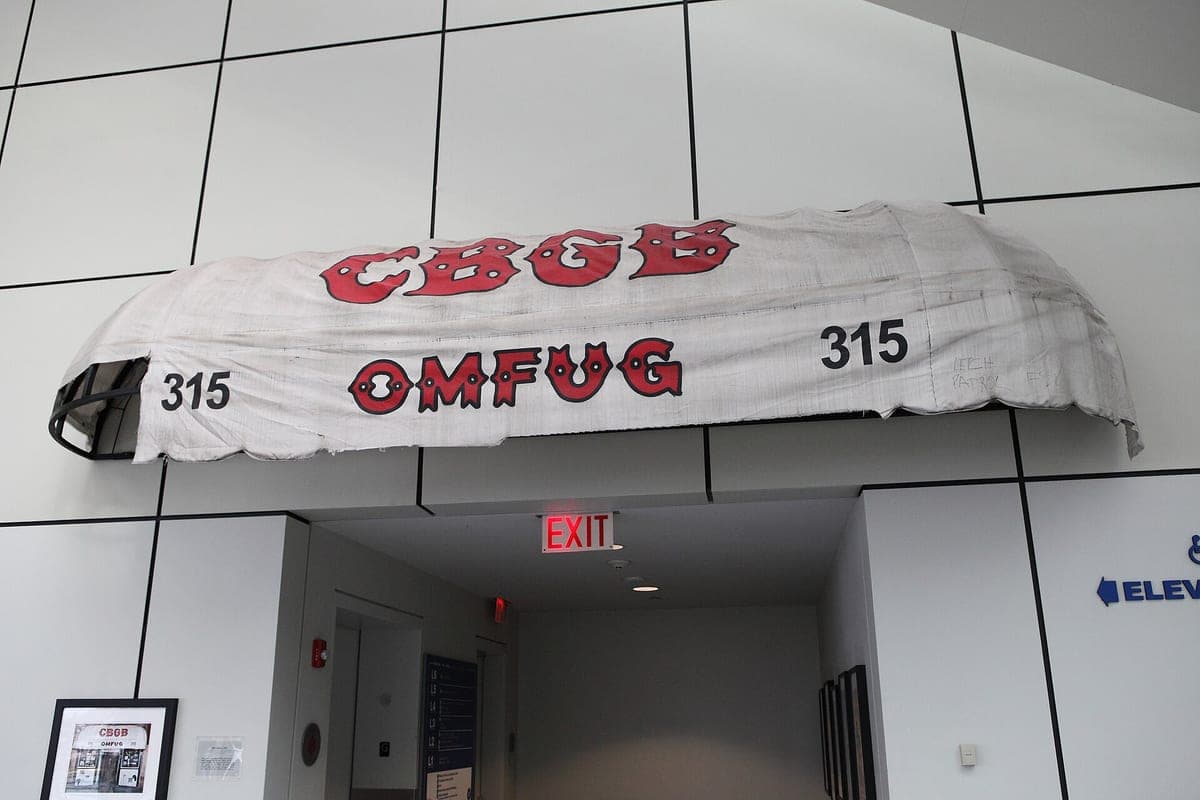
CBGB opened on the Bowery in December 1973, when the neighborhood was still associated more with flophouses than nightlife. Its owner, Hilly Kristal, named it for the music he actually intended to book: Country, BlueGrass, and Blues, with OMFUG tacked on for "Other Music For Uplifting Gormandizers." Almost none of that ever happened. Within a year, Kristal was booking a scrappy, art-damaged, deliberately un-slick roster of local bands who had nowhere else to play, and the club became the birthplace of a genre its own name had nothing to do with. It's proof that the room mattered more than the name painted over the door.
The Ramones played their first show there on August 16, 1974, a set of roughly a dozen songs that reportedly clocked in under twenty minutes, played so fast the audience barely had time to figure out what they were watching. That show, more than any other single event, is where most historians date the start of American punk. And the band that played it was a lot more Jewish than its uniform of matching leather jackets and shared stage surname let on.
That shared surname was itself a piece of invented identity, borrowed from a pseudonym Paul McCartney had once used to check into hotels. Four guys from Forest Hills, Queens, who weren't related and weren't named Ramone built an entire persona around looking and sounding like a street gang. That took a lot of deliberate reinvention, and the two members carrying Jewish family histories were also the two most responsible for what the band actually sounded like.
The Ramones Weren't Brothers, and Two of Them Were Jewish
None of the Ramones were actually related, and none of them were really named Ramone. Jeffrey Ross Hyman, the band's lead singer, grew up in a Jewish family in Forest Hills, Queens, before reinventing himself as Joey Ramone: six foot six, painfully thin, hidden behind sunglasses and a curtain of hair, singing in a voice that turned bubblegum melodies into something stranger and more urgent. He became, by most accounts, the emotional center of the band and one of the most recognizable frontmen punk ever produced.
Behind the drum kit was Tommy Ramone, born Tamás Erdélyi in Budapest in 1949 to Hungarian Jewish parents who survived the Holocaust. The family fled Hungary during the 1956 revolution and settled in Queens, where young Tamás became Tommy and, eventually, the Ramones' original drummer, producer, and de facto musical architect: the one who shaped the band's relentless, stripped-down sound into something a record label could actually release. What's remarkable is how completely Tommy kept his background private: by his own account, he concealed his Jewish identity and refugee history so thoroughly that even Danny Fields, the band's first manager and himself Jewish, didn't know about it for years. Two members of arguably the most influential punk band in history were carrying Jewish and refugee histories that barely surfaced in interviews, buried underneath matching leather jackets and stage names built to sound like a fake Italian crime family.
Lou Reed's Long Island Bar Mitzvah
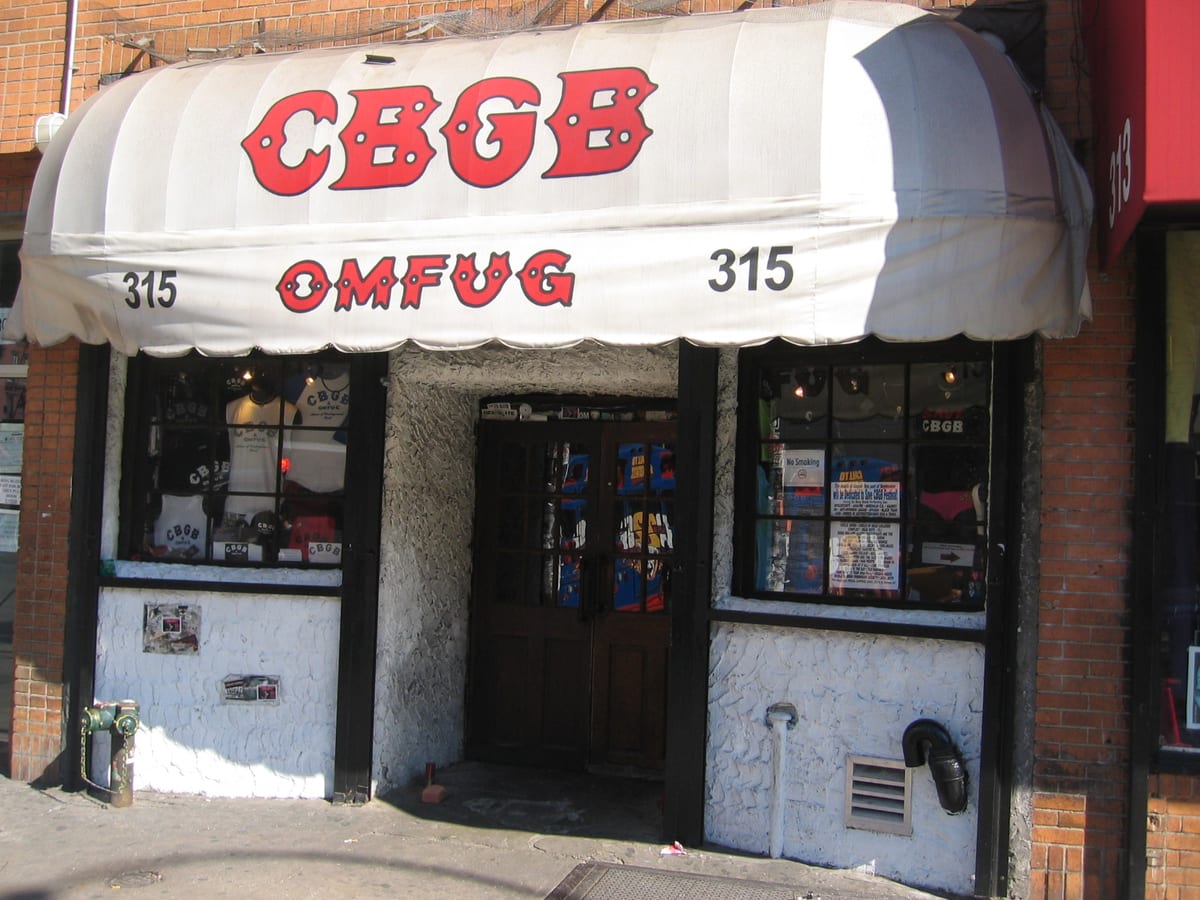 Photo: Adicarlo, Wikimedia Commons (CC BY-SA 3.0)
If the Ramones were punk's first great CBGB band, Lou Reed was its patron saint before the club even existed. Reed was born Lewis Allan Reed in Brooklyn to Toby and Sidney Reed. Sidney's own family had shortened their name from Rabinowitz a generation earlier. Reed grew up a Conservative Jew in Freeport, Long Island, attending Hebrew school and becoming a bar mitzvah at Congregation B'nai Israel. Years before punk had a name, Reed's band the Velvet Underground was writing the sonic and lyrical playbook, deadpan vocals, confrontational subject matter, a refusal to sound pretty on purpose, that nearly every CBGB band would later draw from directly. By the time punk had an actual address on the Bowery, Reed was less an influence than a founding text, and later interviews and biographies would return again and again to how much his Long Island Jewish upbringing shaped the outsider's eye he brought to downtown New York.
Richard Hell's Complicated Inheritance
Not every Jewish figure in this story had a tidy relationship with that identity, and we'd rather not smooth that over. Richard Hell, born Richard Meyers, co-founded the influential early CBGB band Television and later fronted Richard Hell and the Voidoids, whose 1977 album Blank Generation shaped punk's look and attitude as much as its sound. Hell is widely credited with originating the torn-shirt, spiked-hair aesthetic that Malcolm McLaren later exported to London. Hell's father was Jewish, his mother was not, and Judaism played no real role in his upbringing; he didn't set foot in a synagogue until a friend's bat mitzvah as an adult. Asked directly about his Jewish identity, Hell has given an answer that's more honest than most: "I am definitely a Jew to an antisemite," while acknowledging he doesn't know much about the religion or culture itself.
That ambivalence is worth including rather than editing out, because it's true to how Jewish identity actually works for a lot of people: inherited, partial, situational, real regardless of how much liturgy or ritual comes attached to it. Nobody gets to gatekeep who counts, and a scene built partly by people renegotiating their own identities in public was always going to include some who were still renegotiating what "Jewish" even meant to them personally.
The Survivor in the Producer's Chair
Most of the Jewish histories running through this scene belong to children or grandchildren of people who lived through the Holocaust. Genya Ravan's is not one generation removed. Born Genyusha Zelkowitz in Łódź, Poland, she and her parents were among the only members of their extended family to escape the Nazi regime alive. She emigrated to the Bronx as a child, and by her twenties she was fronting Goldie and the Gingerbreads, the first all-female rock band signed to a major label.
By the mid-1970s, Ravan had become the most prominent female record producer in rock, and in 1977 she produced Young, Loud and Snotty, the debut album by the Dead Boys, a band that had migrated from Cleveland to become one of CBGB's signature acts, discovered and championed by Hilly Kristal himself. A Holocaust survivor from Łódź producing a shirtless, confrontational punk record for the CBGB stable is exactly the kind of detail that punk histories tend to mention once, briefly, and move past. She deserves more than a footnote.
The Suits Who Made It a Movement
A scene needs more than bands; it needs people willing to bet money and reputation on music that radio wouldn't touch, and here again the Jewish presence runs deep. Danny Fields, who managed the Ramones and had earlier championed the Stooges and the MC5, was one of the most important behind-the-scenes figures in getting proto-punk and punk taken seriously by anyone with a checkbook. And Seymour Stein, born Seymour Steinbigle and raised in an Orthodox Jewish family near Bensonhurst, Brooklyn, co-founded Sire Records and personally signed the Ramones, Talking Heads, and Blondie, three of the acts that defined what CBGB's scene sounded like on record. Stein spent his career talking openly about how his Jewish upbringing shaped his ear and his instincts as a talent scout; without his willingness to put Sire's money behind bands that mainstream labels considered commercial suicide, a meaningful chunk of the CBGB roster might never have made it onto vinyl at all.
One of the bands Seymour Stein signed to Sire adds an unplanned coincidence to this story: Blondie, co-founded by guitarist Chris Stein (no relation), who grew up in the Midwood section of Brooklyn to left-wing Jewish parents who'd emigrated from Russia. The family was too committed to secular politics to raise him with much formal religious practice (he got a big thirteenth-birthday party instead of a bar mitzvah), but he's spoken since about how thoroughly that Brooklyn Jewish milieu, communist relatives and all, shaped his sense of humor and his eye as Blondie's chief visual collaborator. Two Steins, unrelated, both essential to the same scene, is the kind of coincidence that only feels surprising if you don't already know how many Jewish New Yorkers were in the room.
Why So Many?
It's tempting to chalk this up to coincidence: New York had a huge Jewish population, and CBGB was a New York club, so of course Jewish kids ended up on its stage. That's part of it, but not all of it. Look at the specific biographies here and a pattern emerges that punk scholars have pointed to directly: refugee and immigrant family histories, a generation removed at most from real catastrophe, producing kids with an outsider's instinct for reinvention. New names, new personas, a comfort with confrontation that a more settled, assimilated upbringing doesn't always produce. Tommy Ramone's parents survived the Holocaust and fled a revolution. Lou Reed's father had already rewritten the family name once. Seymour Stein grew up Orthodox in Brooklyn and built a career finding the next thing nobody else would touch. Geography explains the room. It doesn't explain the throughline.
It's also, not incidentally, the same instinct that shows up over and over across a century of American Jewish culture: the Borscht Belt comedians reinventing themselves for the Catskills circuit, the Tin Pan Alley songwriters writing the American songbook under Anglicized names, the Hollywood studio founders building an entire industry out of nothing because no other industry would have them. Punk just happened to be the version that showed up wearing safety pins instead of a tuxedo.
None of this means that punk was secretly a Jewish genre, or that every important figure in the scene shared this particular background. Plenty didn't, and the music belongs to everyone who ever slammed into a mosh pit at CBGB. What it does mean is that when a handful of outsider kids from Queens, Brooklyn, Long Island, and Budapest needed somewhere to put a generation's worth of restlessness, a scrappy bar on the Bowery named after music it never played turned out to be exactly the room that would let them.
At Kosher Couture, we've always said that chutzpah is in our DNA, and there's genuinely no better one-word summary of what Joey Ramone, Lou Reed, Genya Ravan, and Seymour Stein brought to a scene that changed music permanently. They weren't hiding their outsider status. They were performing it, loudly, on a stage in a club named for music they had no intention of playing, daring anyone to tell them it wouldn't work.
Cover image: Sam Howzit, Wikimedia Commons (CC BY 2.0)


