You Don't Have to Be Jewish to Love Levy's
A man in a railroad engineer's cap holds up a slice of rye bread, mid-bite, grinning like he's just found the best thing in Brooklyn. He is not Jewish. He is Penobscot. Above his head, in fat black lettering, the poster reads: "You don't have to be Jewish to love Levy's real Jewish rye."
Commuters saw that face — and a Black child's, and an altar boy's, and a New York City police officer's — thousands of times a day, strap-hanging on the IRT and the BMT through the 1960s. Nobody had ever advertised bread like this before. Nobody has quite managed it since.
A Brooklyn Bakery Looking to Grow Up
The bread itself predates the joke by more than seventy years. Henry S. Levy, a Russian Jewish immigrant, started baking rye in Brooklyn in 1888. By the mid-twentieth century, Henry S. Levy and Sons made a serious loaf — thick-crusted, dense, packed with caraway — beloved on the Lower East Side and across the outer boroughs. The trouble was that "beloved on the Lower East Side" is also a ceiling. Levy's was a hit in Jewish neighborhoods and invisible everywhere else, and by the early 1960s the company wanted out of that ceiling.
Jewish rye — dark, dense, caraway-flecked, built to hold up under a thick slab of pastrami or corned beef — had been a staple of Ashkenazi kitchens in Eastern Europe for generations before it crossed the Atlantic with immigrants like Henry Levy. In New York, it became as much a fixture of Jewish deli culture as the pastrami itself, sold at appetizing counters and bakeries throughout Jewish neighborhoods. It was, in other words, exactly the kind of proudly ethnic product that most companies of the era would have marketed narrowly, if they marketed it at all. Levy's did the opposite.
They hired Doyle Dane Bernbach, the Madison Avenue agency that was in the middle of tearing up the rulebook for American advertising. Founded in 1949 by Bill Bernbach, Ned Doyle, and Maxwell Dane, DDB had built its reputation on a simple, radical bet: that advertising could be honest, funny, and visually spare, and still sell more product than the shouting, superlative-stuffed copy that dominated the industry. The agency had already put Volkswagen's "Think Small" and Avis's "We Try Harder" into the culture's bloodstream — plainspoken, self-aware ads that trusted the reader's intelligence instead of talking down to it. Levy's rye bread was about to get the same treatment.
Bernbach's method depended on pairing a copywriter with an art director as equal creative partners, rather than having writers hand finished copy down to a layout department. That pairing is exactly what produced Levy's: a copywriter who understood the emotional hook, and an art director who knew how to let a single photograph and six words fill a subway car with warmth.
The Subway Campaign Is Born, 1961
The Levy's Rye Bread ad campaign launched in 1961, and it stayed in New York subway stations, on buses, and eventually in magazines for most of the decade and beyond. The tagline came from Judy Protas, a DDB copywriter who had studied at Barnard College and earned a master's degree in English literature from Yale. Protas worked at Macy's before DDB hired her in 1950, and she rose through the agency to become a vice president in 1967 — a rare height for a woman in advertising at the time. Agency founder Bill Bernbach and art director William Taubin conceived and shaped the campaign alongside her; photographer Howard Zieff, who later left advertising entirely to direct Hollywood comedies, shot the faces that made it famous. Time magazine would go on to dub Zieff the "Master of the Mini-Ha-Ha" for his knack for packing a full joke into sixty seconds of film — a skill that started with a single frame of a stranger biting into rye bread.
Protas later explained the strategy in plain terms: "We had a local bread, real Jewish bread, that was sold widely in Brooklyn to Jewish people. What we wanted to do was enlarge its public acceptance. Since New York is so mixed ethnically, we decided to spread the good word that way."
That was the whole idea, and it was a small act of genius: instead of trying to convince Jewish New Yorkers to buy more rye bread, sell everybody else on it — by having them do the selling themselves, one delighted bite at a time.
The Faces on the Platform
The campaign's engine was a rotating cast of visibly non-Jewish New Yorkers, photographed enjoying Levy's rye under that same six-word punchline, set in a bold, friendly, rounded typeface called Cooper Black — the kind of lettering that reads as a smile before you've even parsed the words. Documented faces from the run include:
- A Black child, mid-bite, grinning at the camera
- Joseph S. Attean, a Penobscot Nation man in a railroad engineer's cap
- A robed Catholic choirboy
- A New York City police officer
- An Italian man
- Silent-film comedian Buster Keaton, in one especially delighted cameo appearance
Every version ran the same tagline underneath a different face, which was the whole trick: the joke didn't change, but the point of view on it kept expanding, one subway ride at a time. The posters were simple enough to read from across a moving train and warm enough to make you smile doing it — no small feat for an ad about bread.
One of those faces went unidentified for sixty years. The Native American man in the campaign was Joseph S. Attean, a Penobscot Nation railroad engineer who had moved to the Bronx after tragedy struck his family in Maine — his young daughter died of tuberculosis in 1921 — and spent his career on the New Haven Railroad. Attean came from a notable Penobscot family; his forebears had served as guides to Henry David Thoreau in Maine, and he was the eldest male descendant of a hereditary Penobscot chief. He never spoke much about the ad, by his family's account, and he died in 1982 at eighty-five, years before anyone in his family connected the dots. His great-nephew first recognized him decades later, staring back from a photo reprinted in a high school sociology textbook — a strange, quiet way to rediscover a relative, and a reminder of how far the poster had traveled from its original subway platform. It's also a reminder that behind every "un-Jewish" grin on those posters was a real New Yorker with a real life and a real family history, not a prop hired for the day and forgotten.
When Malcolm X Stopped to Pose
The campaign's cultural reach went further than DDB could have planned. In 1964, during a photo shoot for the magazine Now!, Malcolm X spotted the Levy's poster featuring a Black child eating the bread, asked to be photographed standing beside it, and reportedly said simply: "I like it." Whatever he meant by that — approval of the ad's inclusiveness, amusement at its cheek, or something more personal — the image of Malcolm X posing next to a rye bread ad says something the campaign's creators surely hoped for: this was advertising that people wanted to be seen next to.
Why It Worked
The joke in "You don't have to be Jewish to love Levy's" only works because it does two things simultaneously. It pokes gentle fun at the idea that "Jewish rye" is a closed club — and in the same breath, it insists that the bread, and the culture behind it, is worth loving regardless of who you are. It's not assimilation. Nobody in these posters is pretending to be something they're not. It's the opposite: a proud, specific, unapologetically Jewish product, confident enough to let outsiders in on the joke and the flavor at the same time.
That combination — humor that punches with pride instead of at anyone's expense — is exactly the register mid-century American Jewish life was finding its way into. This was the generation moving out of immigrant enclaves in Brooklyn, the Lower East Side, and the Bronx and into the postwar mainstream: suburbs, universities, boardrooms, the melting-pot version of New York City that the whole country liked to imagine itself joining. That generation was confident enough to be self-deprecating and secure enough to let a rye bread ad be a punchline and a statement of belonging in the very same sentence. Nobody in the Levy's campaign is apologizing for the word "Jewish" printed in enormous letters on a subway wall. The joke assumes you already know the bread is good — it's just inviting everyone else to catch up.
It also happened at a moment when advertising itself rarely showed a Black child, a Native American man, and a Catholic choirboy as equally desirable customers for the same product, let alone let each of them anchor the joke. Decades before "diversity" became a marketing checkbox, Levy's built an entire campaign on the premise that a good thing should belong to everybody who wants it — which is a very New York idea, and, not coincidentally, a very Jewish one. Advertising historians have pointed to it as one of the first sensitive and successful uses of cultural and racial identity in mainstream American advertising, and the posters have since made their way into serious institutional collections, including the Smithsonian's permanent holdings and the Oakland Museum of California's 1999 "Posters American Style" exhibition — evidence that Madison Avenue's fast-food-for-the-eye eventually became a museum piece. It's remembered today as one of the defining campaigns to come out of DDB's 1960s "creative revolution," in the same breath as "Think Small" and "We Try Harder," and it's a fixture of retrospectives on the era's most influential advertising.
It's also, frankly, the same instinct behind a lot of what we build at Kosher Couture. Heritage that's worn with a wink instead of a warning label. A joke that's for the culture, never at its expense. Chutzpah is in our DNA precisely because campaigns like this one proved, decades before we existed, that Jewish pride and universal warmth were never in competition — they were always the same sell.
A Punchline That Outlasted the Product
Levy's rye bread outlived its original independence — the company was sold to Arnold's Bakers in 1979 and the brand eventually passed into Bimbo Bakeries USA's portfolio — but the tagline never really left. "You don't have to be Jewish to love [X]" has been borrowed, parodied, and riffed on for everything from bagels to Chinese food ever since, which is its own kind of tribute: a six-word joke so well built that two generations of copywriters who never saw the original posters still reach for its shape. Few advertising taglines outlive the product they were written to sell by half a century; fewer still get quoted by people who've never eaten the bread and couldn't tell you which bakery made it.
What made it last wasn't just the wit. It was the warmth underneath the wit — the sense that a Brooklyn bakery, an ad agency, a Penobscot railroad engineer, a Catholic choirboy, and a subway car full of strangers had all, for a moment, found something to grin about together. That's a harder trick than it looks like from sixty years' distance. A weaker version of the same idea could have felt like a punchline at Jewish New Yorkers' expense — "look how exotic this bread is." Instead it landed as an invitation, because the joke never once suggested the bread, or the culture behind it, needed anyone's approval. It was already good. Everyone else was just finally being let in on it.
At Kosher Couture, that's more or less the whole mission statement, just printed on a t-shirt instead of a subway poster: heritage worn proudly, humor that includes rather than excludes, and the confidence to let the joke be the compliment rather than the apology. It's why "Chutzpah is in our DNA" reads less like a slogan and more like a direct descendant of "You don't have to be Jewish to love Levy's" — both are built on the same dare: be specifically, visibly, unmistakably Jewish, and trust that the rest of the world will want in on the joke, not out of it.
You don't have to be Jewish to get it. It just helps to have loved something enough to want the whole platform in on the joke.
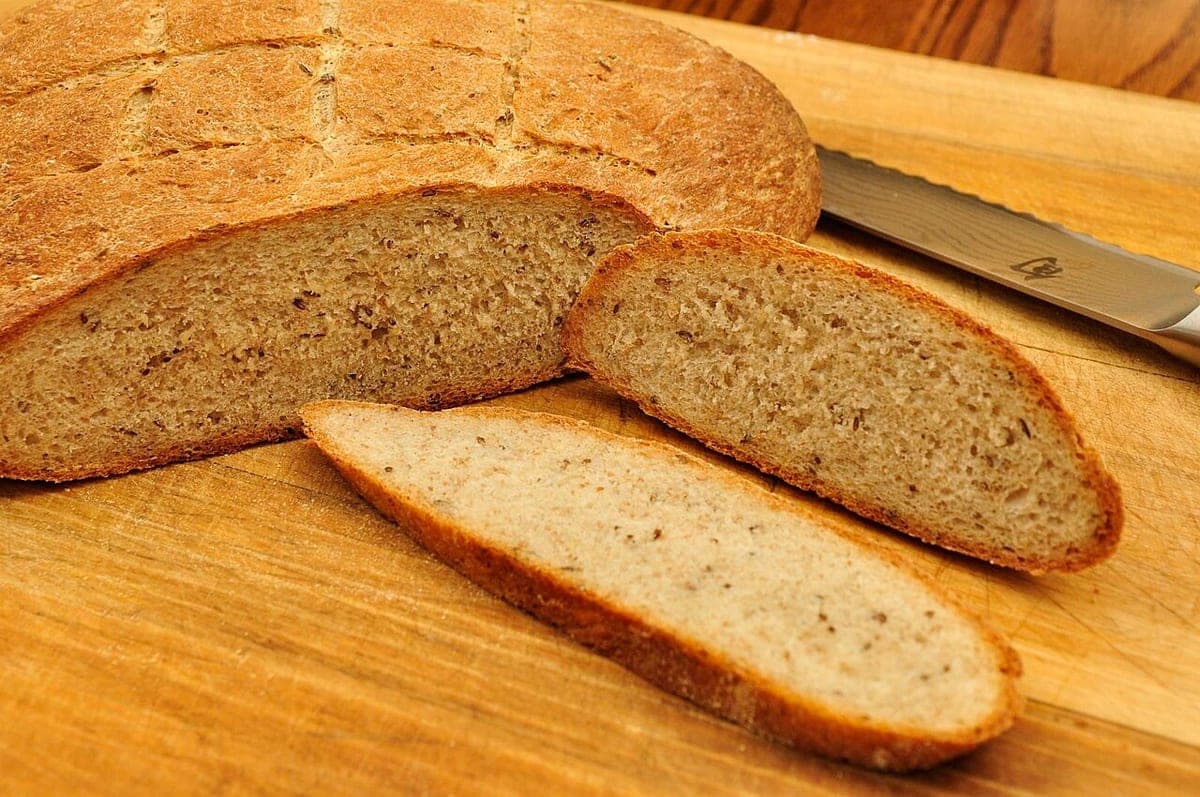
Cover image: jeffreyw, Wikimedia Commons (CC BY 2.0)


