
Jewish Comedians: From Borscht Belt to Modern Comedy
Jewish comedians didn't just tell jokes; they fundamentally changed how American audiences laugh and think. From ancient Talmudic debate to vaudeville stages to prime-time television, Jewish humor has been a voice for the underdog, a tool for survival, and an art form that punches up rather than down.
Where Jewish Humor Comes From
Jewish humor didn't start in nightclubs or comedy clubs. Its roots run deep into Jewish intellectual and spiritual tradition. The Talmud itself is full of wit and sharp dialogue used to explore moral and philosophical questions. The rabbis who argued over interpretations of Jewish law did so with humor, wordplay, and clever argumentation as core parts of their method.
This tradition of rigorous, playful debate shaped how Jewish communities approached problem-solving and meaning-making for thousands of years. When you grow up in a culture where asking tough questions and challenging authority through wit is valued, humor becomes a natural language.
Yiddish, the language spoken by Ashkenazi Jews across Eastern Europe for centuries, is the perfect vehicle for this sensibility. It's a language built on irony, sarcasm, and contradiction. Words like "chutzpah" (nerve, audacity) and "schmaltz" (excessive sentiment) aren't just vocabulary; they're philosophy. The "shm-reduplication" (fancy shmancy, kosher shmosher) lets speakers dismiss pretension with a single linguistic flourish. Every word carries centuries of wit.
In the shtetls (small towns) of Eastern Europe, humor wasn't reserved for professionals. It was woven into everyday life. The badkhn, a wedding jester employed at celebrations, was an honored role dating back to at least the 17th century. These performers didn't just make people laugh at the wedding feast; they improvised sharp satires targeting the bride's family quirks, dowry negotiations, and social hypocrisies. Comedy was emotional, pointed, and deeply embedded in community life.
Humor also became a survival tool. When a people spend millennia as a minority navigating hostile majorities, humor bridges the gap between how things are and how they should be. It's a way to acknowledge pain without being crushed by it, to build solidarity in hard times, to say the unsayable in a room where it might otherwise get you in trouble.
The Borscht Belt: Comedy's Training Ground
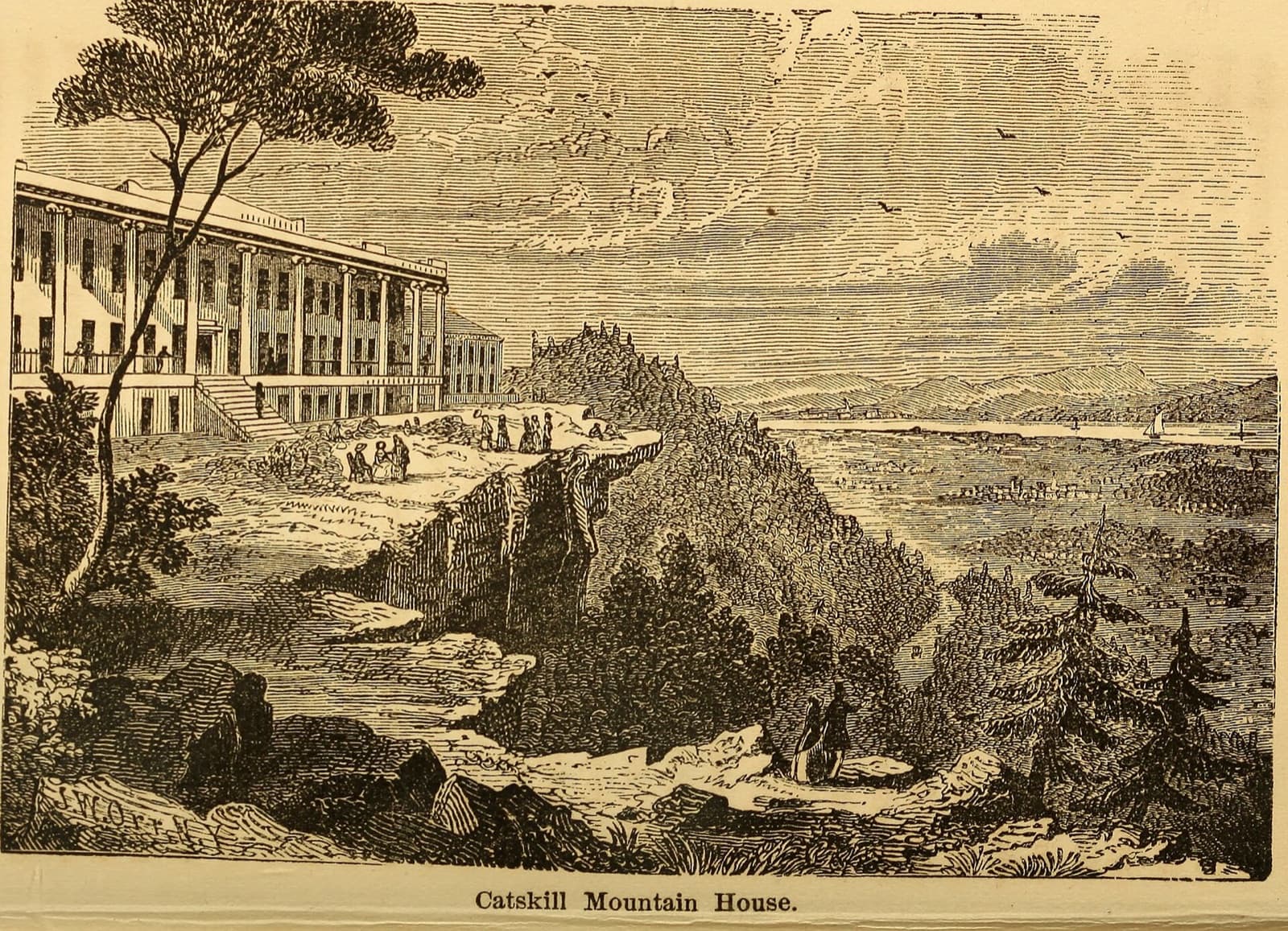
In the early 20th century, as millions of Jews immigrated to America, Yiddish theater thrived in urban centers. But it was the Borscht Belt, the Jewish resort region in New York's Catskill Mountains, that became the incubator for modern American comedy.
The name itself comes from the beet soup served at these resort hotels. Resorts like Grossinger's, the Concord, and Kutsher's hired entertainers to keep guests happy during vacations. Young comedians used these venues as their proving ground, testing jokes, refining timing, and building their craft in front of live audiences night after night.
The connection between vaudeville and the Borscht Belt is crucial to understanding American comedy's evolution. As vaudeville waned in the 1930s, many performers needed new venues. At the same time, Jewish resorts were booming and hungry for entertainment. The marriage was perfect. Comedians who might have struggled in other entertainment venues found audiences, paychecks, and the space to experiment.
The roster of comedians who cut their teeth in the Borscht Belt reads like a who's who of American comedy: Mel Brooks, Milton Berle, Lenny Bruce, Woody Allen, Joan Rivers, Jerry Lewis, Sid Caesar, Buddy Hackett, Henny Youngman, and Jerry Seinfeld. These weren't performers working in isolation; they were part of a thriving cultural ecosystem where Jewish humor, Jewish identity, and American entertainment intersected.
The comedy style that emerged was distinctive. Borscht Belt humor moved at lightning speed, favoring rapid-fire one-liners over long-form bits. It was deeply self-deprecating, mining humor from insecurity, neurosis, and the absurd gaps between expectation and reality. Performers freely used Yiddish phrases and references to Jewish family life, overbearing mothers, and the experience of being Jewish in America. It wasn't comedy that explained itself to outsiders; it was humor that celebrated being part of an insider culture while making that culture accessible and funny to anyone willing to listen.
Icons Who Changed Entertainment
Mel Brooks arrived at the Borscht Belt as a young comedy writer and performer. What he eventually created was something revolutionary: comedy that used satire to dismantle prejudice and power structures. "The Producers" and "Blazing Saddles" didn't just make audiences laugh; they used humor as a weapon against bigotry and institutional stupidity. Brooks drew on his own experiences, including his World War II service, to create comedy that was both wildly funny and genuinely serious about what it was critiquing.
Joan Rivers burst onto the stand-up scene at a time when comedy was still overwhelmingly male-dominated. Her sharp-tongued, no-holds-barred approach to stand-up broke down barriers. She talked about her own insecurities, her marriage, her body, and the absurdity of beauty standards with a frankness that shocked and delighted audiences. She didn't perform for approval; she performed with absolute conviction. Rivers proved that you didn't have to soften your voice or apologize for your opinions to be funny. She was also conscious of being Jewish, though her comedy ranged far beyond cultural references. Her legacy extends far beyond Jewish comedy; she fundamentally changed what female comedians could do.
Jerry Seinfeld's sitcom "Seinfeld" (1989-1998) brought Jewish cultural references to a mass audience in a way that had never happened before on network television. The show's observational humor about the small absurdities of daily life is instantly recognizable as emerging from a Jewish comedic sensibility: the neurosis, the overthinking, the way Seinfeld himself embodied the anxious Jewish intellectual who notices everything and worries about all of it. "Seinfeld" proved that a show rooted in Jewish sensibilities could be one of the most popular television programs in the world.
These three comedians represent different eras and approaches, but they share something fundamental: they used humor to process their own identity while speaking to universal human experiences. They didn't dilute their Jewishness to reach mainstream audiences; their Jewishness was the lens through which they saw everything.
What Makes Jewish Humor Jewish
If you listen to a comedian making jokes about anxiety, family dysfunction, overthinking, and the gap between expectation and reality, you're probably hearing Jewish comedy, whether or not the comedian is Jewish. The sensibility has become so embedded in American humor that it sometimes feels universal.
Jewish humor is characterized by self-deprecation. It comes from a tradition where admitting your flaws before someone else points them out is both an intellectual stance and a survival strategy. This creates comedy that's intimate and honest rather than punchy from above.
Intellectual wordplay and linguistic dexterity are central. Jewish comedians often build jokes around the meanings and sounds of words, the gap between what's said and what's meant, the way language can mask or reveal truth. This is Talmudic argument dressed up in punchlines.
Irony and skepticism toward authority run through Jewish humor. You're encouraged to question, to point out contradictions, to say "really?" when someone claims to have all the answers. This stance became a comedic superpower: the ability to see through BS and laugh at it.
Perhaps most importantly, Jewish humor tends to punch up rather than down. The tradition of the badkhn or the Borscht Belt comedian was to use wit against the powerful, the pretentious, the hypocritical. The humor isn't meant to humiliate the vulnerable or reinforce existing power structures; it's meant to challenge them.
Jewish Humor Today
The Jewish comedians who dominated mid-20th century American comedy established a style that continues to influence how comedy is made. Contemporary comedians like Sarah Silverman, David Cross, and others carry forward the tradition of using humor to process identity, challenge power, and build community.
The platforms have changed; the instinct remains. Podcasts, YouTube, and social media have given comedians new ways to reach audiences and build followings. The rapid-fire Borscht Belt style translates beautifully to social media clips. The self-deprecating, neurotic sensibility of Jewish comedy pairs naturally with the anxiety of modern life that comedians process online.
What's interesting is that Jewish humor has become so foundational to American comedy that you can't really separate them anymore. When someone makes an anxiety joke, uses irony as their main mode of expression, or points out the gap between how people say they are and how they actually are, that's the legacy of Jewish comedians at work, whether or not anyone's explicitly calling it "Jewish humor."
Why This Matters: Humor as Resilience and Pride
Humor is resilience technology. It's a way to keep going when the world gives you reasons to quit. For centuries, Jewish communities used humor to survive persecution, displacement, and loss. The ability to laugh at yourself and at the absurdity of your circumstances is a form of power.
Jewish humor also builds community. When you share an inside joke, you're saying "I know you get this; we're part of the same world." The self-awareness and irony of Jewish comedy creates an intimate connection between performer and audience. You're not being lectured or entertained from above; you're being brought into a conversation.
Today, at a time when wearing your heritage with pride sometimes feels risky, Jewish comedians continue to model what it looks like to be unapologetically yourself. They show that you can be funny, serious, self-aware, and culturally rooted all at once. You don't have to choose between belonging to your community and reaching beyond it. The best humor does both.
This is why Kosher Couture exists at the intersection of pride and wit. When you wear a pun tee or a statement piece that celebrates your heritage, you're participating in the same tradition that kept Jewish communities laughing through hard times. You're saying, out loud and on your chest, that your culture, your humor, and your identity are worth celebrating.
FAQ
What is Borscht Belt comedy? Borscht Belt comedy is the rapid-fire, often self-deprecating humor style that emerged from Jewish resort hotels in New York's Catskill Mountains in the early-to-mid 20th century. It's characterized by quick one-liners, Yiddish phrases, references to Jewish family life, and observations about Jewish-American identity. Comedians like Mel Brooks, Joan Rivers, and Jerry Seinfeld all honed their craft in these venues.
Is Jewish humor different from other kinds of humor? Jewish humor has distinct characteristics: it tends to be self-deprecating rather than mean-spirited, emphasizes intellectual wordplay and linguistic wit, uses irony and skepticism as primary tools, and typically punches up at power structures rather than down at vulnerable groups. These traits come from both the Talmudic tradition of argumentation and the lived experience of being a minority navigating majority cultures.
Do you have to be Jewish to appreciate Jewish humor? No. While Jewish humor often includes cultural references and inside jokes that resonate especially deeply with Jewish audiences, its core sensibility appeals to anyone who relates to anxiety, family dysfunction, overthinking, and the gap between how the world is and how it should be. Some of the greatest Jewish comedians have been deeply appreciated by non-Jewish audiences.
Who are some modern Jewish comedians? Contemporary Jewish comedians include Sarah Silverman, David Cross, Ari Shaffir, Nikki Glaser, and many others working in stand-up, television, podcasting, and digital media. They carry forward the tradition of using humor to process identity and challenge assumptions while adapting the form to modern platforms.
Why did the Borscht Belt become so important to comedy? The Borscht Belt gave young comedians consistent access to live audiences, steady paychecks, and space to experiment and refine their craft. This created an ecosystem where comedic talent could develop and innovate. When vaudeville declined, the Borscht Belt filled the entertainment gap, and many comedians who trained there went on to shape American entertainment for decades.
Want to wear your pride in humor and heritage? Check out our Yiddish Yarns and Etymology Elegance collections for tees that celebrate the wit and wisdom of Jewish culture.


