
The Complete History of Bagels in Jewish Culture
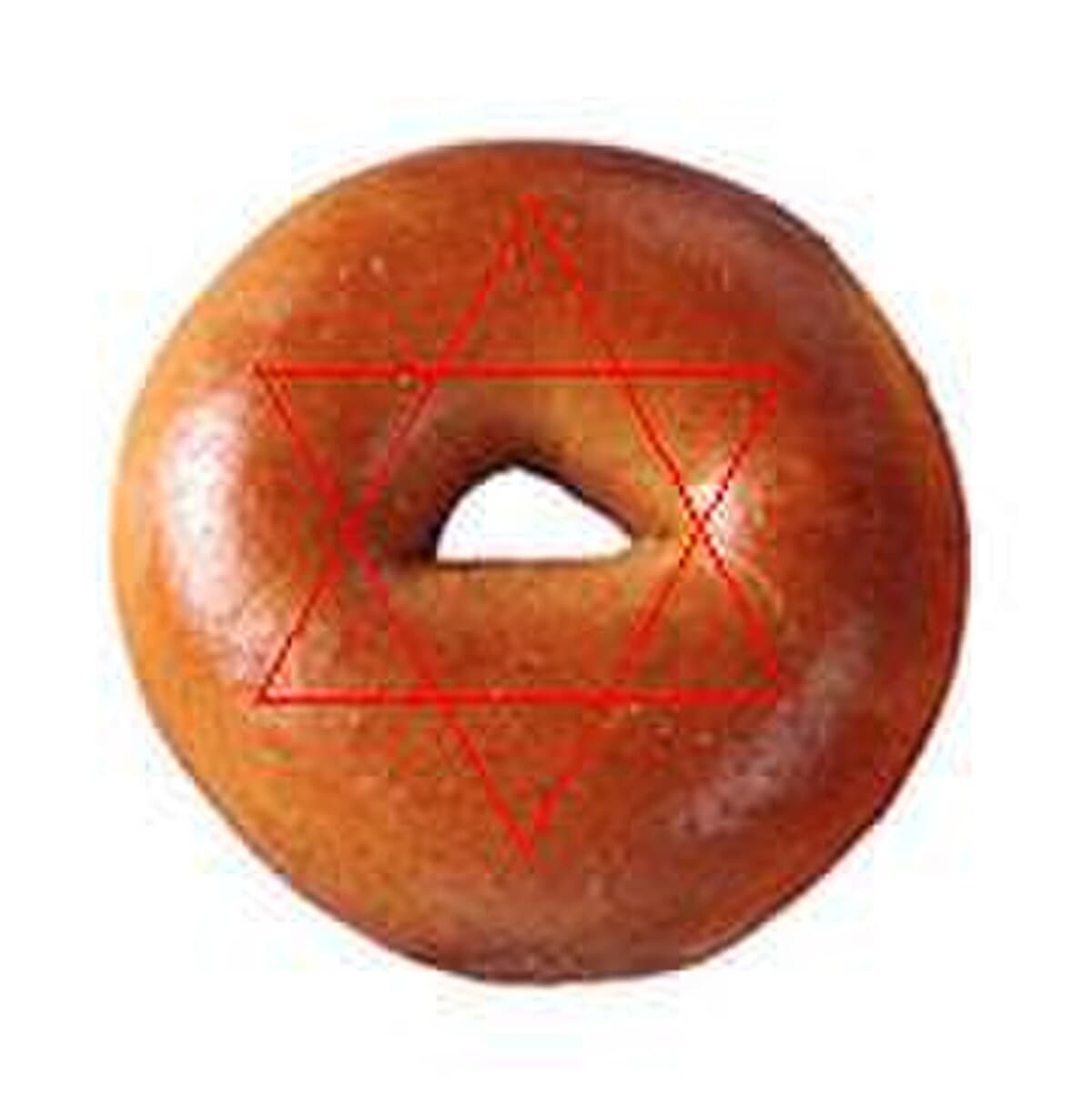
Bagels are far more than breakfast bread, they're a edible story of Jewish migration, survival, and pride spanning nearly 500 years. Born in Poland in the 16th century as humble ring-shaped dough, bagels traveled with Jewish communities across oceans and continents, becoming a symbol of cultural continuity, resourcefulness, and home. Today, a bagel represents both ancient tradition and modern identity, a daily way of wearing heritage.
The Polish Beginning: Where It All Started
The bagel's origin story begins in Poland, a country where Jewish communities had flourished for centuries. The first official documentation of the word itself comes from 1610, in community ordinances from Kraków, where "bajgiel" (from the Yiddish "beygal," derived from the German "beugel," meaning ring or bracelet) appears as a gift given to women after childbirth. This wasn't a casual mention, it was formal enough to codify in Jewish law, meaning the bagel held cultural weight from the start.
The bagel's physical form, a ring of boiled and baked dough, wasn't accidental. The distinctive method of boiling before baking may have had religious origins, possibly connected to kashruth practices or the Jewish relationship with bread. What mattered most was that the bagel was affordable, nourishing, and distinctly Jewish. It became a staple in Eastern European Jewish bakeries alongside challah, rye bread, and other foundational foods.
The circular shape itself carried meaning. In Jewish folk tradition, the unbroken ring symbolized wholeness, eternity, fertility, and protection. Bagels were served at circumcisions and to women in labor as protective talismans, not just nourishment but spiritual insurance. The bagel was baked intention made edible.
From Kraków to the Kitchen Table: What Bagels Meant
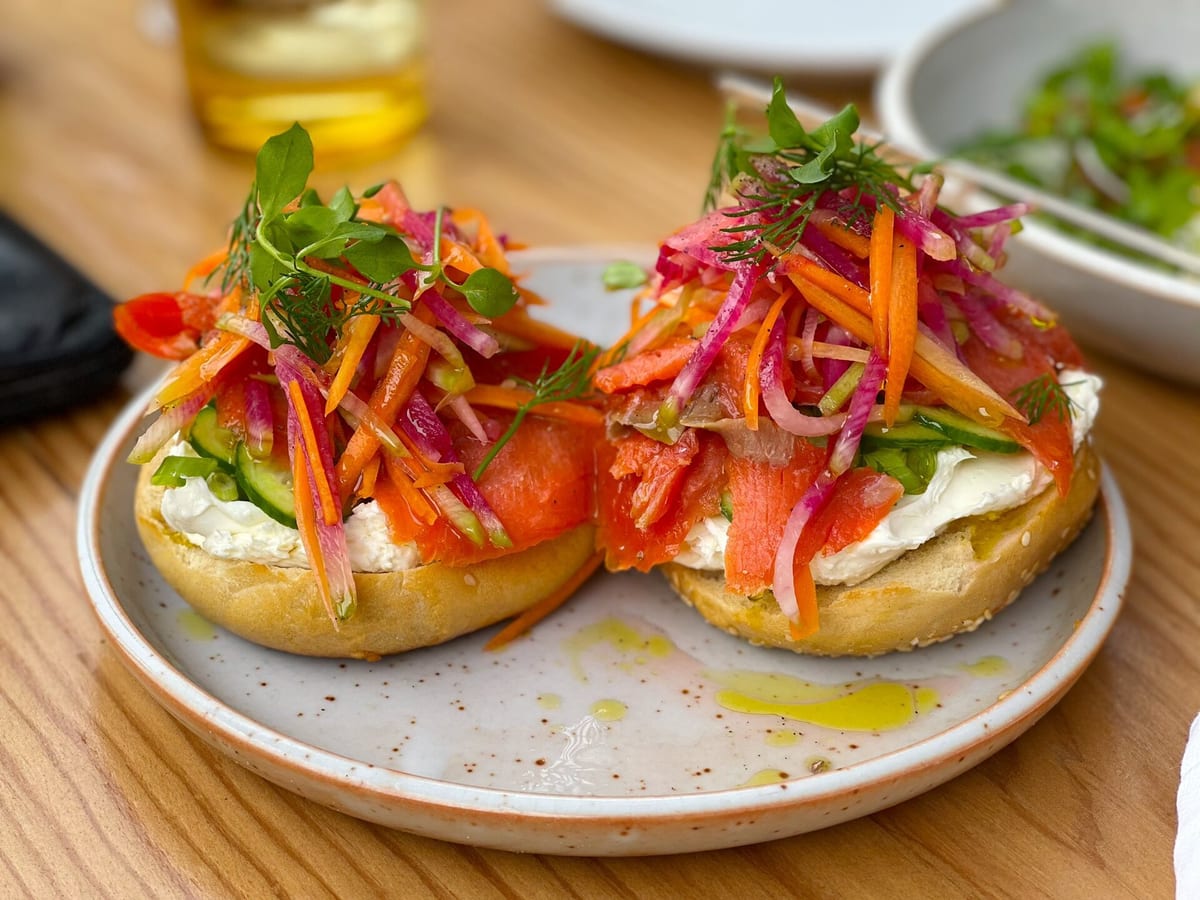 Photo: ="//commons.wikimedia.org/wiki/User:Missvain" title="User:Missvain", Wikimedia Commons (CC BY 4.0)
To understand bagels, you have to understand what food meant in Jewish Eastern Europe. In a world of pogroms, displacement, and poverty, food was stability. It was community. It was memory made edible and shareable.
Bagels fit perfectly into this role. They were cheap to make, could feed a family or a village, and belonged wholly to Jewish culture. Unlike bread, which appeared in neighboring communities too, the bagel was distinctly ours. The boiling technique set it apart. The shape set it apart. The name, in Yiddish, set it apart.
This wasn't abstract pride. This was survival. Jewish bakers controlled bagel production in their communities. Jewish families gathered around bagels. Bagels marked occasions, births, mourning, ordinary Thursday mornings. They were portable heritage, the kind you could carry in a bundle when you had to leave in a hurry.
The Great Migration: Bagels Cross the Ocean
Between the 1880s and the 1920s, millions of Jews fled Eastern Europe for America, driven by pogroms, forced military conscription, economic desperation, and the simple hope of building a life where they wouldn't be hunted. They brought their skills, their language (Yiddish), their religions, and their recipes. They brought bagels.
The earliest waves of immigrants settled in dense urban neighborhoods, New York's Lower East Side, neighborhoods in Boston, Philadelphia, and Baltimore. These were Yiddish-speaking enclaves where the old world was rebuilt in miniature. And wherever these communities landed, bagel bakeries followed. Not because bagels were exotic or trendy, but because they were home. They were Friday morning before Shabbat. They were the taste of mothers and grandmothers who had stayed behind.
By the turn of the 20th century, New York had become the bagel capital of America. Jewish bakers set up shop in the Lower East Side and beyond, working brutal hours to supply the demand. The bagel wasn't aspirational food, it was everyday food for people rebuilding their lives on minimal money. It was affordable, filling, and endlessly customizable. A bagel with a schmear of cream cheese or lox was luxury that cost pennies.
The Bagel Bakers Union and the Fight for Dignity
The story takes a turn that reveals the deeper meaning of bagels in Jewish immigrant life: the story of the International Bagel Bakers Union.
In 1907, Jewish bagel bakers in New York came together to form a union. They weren't just organizing around wages and hours (though those mattered). They were organizing around dignity and the right to thrive. At its peak, the union's power was remarkable, it controlled the production of nearly every bagel made in New York City. Bakers coordinated prices, set quality standards, and collectively refused exploitative working conditions.
The bagel industry itself was exploitative. Bakers worked before dawn, their hands in boiling water, their ovens roaring all day and night. Margins were thin. Competition was fierce. A unified union meant survival for hundreds of families.
The bagel, then, carries within it the history of Jewish labor resistance in America. Eating a New York bagel from a traditional bagel shop is, in a sense, honoring that fight, honoring the bakers who refused to accept that their labor could be endlessly devalued just because they were immigrants and Jews.
The Regional Variations: Bagels Claim Different Homes
As bagels spread across North America, they didn't stay uniform. Geography, climate, immigration patterns, and local preferences shaped distinct regional styles.
Montreal bagels are smaller, sweeter, denser, with a larger hole. They're boiled in honey-sweetened water and traditionally baked in wood-fired ovens, which gives them a slightly smoky flavor and crisp, sometimes charred exterior. The dough often includes egg yolk and oil, making the crumb tender and delicate. A Montreal bagel is a sweeter, crunchier experience, less filling but more delicate.
New York bagels are larger, chewier, heartier. They're boiled in salted water with a splash of malt syrup, then baked in conventional ovens. Without egg and oil, the crumb is denser, the chew more pronounced. A New York bagel is designed to hold an enormous shmear and last through your morning. It's practical. It's filling. It tastes like a long commute and someone giving you breakfast to sustain you.
These aren't better or worse, they're different solutions to the same inheritance. And the fact that both communities adapted the bagel in different ways is itself a story about Jewish diaspora: we take what's ours and make it our own, again and again, in each place we land.
Toronto, Los Angeles, and other communities developed their own preferences too. Some preferred Montreal style, some New York. Some invented hybrid approaches. The beauty of the bagel was its flexibility. It could travel. It could adapt. It could belong to a Polish shtetl and a Montreal bagel shop and a New York deli and still be itself.
From Immigrant Food to American Icon: The Bagel Goes Mainstream
For much of the 20th century, bagels remained food of Jewish neighborhoods. In 1950s Brooklyn, you knew exactly where to get a real bagel. In Gentile neighborhoods in the same city, bagels were exotic or unknown.
But by the 1960s and 1970s, bagels began to escape the Jewish neighborhood boundaries. Supermarkets started selling packaged bagels. The bagel's appeal was broader than its origin. People loved it whether or not they were Jewish. Non-Jewish immigrants and their kids discovered bagels. Health-conscious Americans embraced them as somehow wholesome (that boiling gave them a certain gravitas). The bagel became generically American.
This had benefits and costs. The benefit: bagels became available everywhere. More people could enjoy them. The cost: a lot of bagels stopped being good. Mass production meant shortcuts. Freezing meant texture loss. The authentic bagel, boiled in small batches, baked with care, eaten within hours, became rare. Most Americans grew up eating frozen supermarket bagels and thinking that was the standard.
But the good bagel survived. In cities with intact bagel traditions (New York, Montreal, Toronto), the old-school bagel shops persisted, stubbornly superior, refusing to modernize just to scale up. These shops became temples of bagel fidelity, places where you could still taste the Kraków 1610s, the Lower East Side 1910s, and authentic Jewish continuity.
Beyond the Jewish Community: Bagels Today
Today, bagels are truly global. You can get bagels in London, Tokyo, Tel Aviv, and Sydney. They're no longer specifically Jewish food, though they remain rooted in Jewish history.
In Israel, bagels exist in a different context. Israeli "beigale" often comes topped with sabich (roasted vegetable spread) or labneh (strained yogurt), folding Middle Eastern flavors into the Polish-Jewish form. This is the diaspora story again: the form travels, the flavors localize, something new is created that's still rooted in what came before.
The bagel also became part of Jewish-American identity in a specific way. For diaspora Jews, especially those several generations removed from Eastern Europe, the bagel became a way of touching the past. Eating a real New York bagel or Montreal bagel became a mini-pilgrimage, a way of saying: I carry this history. This matters to me. My breakfast is my heritage.
And it works. Because the bagel, in all its variations, genuinely connects you to Jewish history: to bakers in Kraków in 1610, to workers in the Lower East Side in 1907, to your great-grandmother's Friday morning, to the resourcefulness that kept Jewish communities alive through displacement and hardship.
Pride in Every Bite: Bagels as Living Heritage
The bagel matters because it's concrete. Unlike some cultural markers that require explanation, a bagel is a bagel. You can hold it. You can eat it. You can share it. And when you do, you're participating in Jewish continuity, not as a duty, but as pleasure.
This is what heritage truly is: not something distant or formal, but something you live with, daily. A bagel with cream cheese and lox is heritage on a Saturday morning. Arguing about Montreal versus New York bagels is heritage as family debate. Learning to make a real bagel at home is heritage as skill and gift. Buying bagels from a Jewish-owned bagel shop is heritage as community economics.
The bagel is also democratic heritage. You don't need special clothing or formal knowledge to participate. You don't need to be a scholar or particularly observant. You just need to want breakfast and an interest in where it came from. For many diaspora Jews, the bagel is the most accessible, most everyday way of staying rooted in culture while living thoroughly modern, contemporary lives. You can wear modern clothes and eat bagels. You can work a secular job and eat bagels. You can live anywhere and understand your heritage through bagels.
For those looking to wear their Jewish pride daily, in ways both playful and profound, the bagel offers a model: stay true to your roots while adapting to where you are. Keep the form, adjust the flavors. Honor the history while living in the present. And do it all with the confidence that comes from knowing your ancestors figured this out centuries ago.
FAQ
What does the name "bagel" actually mean? The word "bagel" comes from the Yiddish "beygal," derived from the German word "beugel," meaning ring or bracelet. The bagel's circular shape is fundamental to its name and its symbolism in Jewish culture.
Is the bagel-as-childbirth-gift story true? Yes. The first official written mention of bagels, from 1610 in Kraków Jewish community ordinances, notes bagels given to women after childbirth. This practice was rooted in folk tradition, the circular shape symbolized protection, wholeness, and the continuation of life.
Why do Montreal and New York bagels taste so different? Montreal bagels are boiled in honey-sweetened water and baked in wood-fired ovens, making them smaller, sweeter, and crunchier. New York bagels are boiled in salted water and baked conventionally, resulting in larger, chewier, more filling bagels. The difference reflects how immigrant communities adapted the recipe to their new homes.
When did bagels arrive in America? The major wave of bagel immigration corresponded with Eastern European Jewish immigration between the 1880s and 1920s. Bagel bakeries were established on the Lower East Side of New York by the early 1900s, and by 1907, the International Bagel Bakers Union had formed.
Did someone invent the bagel shape to commemorate a Polish king? No. The popular story that bagels were created in the shape of a stirrup to honor King John III Sobieski's victory at the Battle of Vienna in 1683 is a myth. Bagels were documented in Kraków decades before that event, and the stirrup shape story was likely created much later as a folklore origin narrative.
How did bagels become mainstream beyond Jewish communities? By the 1960s and 1970s, improved distribution, supermarket availability, and broader appeal helped bagels cross from ethnic neighborhoods into mainstream American food culture. Today, bagels are enjoyed globally, though traditional bagel shops in cities with strong Jewish histories still maintain authentic boiling and baking methods.


