Yiddish Words Worth Knowing (and Wearing)
Yiddish is the thousand-year-old language of Ashkenazi Jews, and it is very much alive: English absorbed dozens of its words (chutzpah, schlep, klutz, glitz), Duolingo added it as course number forty in 2021, and a Yiddish-language Fiddler on the Roof ran in New York for roughly two years. This glossary covers the Yiddish words English already adopted, the ones worth reclaiming, and why the mameloshn is having a genuine revival.
We sell shirts with Yiddish on them, so we'll admit our bias up front: we think these words belong in your mouth and on your chest. But the case for Yiddish doesn't need a sales pitch. It's simply one of the great languages of feeling. English gives you "annoyed"; Yiddish gives you a word for the specific pleasure of complaining about being annoyed. English gives you "proud"; Yiddish gives you a word for pride so intense you might need to sit down. Once you know these words, you can't unknow them, and honestly, why would you want to?
A Very Short History of a Very Stubborn Language
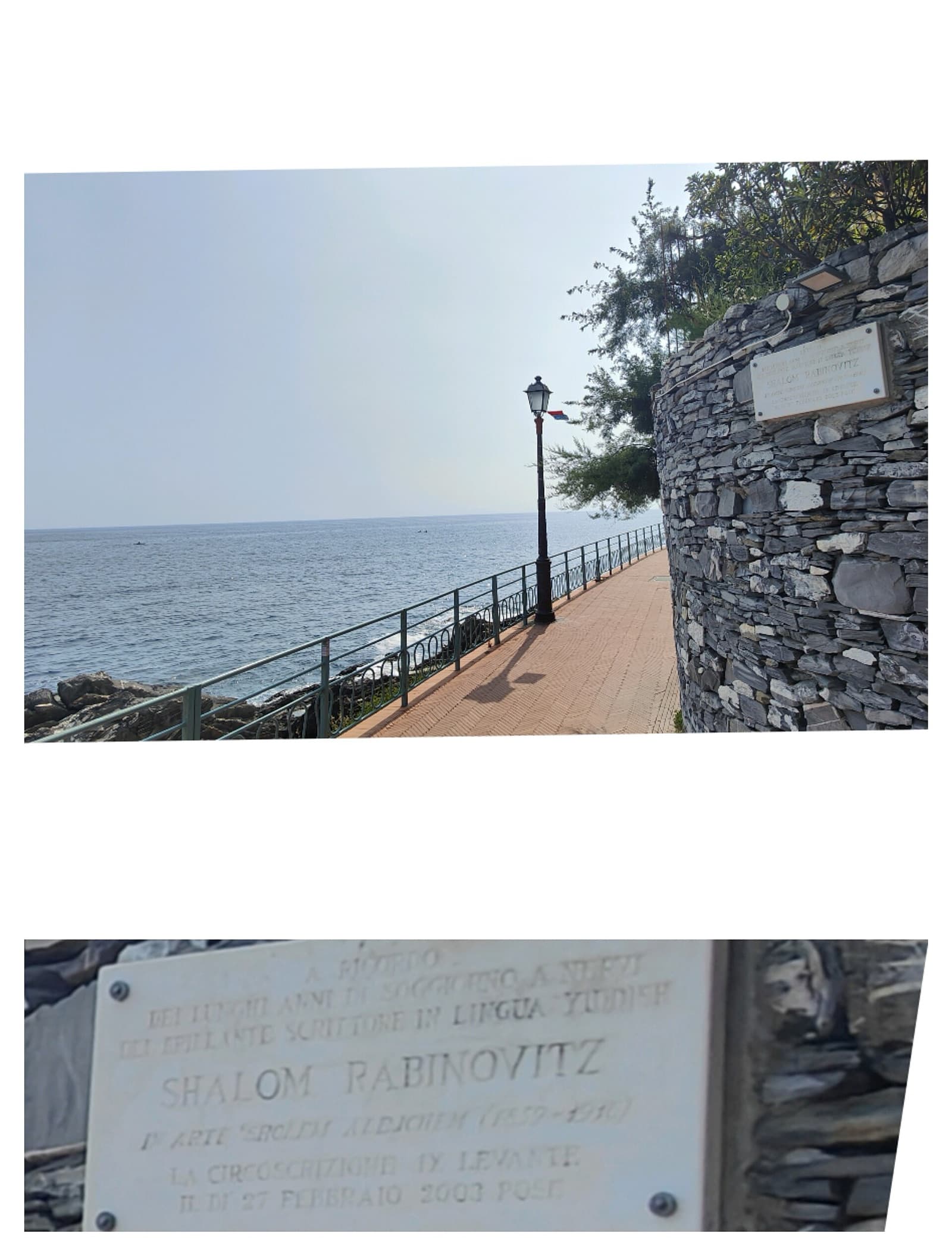
Yiddish began over a thousand years ago in the Rhineland, where Jewish communities fused medieval German with Hebrew, Aramaic, and later Slavic languages, all written in the Hebrew alphabet. By the early twentieth century it was the daily language of the majority of the world's Jews, with an estimated eleven million speakers, a thriving press, a literature that produced Sholem Aleichem and Isaac Bashevis Singer (who won the Nobel Prize writing in it), and a theater district on New York's Second Avenue that rivaled Broadway.
Then the twentieth century did its worst. The Holocaust murdered most of the world's Yiddish speakers. Assimilation in America and the primacy of Hebrew in Israel did much of the rest. For decades, Yiddish was written off as a dying language, the punchline-flavored speech of grandparents.
The grandparents, it turns out, got the last laugh. Yiddish never actually left; it went underground into English, into music, into the way Jewish families talk at the dinner table. And in the last two decades it has come roaring back into the open. More on that below. First, the words.
The Words English Couldn't Resist
These are the Yiddish words that jumped the fence into everyday English. You've heard them. You may not have known you were speaking Yiddish.
Chutzpah (חוצפּה, khutspe) — Audacity, nerve, gall, with a grudging note of admiration. The classic definition: a person who kills both parents and then pleads for mercy as an orphan has chutzpah. In a sentence: "She emailed the CEO directly on her first day. That's chutzpah." It's our favorite word for a reason; we put it on our homepage. There's a longer love letter to it at /meaning/chutzpah.
Mensch (מענטש, mentsh) — Literally "person," but in Yiddish it means a person of integrity: someone decent, reliable, and kind when no one is watching. There is no higher compliment. "He drove two hours to help me move a couch. A real mensch."
Schlep (שלעפּן, shlepn) — To drag or haul something heavy, or yourself, somewhere you'd rather not go. "I schlepped three suitcases through the airport." Also a noun: "It's a schlep from Brooklyn."
Kvetch (קוועטשן, kvetshn) — To complain, at length, with feeling, often recreationally. "Stop kvetching about the weather and put on a coat." A kvetch is also the person doing it.
Nosh (נאַשן, nashn) — To snack, to nibble, to eat a little something between meals that somehow becomes a whole meal. "Come in, nosh on something, you look thin."
Schmooze (שמועסן, shmuesn) — Originally just "to chat," from the Hebrew shmuot, "things heard." English gave it a networking spin, but at heart it's warm, unhurried conversation. "We schmoozed at the kiddush for an hour."
Klutz (קלאָץ, klots) — Literally a wooden block; figuratively, a person who trips over one. "I dropped the kugel. I'm such a klutz."
Maven (מבֿין, meyvn) — An expert, a connoisseur, from the Hebrew for "one who understands." "Ask Rachel, she's the bagel maven."
Spiel (שפּיל, shpil) — Literally "play" or "game"; in English, a practiced pitch or monologue. "He gave me the whole spiel about the timeshare."
Tchotchke (צאַצקע, tsatske) — A knickknack, a trinket, a little decorative thing with no purpose except delight. Your bubbe's shelf is full of them.
Glitch (גליטש, glitsh) — From the Yiddish for a slip or slide. Yes, the word your IT department uses all day is Yiddish. You're welcome, Silicon Valley.
The Words Worth Reclaiming
These are the ones English hasn't fully adopted yet, which is a shame, because they name feelings English speakers have every day and can't express.
Kvell (קוועלן, kveln) — To swell with pride and joy, usually over someone you love. Watching your kid read from the Torah, seeing your best friend get the promotion. "I sat in the back row and kvelled through the whole recital." English has no verb for this. It should.
Naches (נחת, nakhes) — The deep, glowing satisfaction you derive from the achievements of your children or people you've nurtured. Kvelling is the verb; naches is the substance. "May you have naches from your grandchildren" is one of the great Jewish blessings. Grandparents run on it the way cars run on gas.
Bashert (באַשערט) — Destined, meant to be. Most famously your destined soulmate, but also the parking spot that opens up exactly when you arrive. "We met because we both missed the same train. Bashert." It's one of the most romantic words in any language, and we've written more about it at /meaning/bashert.
Bubbe and Zayde (באָבע / זיידע, bobe / zeyde) — Grandmother and grandfather. But "grandmother" doesn't carry the aroma of chicken soup, the unsolicited sweater, the firm conviction that you are the most brilliant child ever born. Bubbe does.
Simcha (שׂמחה, simkhe) — A joyous occasion: a wedding, a bris, a bar or bat mitzvah. From the Hebrew for joy. "We'll see you at the simcha!" Also used for the joy itself. A life measured in simchas is a life well lived.
Heimish (היימיש, heymish) — Homey, cozy, unpretentious, warm. A heimish restaurant is one where the owner knows your order. A heimish person makes you feel like family within five minutes.
Mishpocha (משפּחה, mishpokhe) — Family, in the widest possible sense: blood relatives, in-laws, the cousins of cousins, the friends who might as well be. "Sit down, you're mishpocha."
Verklempt (פֿאַרקלעמט, farklemt) — Choked up, overcome with emotion, unable to speak. Mike Myers made it famous on Saturday Night Live's "Coffee Talk," but the word is the real deal. "She saw the surprise party and got completely verklempt."
Shayna punim (שיינע פּנים, sheyne ponem) — "Pretty face," the standard-issue term of endearment for babies, grandchildren, and anyone a bubbe has decided to love. Deployed while cheeks are being pinched.
Plotz (פּלאַצן, platsn) — To burst, collapse, or keel over from strong emotion, good or bad. "When she told me the price, I nearly plotzed."
Bubkes (באָבקעס) — Nothing, zilch, an insultingly small amount. Literally "goat droppings," which tells you how Yiddish feels about being shortchanged. "I worked on that deal for six months and got bubkes."
Chochem (חכם, khokhem) — A wise person, from the Hebrew chacham. Used sincerely for the genuinely brilliant, and with lethal irony for the person who just locked the keys in the car. Yiddish loves a word that can hug you or roast you depending on the eyebrows.
Oy vey (אוי וויי) — Technically "oh, woe," practically a full emotional operating system. There is no situation, from a stubbed toe to a global crisis, that oy vey cannot meet at the appropriate scale. Its extended form, oy vey iz mir ("woe is me"), is reserved for when the brisket burns.
A Quick Word on Spelling
You'll see these words spelled six different ways because Yiddish is written in the Hebrew alphabet, and every English rendering is a transliteration. The YIVO Institute for Jewish Research maintains the scholarly standard (that's why we noted khutspe and mentsh above), but common English spellings like "chutzpah" and "mensch" arrived through German-influenced conventions and are completely legitimate. Our rule: pick a recognized spelling, verify it, and never guess. We hold our shirts to the same standard, because there is nothing less heimish than a typo in your heritage.
The Revival Is Real
Here's the part that makes us kvell. Yiddish isn't just surviving as seasoning in English; people are learning the whole language again, in numbers nobody predicted.
Duolingo made it official
In April 2021, Duolingo launched Yiddish as its fortieth language course, built with contributors including Hasidic speakers from Brooklyn, and about 9,500 learners had signed up before it even went live. The pandemic years supercharged the trend: the Workers Circle reported a 65 percent jump in Yiddish class enrollment, and YIVO's famed Uriel Weinreich Summer Program saw attendance climb 60 percent. Somewhere, eleven million ancestors are exchanging satisfied nods.
Klezmer never stopped dancing
The klezmer revival began in the 1970s, when young musicians like Henry Sapoznik and Hankus Netsky (who founded the Klezmer Conservatory Band in 1980) dug up old 78s and re-learned the wedding music of Eastern Europe. Today bands like the Klezmatics, who won a Grammy for their album of Woody Guthrie lyrics set to music, pack venues worldwide, and klezmer festivals draw crowds from Krakow to Montreal. The clarinet, it turns out, was just warming up.
Fiddler, in the original-ish
In 2018, the National Yiddish Theatre Folksbiene staged Fidler Afn Dakh, Shraga Friedman's 1965 Yiddish translation of Fiddler on the Roof, directed by Joel Grey. A planned six-week run kept extending until it had played New York for about two years, with Steven Skybell winning a Lucille Lortel Award for his Tevye. Audiences who spoke no Yiddish wept anyway. That's the thing about the mameloshn: it gets you even before you understand it.
Wearing Your Words
Language lives where it's used, and a shirt is a sentence you wear all day. When you walk around in a Yiddish pun, three things happen: strangers smile, landsmen find you ("wait, you know what that means?"), and a thousand-year-old language gets one more day in the sun. That's the whole idea behind our Yiddish Yarns collection: real words, spelled correctly, worn with pride. Every design is printed on demand, so nothing sits in a warehouse waiting to be pulped, and ten percent of our net profits goes to tzedakah. Your bubbe would approve of at least two of those three things, and she'd pretend to disapprove of the third while telling all her friends.
FAQ
Is Yiddish the same as Hebrew?
No. Hebrew is a Semitic language and the language of the Torah and modern Israel; Yiddish is a Germanic language written in the Hebrew alphabet, with a large helping of Hebrew, Aramaic, and Slavic vocabulary. They're mishpocha, not twins.
Is Yiddish a dying language?
It's endangered but genuinely rebounding. Hasidic communities have kept it as a daily first language all along, hundreds of thousands strong, and secular learners are flooding back through Duolingo, YIVO, the Workers Circle, and university programs. Endangered, yes. Dying? Don't tell the language that.
What's the difference between kvelling and naches?
Kvell is the verb: you kvell, actively, visibly, sometimes embarrassingly. Naches is the noun: the deep satisfaction itself, classically the kind you get from children and grandchildren. You kvell because you're full of naches.
How do I use these words without sounding like I'm performing?
Use the ones that name something you actually feel, and don't over-explain them (the fastest way to kill a Yiddish word is to footnote it mid-sentence). Start with mensch, schlep, and kvetch, which English already understands, and let the rest follow naturally.
What does "mameloshn" mean?
Literally "mother tongue" (mame + loshn). It's the affectionate name Yiddish speakers use for the language itself, and it tells you everything: this is the language of home, of the kitchen, of love delivered slightly too loudly.
Browse the Yiddish Yarns collection and find the word that's been yours all along.


