
What to Wear to a Jewish Wedding: A Guest's Guide
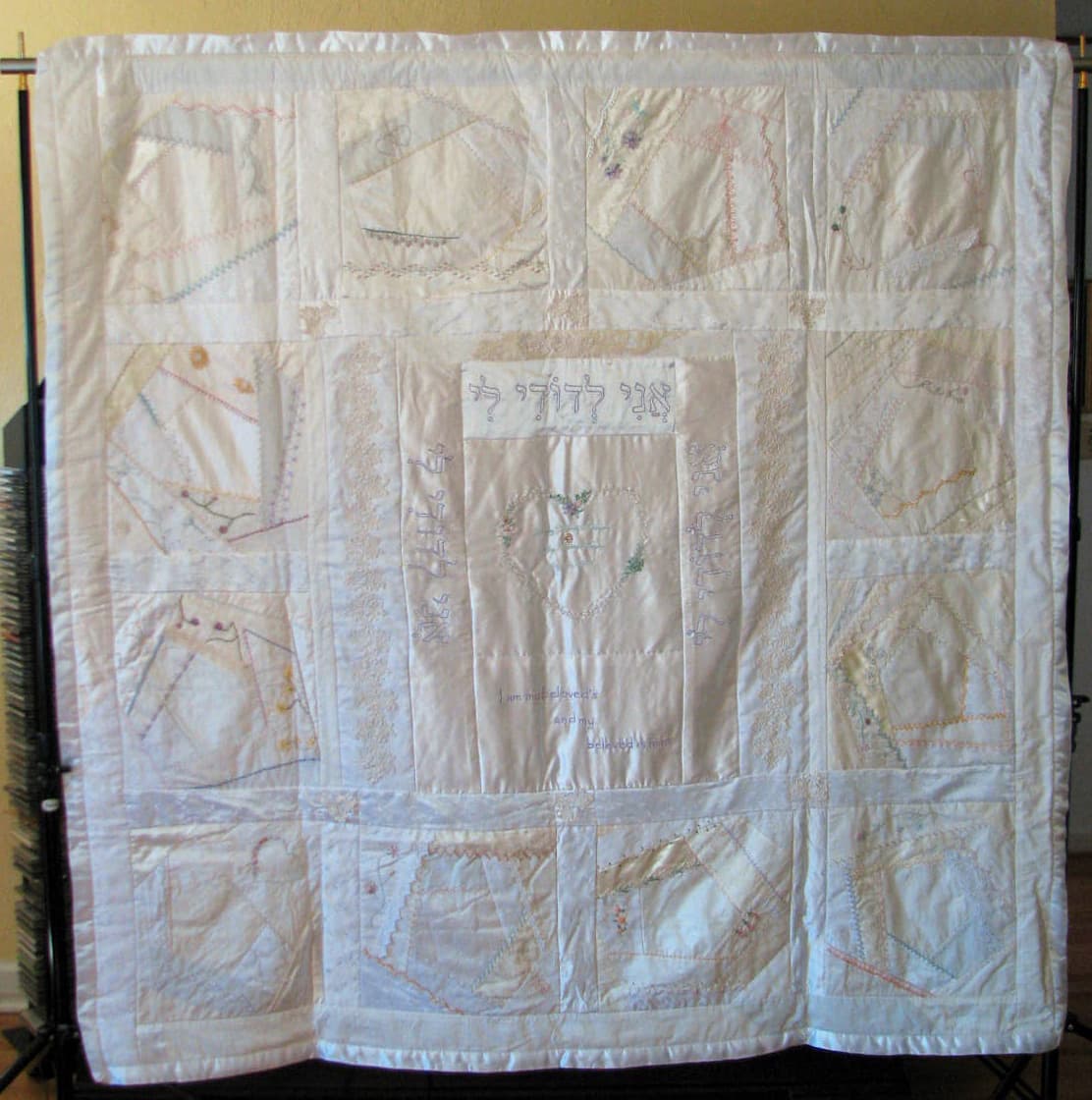
What you wear to a Jewish wedding depends on one thing above all: which kind of Jewish wedding it is. At an Orthodox celebration, guests dress modestly (covered shoulders and knees for women, suits for men); at Conservative and Reform weddings, standard formal wedding attire is usually fine, with a little extra coverage if the ceremony is in a synagogue. When in doubt, dress one notch more formal and one notch more covered than you think you need, and say yes to the kippah at the door.
That's the short version. The long version is more fun, because a Jewish wedding is one of the great parties of the human species, and showing up dressed right is only half the assignment. The other half is knowing what you're watching when the glass shatters and why forty people are suddenly hoisting the bride toward the ceiling on a chair. We've got you on both counts.
First, Decode the Invitation
The invitation is doing more work than you think. Read it like a detective.
The venue tells you the register. A synagogue ceremony means more coverage during the ceremony itself, whatever the denomination. A hotel ballroom at 7 p.m. means formal. A vineyard at 4 p.m. means garden-party elegant. An invitation that says "black tie" means black tie; Jewish weddings did not get the memo that formalwear is dead, and we're proud of that.
The timing tells you the community. A Sunday afternoon or weekday evening wedding is common across all denominations. What you will almost never see is a wedding on Friday night or Saturday before sundown, because weddings aren't held on Shabbat. A Saturday night wedding that starts "one hour after sundown" is a strong signal you're headed to an Orthodox simcha, and the party will run late. Caffeinate accordingly.
The Hebrew tells you plenty. An invitation with Hebrew text, a reference to separate seating, or a line like "modest dress requested" is telling you exactly what to expect. Believe it. Nobody writes "modest dress requested" as a decorative flourish.
And when all else fails, ask. Text the couple, a member of the wedding party, or that one cousin who's been to a hundred of these. "What's the dress vibe?" is a completely normal question, and every couple would rather answer it than watch you sweat through the ceremony in the wrong outfit. If you've been to a bar mitzvah in the same community, the calculus is similar, and our guide to what to wear to a bar mitzvah covers that ground too.
Orthodox, Conservative, Reform: What Each One Expects
Here's the honest breakdown, denomination by denomination. These are patterns, not laws of physics; every community and every couple is a little different.
Orthodox weddings
Modesty (tzniut, if you want the word) is the organizing principle. For women, that generally means: shoulders and elbows covered, necklines that stay high, hemlines at the knee or below, and dresses or skirts rather than pants. A chic midi dress with sleeves, or a sleeveless dress with a proper jacket or shrug that stays on, solves the whole equation. Married Orthodox women often cover their hair; as a guest, you are not expected to unless you follow that practice yourself.
For men: a suit and tie. Dark is standard. A kippah is worn throughout, and one will be provided if you don't have your own.
Two more things worth knowing so nothing surprises you. Many Orthodox weddings have separate seating for men and women during the ceremony, and often separate dancing at the reception, sometimes with a mechitza (divider) down the middle of the dance floor. This is not a comment on you; it's how the community celebrates. The dancing on both sides, for the record, goes hard.
Conservative weddings
Think dressy synagogue standards. Standard formal wedding attire works: cocktail dresses, suits, gowns if the invitation calls for them. If the ceremony is in the sanctuary, women may want a wrap or jacket for covered shoulders during the ceremony itself; it can come off at the reception. Men should expect to wear a kippah during the ceremony, and usually there's a basket of them at the door, often printed with the couple's names and the date, which makes a genuinely lovely souvenir.
Reform weddings
Dress as you would for any formal wedding of the same time and venue. Kippot are typically available and optional; wearing one is always a respectful choice and never a wrong one. Reform weddings run the full aesthetic range from beach ceremony to black-tie ballroom, so lean on the invitation and venue for your cues.
The Kippah Question, Answered Once and for All
If you're not Jewish, or you're Jewish but don't usually wear one, here is everything you need to know.
Take one from the basket. Put it on the crown of your head. If it slides (and on smooth hair, it will), a bobby pin or the little clips sometimes provided will hold it; ask literally anyone nearby for help and you'll make a friend. Wear it for the ceremony at minimum; at Orthodox weddings, men keep it on for the whole event.
Wearing a kippah as a guest is a gesture of respect for the space and the moment, not a declaration of faith. No one will assume anything about your religion. What people will notice, warmly, is that you bothered. And yes, women guests at most non-Orthodox weddings will see women wearing kippot too; at egalitarian congregations it's common.
One small piece of chutzpah from us: the couple's custom kippot are meant to be kept. Take yours home. It goes in the drawer with the wedding matchbooks and becomes a tiny archive of every simcha you've ever danced at.
What NOT to Wear
Every guide needs this section, so let's make it count.
Skip white, ivory, and cream. Same rule as every other wedding: the bride owns that palette. At a Jewish wedding there's a second reason, which is that the groom in many Ashkenazi communities wears a white robe called a kittel under the chuppah. The whites are spoken for.
Skip anything you'd wear to a club. Even at a Reform wedding where the dress code is relaxed, a wedding with a religious ceremony is not the venue for a backless mini. You can be stunning and covered at the same time; Jewish fashion has been proving this for roughly three thousand years.
Skip the stilettos you can't dance in. This is the most practical advice in this entire article. The hora takes no prisoners. You will be pulled into a circle moving at surprising speed, and your footwear needs to be up to the job. Block heels, dressy flats, or the classic heels-until-the-hora-then-flats maneuver are all honorable strategies.
Skip strong perfume and clanking statement pieces if it's an Orthodox crowd in a small shul; keep the drama in the tailoring instead. And leave the tallit at home unless you'd wear one to services; a wedding guest doesn't need one.
Don't wear your politics. A wedding is a night off from everything except joy.
Dressing for the Season and the Venue
A June wedding under an outdoor chuppah and a December wedding in a Brooklyn ballroom are different sports.
Summer and outdoor weddings: natural fabrics are your friend. Linen blends, cotton, breathable crepe. If modesty standards apply, look for lightweight long sleeves rather than layering a jacket over a sundress in ninety-degree heat; you'll look more polished and suffer less. Outdoor chuppahs often mean grass, so wedge or block heels beat spikes.
Winter weddings: velvet, wool crepe, heavier satins. Bring a real coat; the photos outside the venue happen whether you're dressed for them or not.
Synagogue ceremonies, any season: a wrap or tailored jacket is the Swiss Army knife of Jewish wedding style. It covers shoulders in the sanctuary, comes off at the party, and hides the inevitable moment when the hora relocates your hairstyle.
Israel weddings deserve their own line: dress codes skew dramatically more casual than American ones. It is genuinely normal to see guests in sundresses and sandals at a Tel Aviv wedding. If you're flying in for one, ask your hosts, then believe their answer even though it sounds impossible.
The Traditions You'll Witness (So You're In on It)
You don't need a degree in Jewish liturgy to be a great guest, but knowing what you're watching turns a beautiful ceremony into a moving one.
The chuppah
The wedding canopy: four poles, a cloth roof, sometimes a family tallit stretched overhead. It represents the home the couple will build, open on all four sides the way Abraham and Sarah's tent was said to be open to guests from every direction. When the couple stands beneath it, they're standing in the first draft of their household. Everything else at the wedding radiates out from this.
The ketubah and the veiling
Before or during the ceremony you may see the signing of the ketubah, the marriage contract, often a genuinely gorgeous piece of art the couple will hang in their home. At many weddings there's also the badeken, where the groom veils the bride, a tradition that traces back to Jacob, who famously did not check and married the wrong sister. We learn from our ancestors, including from their mistakes.
The rings and the seven blessings
Under the chuppah, the couple exchanges rings and the Sheva Brachot, seven blessings, are sung or recited, often by a parade of honored friends and relatives. You'll also see the bride (or both partners, in many communities) circle the other, traditionally seven times. Layers of meaning have been proposed over the centuries; the simplest one is that they're drawing the boundary of a new world with each other at the center. This is also the moment we'd point to when people ask what bashert means; there's a fuller story behind the idea of bashert, but the shorthand is "the one you were meant to find," and under the chuppah it stops being an abstraction.
Breaking the glass
At the very end of the ceremony, a wrapped glass is placed on the ground and stomped flat, traditionally by the groom, increasingly by either or both partners. The oldest explanation is that even at our most joyful moment, we remember the destruction of the Temple in Jerusalem; joy in Jewish life always carries memory inside it. Other readings: love is fragile and must be protected, or the marriage should last until the glass is whole again, which is to say forever. When it shatters, everyone shouts "Mazel tov!" at full volume. You are warmly expected to join. This is not optional so much as it is irresistible.
The hora
At the reception, the music kicks up, hands link, and concentric circles of dancing guests form around the couple, who are then raised on chairs above the crowd, each holding one end of a napkin. This is the hora, and it is a full-contact expression of communal joy. You do not need to know the steps. There are barely steps. Grab a hand, move with the circle, and when someone gestures you toward the middle, go. The chair-lifting is handled by volunteers with more enthusiasm than technique, which is exactly as it should be.
Quick Answers Before You RSVP
Can I wear black to a Jewish wedding?
Yes, absolutely. Black is not a mourning color at Jewish weddings; in many Orthodox communities it's practically the uniform, and a black-tie Jewish wedding will be a sea of black suits and gowns. Wear it well and dance in it.
Do non-Jewish guests have to wear a kippah?
Male guests are generally expected to wear one during the ceremony at Orthodox and Conservative weddings, and it's a respectful choice anywhere kippot are offered. It signals respect for the space, not religious affiliation. Take one from the basket at the door; clips help.
Can women wear pants to a Jewish wedding?
At Reform and most Conservative weddings, yes; a sharp jumpsuit or tailored suit is a great look. At Orthodox weddings, women traditionally wear dresses or skirts that cover the knee, so save the trousers for a different simcha.
What do I do during the parts of the ceremony I don't know?
Stand when others stand, sit when they sit, and let the Hebrew wash over you; nobody expects you to read along. The only mandatory audience participation is shouting "Mazel tov!" when the glass breaks, and you'll feel it coming.
How long does a Jewish wedding last?
The ceremony itself usually runs twenty to forty-five minutes. The full event is another story: between the pre-ceremony reception (often with a full spread before you've even seen a chuppah), the ceremony, and dancing that does not believe in ending, budget four to six hours and wear the comfortable shoes we told you about.
Go Be a Great Guest
Here's the real secret, and it's the same one that animates everything we make: dressing for a Jewish wedding isn't about rules, it's about kavod, honor, for the couple and the community throwing open their doors to you. Get the coverage right, take the kippah, save your knees for the hora, and bring your whole heart. The rest is just tailoring.
And if you want to show up to the next simcha with a little heritage already woven into what you're wearing, come browse our Signature Kosher Couture collection and find the piece that dances as hard as you do.


