
What Is Tzedakah? Justice, Not Charity, and Why We Give 10%
Tzedakah is the Jewish practice of giving, but it does not translate to "charity." The word comes from tzedek, the Hebrew word for justice, and that root changes everything: in Jewish tradition, giving to those in need is a baseline obligation rather than an act of optional generosity, something you owe rather than something you bestow. It is also the reason Kosher Couture gives 10% of net profits to Jewish community charities. We didn't pick that up as a marketing gesture. We come from a tradition that considers the question "should a business give back?" already answered.
This is the value we would keep if we could only keep one. So let's do it justice, so to speak, and go all the way down: where the word comes from, how Maimonides ranked the ways of giving, why 10% specifically, how tzedakah shows up in ordinary Jewish life, and what our own program actually does with your purchase.
Tzedek, Tzedek: Why the Root Word Matters
"Charity" comes from the Latin caritas, meaning love or affection. Built into the English word is the idea that giving flows from the warmth of the giver's heart. Lovely, but fragile. Hearts have moods. Warmth runs out. If giving depends on feeling generous, the poor eat only when the rich are in a good mood.
Hebrew took a different road. Tzedakah shares its root with tzedek, justice, the same word in Deuteronomy's famous charge "tzedek, tzedek tirdof": justice, justice shall you pursue. Giving, in this framing, is a correction rather than an emotional overflow. If someone in your community lacks what they need to live with dignity, that is an injustice sitting on the community's books, and tzedakah is how the ledger gets balanced.
You can see the idea in the Torah's harvest laws. When you reap your field, Leviticus tells you to leave the corners for the poor. The poor who gather there aren't receiving a favor. They're collecting what already belongs to them. In this way of thinking, when you have more than you need and someone else lacks what they need, part of what you're holding was never fully yours. You're a steward, not an owner.
The practical consequences of this one word choice are enormous:
You give whether or not you feel moved. Obligations do not wait for inspiration. Jewish law expects giving from everyone, and traditionally even a person who receives tzedakah gives tzedakah. Nobody is too poor to owe justice, because giving is understood as something that dignifies the giver, too.
The recipient is not a beggar receiving favor. They are a person claiming what a just arrangement of the world would have given them already. That reframe protects the one thing charity so often costs people: dignity. Jewish law takes this seriously enough to make it a requirement. Giving in a way that humiliates the recipient, in front of a crowd or with a scowl, falls short of what tzedakah demands.
The giver isn't the hero. Because tzedakah is owed, the tradition doesn't make a fuss over the person who gives it. You're meeting an obligation, which keeps ego out of the transaction.
It is measurable. Feelings cannot be audited. Percentages can. Which is exactly why the tradition attached a number to it, and we will get to that number shortly.
If you want the short version to keep in your pocket: charity is what you give when you are moved. Tzedakah is what you owe because you are here. We wrote more on the word itself over at our meaning page for tzedakah, part of our little glossary of the words we build our shirts, and our company, around.
Maimonides' Ladder: Eight Levels of Giving, Ranked by a 12th-Century Genius
If tzedakah is a legal obligation, someone had to work out the fine print, and nobody did it more memorably than Moses Maimonides, the 12th-century philosopher and legal codifier known as the Rambam. In his Mishneh Torah, in the section on gifts to the poor (Hilchot Matnot Aniyim, chapter 10), he laid out eight levels of tzedakah, each greater than the one below it. Notice what his ranking rewards. It is not the size of the check.
Climbing from the bottom:
8. Giving grudgingly. You gave, but with a sour face. It counts, barely. Even Maimonides could not bring himself to give this level a compliment.
7. Giving less than you should, but pleasantly. The amount fell short; at least the manner did not.
6. Giving after being asked. The person had to come to you and say the words. The need was real before the request was; you just waited for it to knock.
5. Giving before being asked. You saw the need coming and met it, sparing someone the hardest sentence in any language: "I need help."
4. The recipient knows you; you don't know them. The giver's identity is known but the giver cannot single out who received. Half-shielded dignity.
3. You know the recipient; they don't know you. Anonymous to the receiver: they never have to lower their eyes when they pass you at shul.
2. Neither party knows the other. Fully anonymous giving, classically through a communal fund, where money moves from those who have to those who need with no one owing anyone a debt of gratitude.
1. Giving that ends the need. The highest level of all: strengthening a person's hand before they fall, through a gift, a loan, a partnership, or finding them work, so that they will never need to ask at all. Restoration beats relief. The best tzedakah, in other words, works toward its own obsolescence.
Look at the pattern. Every rung up the ladder buys the same thing: the recipient's dignity. Maimonides understood eight centuries ago what modern philanthropy keeps rediscovering in white papers, that how you give shapes whether the person on the other end stands taller or smaller afterward. It also explains why Jewish community organizations so often pair direct aid with job training and education. Direct aid isn't wrong. But helping someone never need it again is the top rung. Justice, done right, leaves no one bowing.
Ma'aser: The Reason It's 10% and Not a Round of Applause
The number attached to tzedakah has its own long history. Ma'aser means "a tenth," from the Hebrew eser, ten, and tithing shows up almost as early as the Torah does. Jacob, after his ladder dream at Beit El, vows to God: "of all that You give me, I will surely give a tenth" (Genesis 28:22). The Torah's agricultural laws later made tithes a structured system: portions of each harvest in the Land of Israel designated for the Levites, for Jerusalem, and, crucially, for the poor.
When Jewish life shifted from fields to wages, the instinct followed the money. There developed the practice known as ma'aser kesafim, tithing one's income, giving a tenth of earnings to those in need. Jewish tradition treats a tenth as the ordinary standard of giving, with a fifth considered generous, and classic sources caution against giving so much that you impoverish yourself. Which is very Jewish, honestly: even our generosity comes with a clause about not being a shlemiel about it.
The law also sets an order of priority, in widening circles: your own household first, then your town, then the wider Jewish community, then the world beyond. That order is practical stewardship, starting where you know the needs best and can reach them fastest. It never lets you stop at the first circle.
What matters most about ma'aser is not the arithmetic. It is the posture. A tithe declares that a fixed portion of what you earn was never really yours to keep. It arrives pre-committed. You do not decide each month whether to be generous; you decided once, structurally, and now justice is simply a line item. Generosity as a system, not a mood.
That posture is precisely what we borrowed when we built this company.
Tzedakah in Everyday Jewish Life
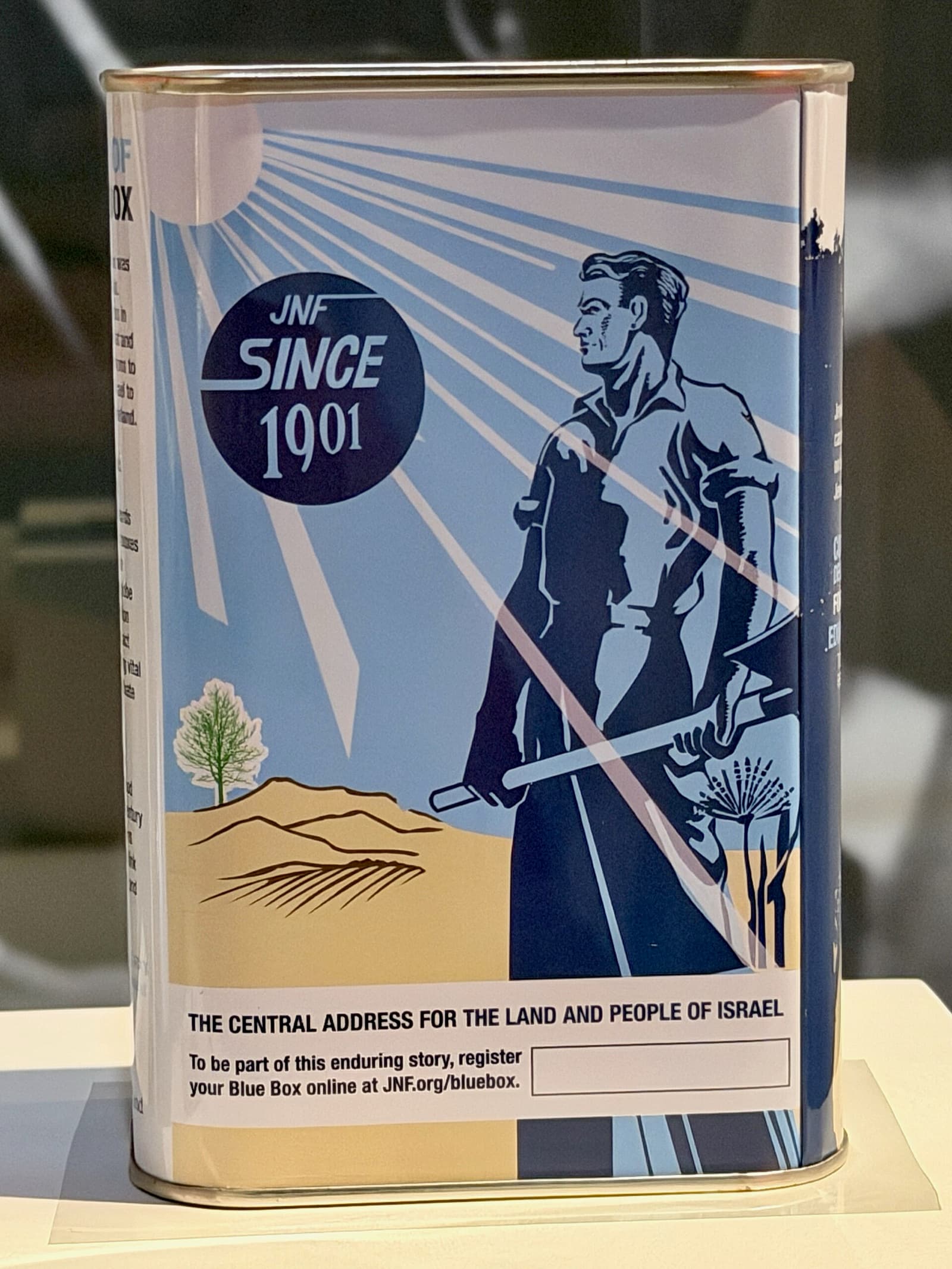
For all the legal architecture, tzedakah mostly lives in small, repeated habits. Many Jewish homes keep a tzedakah box where coins collect, often right in the kitchen, and a lot of children learn the idea by dropping in their own. Families let kids help choose which organizations to support, so giving becomes something you do because you're part of a community rather than something you do once you're rich. The modern version is an automatic donation that leaves your paycheck before you ever see it, which is ma'aser logic with a direct deposit.
The spirit reaches past money, too. Teaching someone a skill, lending to someone starting a business, helping someone find a job: all of it points toward the top of Maimonides' ladder. Bringing a meal to a friend in mourning, or walking a stranger an extra block to find their way, belongs to the same instinct.
The holidays turn the volume up. Passover is a season of gathering, and the tradition insists that no one gets left out, which means making sure the poor in your community have what they need for the holiday before your own seder begins. The giving is part of the celebration itself.
And at the community scale, the infrastructure has grown up around the same old principle: federation giving days, synagogue tzedakah committees, communal funds that distribute to effective causes. When everyone carries the obligation, everyone has a stake in everyone else. You might be the giver today and the one in need tomorrow, and the system is built so that neither role comes with shame. That idea, that people owe each other a floor no one falls below, has rippled well beyond Jewish communities into how the wider world thinks about justice and mutual aid.
Tikkun Olam: Repairing a World That Arrives Unfinished
One more phrase belongs in this story: tikkun olam, "repair of the world." You have probably heard it, since it has become shorthand for Jewish social action, but its roots run deep. It appears in the Aleinu prayer, recited at every traditional service, in the hope l'takken olam, to perfect the world. The rabbis of the Mishnah used the phrase for legal enactments made mipnei tikkun olam, for the sake of the world's good order. Centuries later, the Kabbalists of Safed, following Rabbi Isaac Luria, gave it a mystical frame: a world containing scattered divine sparks, with humanity's task to gather and restore them, act by act.
Three eras, one shared premise: the world does not arrive finished. It arrives as a project, and you are on the crew. Tzedakah is one of the primary tools in the kit. Every act of giving is a small repair, a spark returned to its place, a corner of the ledger balanced.
We find this genuinely moving, and also genuinely useful, because it answers the cynic's question: what difference does one small business's ten percent make? The tikkun olam answer is that the world is repaired exactly that way and no other way. Small acts, accumulated, on purpose.
How Our 10% Actually Works (Tzedakah Time)
So here is what all of this looks like when it takes the form of a t-shirt company.
The commitment: 10% of net profits goes to Jewish community charities. Not a rounding error, not a "portion of proceeds" vague enough to mean anything. A tenth, the ma'aser standard, built into how the business runs. It comes off the top before anyone here is deciding what to do with a good month. That is the entire point of a tithe: the decision was made before the money existed.
The current featured charity: American Friends of Magen David Adom (AFMDA). AFMDA is the U.S. fundraising organization supporting Magen David Adom, Israel's national emergency medical service. MDA's professionals and thousands of trained volunteers run the country's ambulance and emergency response network, and its national blood services supply the overwhelming majority of the blood needs of Israel's hospitals as well as the Israel Defense Forces. When minutes decide outcomes, MDA is who shows up. We chose them first because emergency medicine is about as close as modern life gets to the top of Maimonides' ladder: help that arrives before you have to ask twice.
A growing stable, not a fixed rotation. Over time, the program supports a widening circle of Jewish community organizations. We deliberately have not locked ourselves into a rigid schedule of swaps, because we would rather choose recipients thoughtfully than punctually. What we do commit to is transparency: we tell you where the money went, plainly, on our Tzedakah Time page.
What this means when you buy a shirt. A tenth of the profit in your order is already spoken for. Along with the apparel, you routed a little justice. We think that is a better loyalty program than points.
One thing we want to say carefully: we are not claiming virtue for meeting a baseline our own tradition sets. Ma'aser is the ordinary standard, remember, not the heroic one. We give ten percent for the same reason we don't print sacred text on garments: because we are a Jewish brand, and this is simply what the inheritance asks of the people carrying it.
FAQ: Tzedakah, Answered the Way People Actually Ask
What does tzedakah literally mean?
Tzedakah comes from the Hebrew root tzedek, meaning justice or righteousness. Rather than "charity," which implies voluntary kindness, tzedakah means giving as a matter of obligation: righting an imbalance, not bestowing a favor.
What is the difference between tzedakah and charity?
Charity (from the Latin caritas, love) frames giving as flowing from the giver's compassion, and therefore optional. Tzedakah frames giving as a duty of justice that applies regardless of how the giver feels. In Jewish tradition, even those who receive tzedakah are expected to give it.
What are Maimonides' eight levels of tzedakah?
In the Mishneh Torah (Laws of Gifts to the Poor, chapter 10), Maimonides ranked giving from lowest to highest: giving grudgingly; giving too little but pleasantly; giving after being asked; giving before being asked; giving where the recipient knows the giver but not vice versa; giving anonymously to a known recipient; giving where neither party knows the other; and highest of all, giving that makes the recipient self-sufficient through a gift, loan, partnership, or job.
How much is ma'aser, and where does the 10% come from?
Ma'aser means "a tenth." The practice traces to the Torah's agricultural tithes and to Jacob's vow in Genesis 28:22 to give a tenth of all he received, and it evolved into ma'aser kesafim, the tradition of tithing one's income. A tenth is the customary standard of Jewish giving, which is why our program gives 10% of net profits.
Can you give tzedakah if you don't have much money?
Yes. The obligation scales with what you have, and traditionally even people who receive tzedakah give a little of it. The point is that everyone takes part in the system of mutual responsibility.
Where does Kosher Couture's 10% go?
To Jewish community charities, with American Friends of Magen David Adom (supporting Israel's national emergency medical service) as our current featured recipient and a growing roster of organizations over time. Details and updates live on our Tzedakah Time page.
The Ledger Is Open
Somewhere along the way, "giving back" became a marketing category, a thing brands say between font choices. We want to be clear about which direction the influence runs here. We did not add tzedakah to the brand. The brand grew out of a tradition where tzedakah was already non-negotiable, the way you don't add a foundation to a house that is standing on one.
So that is what tzedakah is: justice with a payment schedule, dignity with a ladder, a tenth that was never yours, and a world that arrives unfinished on purpose. If you want to see what our corner of the repair work looks like in practice, come read Tzedakah Time. The ledger is open, and you're part of it.


