
Teaching Jewish Traditions to Children
Teaching Jewish traditions to children is one of the most meaningful things a parent can do. Done well, it connects kids to centuries of heritage, grounds them in identity, and hands them tools for making sense of the world. This guide walks you through what actually works, from the time your child asks their first question through the teen years, without requiring perfect Hebrew or endless hours.
Why Passing Down Tradition Matters
The Shema, Judaism's central prayer, contains a direct command: "Teach your children diligently." This isn't a suggestion. For generations, Jewish parents have understood that transmitting values, stories, and practices is how a people survives and thrives.
There's also something quieter that happens when a child learns where they come from. They develop resilience. They build pride in their identity. They join a conversation that spans thousands of years.
This matters even more now. When kids grow up surrounded by countless competing narratives about who to be and what to care about, Jewish education offers an anchor: a set of values, rituals, and stories that have weathered everything. That kind of grounding is rare and invaluable.
The Three Pillars of Jewish Education
Jewish tradition itself offers a framework. Teachers have historically pointed to three interlocking elements: Torah study, spiritual community, and ritual practice. The strongest foundation for teaching Jewish values to the next generation involves engaging at some level in all three.
Torah study means engaging with Jewish texts and stories, not necessarily in the formal sense. A picture book version of Jacob and Esau, a discussion about what the Passover story means for your family, a conversation about kindness rooted in Jewish sources, all count. The stories in Torah ask the same big questions your kids are already asking: How do we handle conflict? What does it mean to be brave? Why do we have to follow rules?
Spiritual community is about belonging. For some families, this means synagogue. For others, it's a havurah (small worship group), Jewish camps, or holiday gatherings with extended family and friends. Kids need to experience Judaism as something bigger than one household, practiced by people they know and admire.
Ritual practice is the thread that weaves daily life. Blessings before eating, Shabbat dinner once a week, lighting a menorah in December, fasting or feasting on the holidays, rituals are how abstract values become embodied, repeated, and memorable. They're also how the body learns, which matters for kids.
Teaching at Different Ages
Ages 3 to 7
Start simple. Kids this age learn through repetition, imitation, and senses. Begin with blessings (the Bracha over food, the Shema at bedtime). Let them help light Shabbat candles. Eat foods tied to holidays.
Stories matter more than explanation. A four-year-old doesn't need to understand the theology of Hanukkah; they need to know that your family lights candles, tells stories, and eats latkes. The meaning deepens over years.
Keep it joyful. Jewish practice should feel like a gift, not a burden. If your kid associates Hebrew school with drudgery and their siblings running circles around them, you've got a problem. Singing, play, and celebration are not luxuries. They're how learning sticks.
Ages 8 to 12
This is when you can introduce more structure and complexity. Many families start Hebrew school or religious education during these years. It's also when kids become conscious of fitting in, so they might resist practices they see as "weird" compared to their peers.
Here's the antidote: pride. Help them understand that being Jewish is something to carry openly. Talk about Jewish contributions to the world (science, justice movements, comedy, food). Read age-appropriate books about Jewish history and heroes. When they see being Jewish as cool and powerful, not as a liability, resistance softens.
Experiential learning works particularly well at this age. Visiting Israel, if possible, is transformative. So are Jewish summer camps. So is participating in a youth group. These immersive experiences do more for Jewish identity in two weeks than years of classroom lessons.
Ages 13 and Up
Adolescence is when Jewish identity becomes a choice, not something inherited. Your teenager might embrace it fiercely, reject it temporarily, or do both at different points. This is normal and, in many ways, healthy.
What helps is offering intellectual engagement. Teens are ready for the harder conversations: Why do we observe this? What's the ethical basis of that? How does Judaism speak to justice, sexuality, environmentalism? They're also old enough to volunteer, to deepen text study, to grapple with real Jewish history and complexity.
Keep the door open. Even if they're rolling their eyes about Shabbat or questioning belief, they're still listening. The practices and values you've transmitted through their childhood will resurface. Many Jews describe returning to tradition in their 20s or 30s, after a period of questioning.
Methods That Work
The Discussion Model
Jewish education has always centered on questioning and discussion. In ancient times, students gathered around a rabbi, asked questions, debated interpretations, and learned through the back-and-forth.
You don't need formal training to do this at home. At the Passover seder, ask your kid what slavery and freedom mean to them. At Hanukkah, talk about what courage looks like. When you encounter a Jewish story or concept, invite their thoughts instead of lecturing.
This method respects children's intelligence and invites them to build their own relationship with tradition, rather than simply receive it. Over time, they develop critical thinking skills and a sense of ownership over their heritage.
Bringing Joy Into Practice
Too many Jewish education efforts are joyless. This is a historical error. Judaism is full of celebration, humor, and delight.
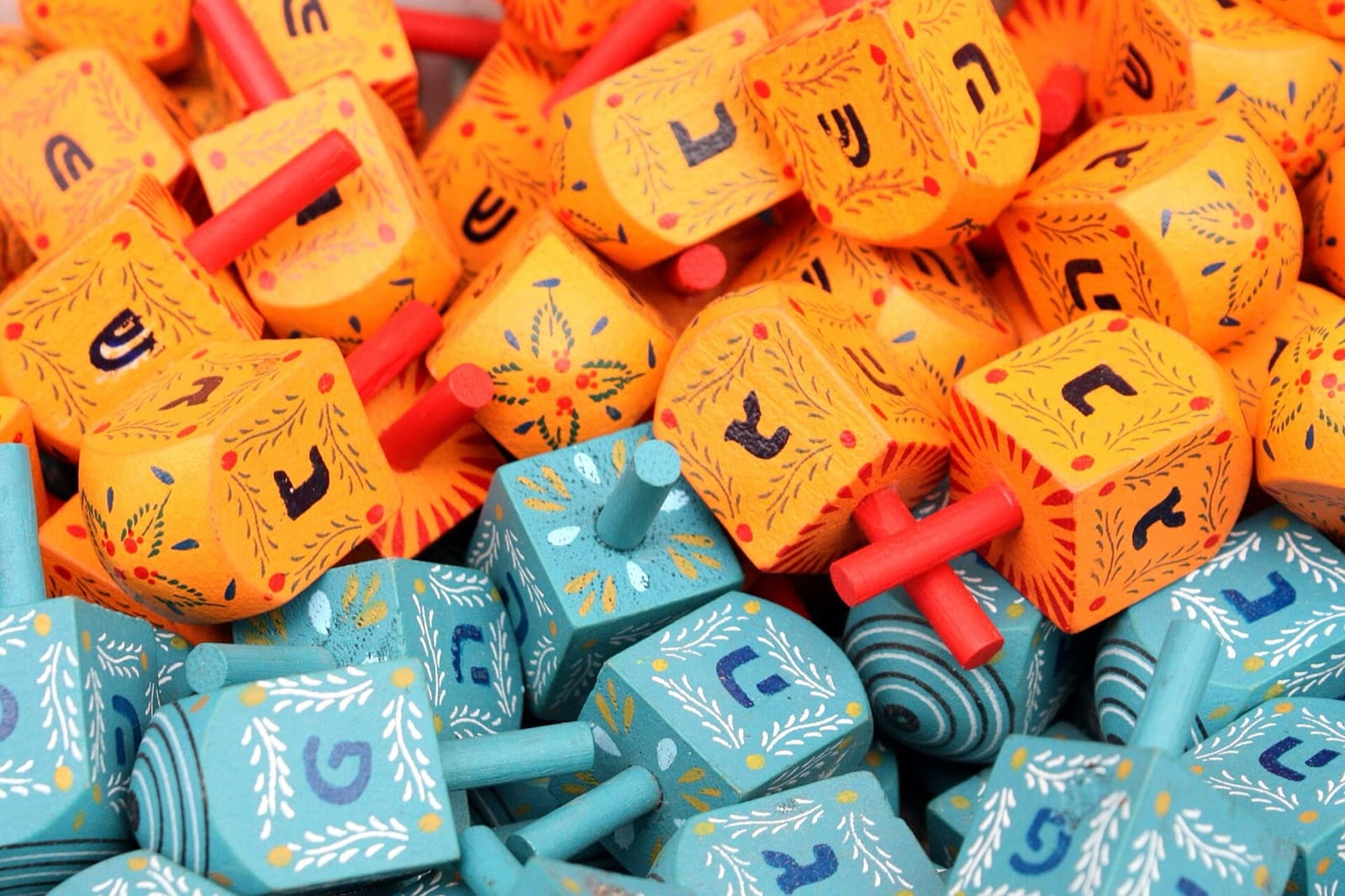
When you teach a holiday, center the joy first. Eat the special foods. Light things on fire. Sing. Tell jokes. Play games tied to the meaning. (Hanukkah has gelt, potato pancakes, and the spinning dreidel game. Purim involves costumes and parody. Sukkot has decoration and outdoor meals. Even Tisha B'Av, a day of mourning, is traditionally followed by immediate celebration and feasting.) The meaning embeds itself through positive association.
Humor, specifically, is a Kosher Couture principle: warm wit that celebrates rather than mocks. When you can laugh at and with your tradition, puns about Hebrew, funny family Passover stories, gentle roasting of your own Jewish quirks, you model healthy pride. Your kids learn that being Jewish is joyful, not solemn.
Ritual as Teacher
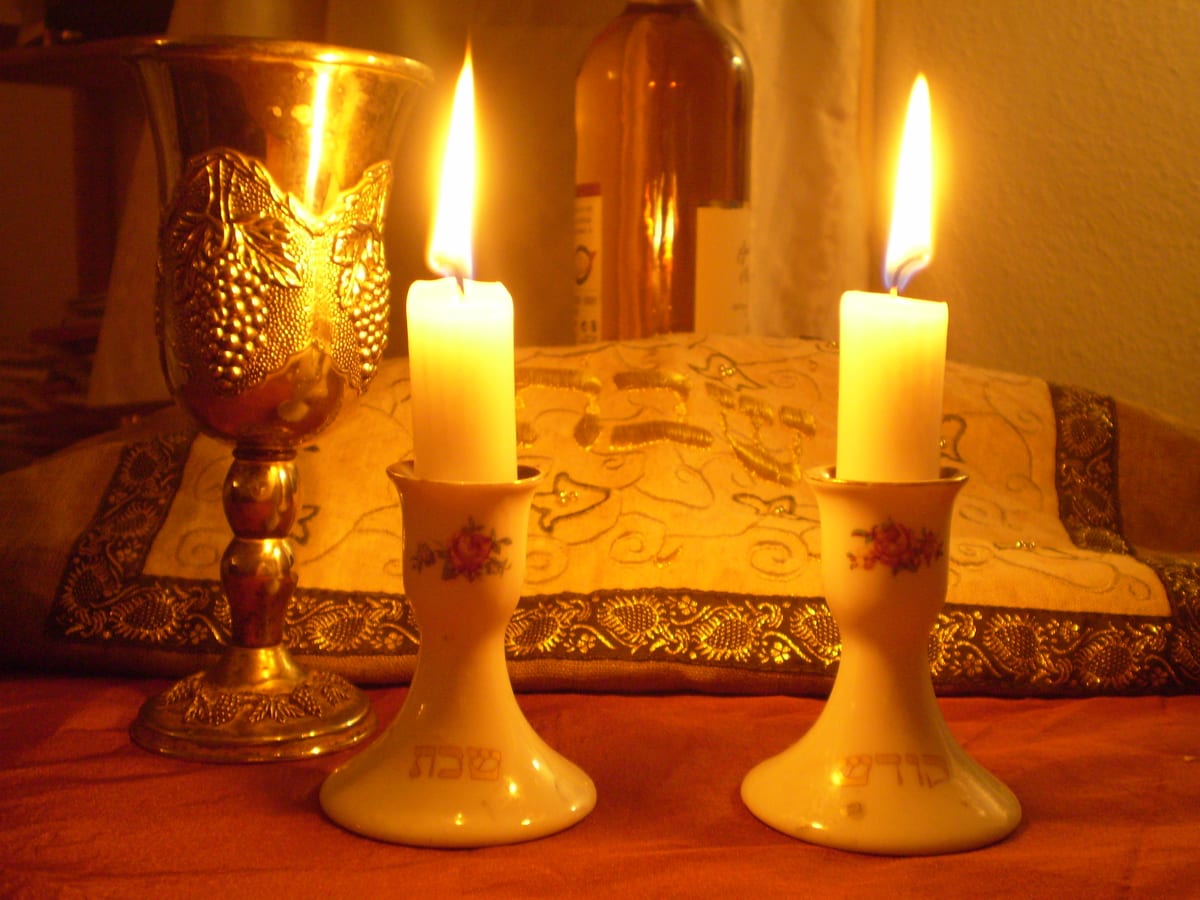 Photo: Wikimedia Commons (CC BY-SA 3.0)
Don't underestimate the power of repetition and ritual. Kids learn through their bodies, through muscle memory, through doing the same thing again and again until it becomes second nature.
A Shabbat ritual, candles, blessings, a special meal, no screens, doesn't need to be fancy. It just needs to happen reliably. By the time your child is ten, they will have experienced 520 Shabbat dinners. Those 520 repetitions of "we pause, we gather, we light candles, we bless the day" teach something that no lecture can.
Similarly, seasonal holidays become landmarks. Your kid comes to expect them, anticipate them, look forward to them. They know what Hanukkah feels like because they've experienced it eight times. The details and meanings deepen each year, but the ritual itself, the scaffolding, remains constant.
Text Engagement, Age-Appropriately
Torah can seem intimidating for young learners. It's ancient, filled with unfamiliar names, and contains some genuinely difficult passages alongside the beloved stories.
Start with a good retelling. There are excellent picture books and story collections designed for kids. Picture books like "The Mitten Mitzvah" or "When Sophie Gets Angry" introduce Jewish values through narrative that lands with young children.
As they grow, move toward original text with context. A teen can handle reading a passage from Torah with background on the historical period, cultural context, and different interpretations. The Talmud, which is structured as ongoing debate and discussion, is actually excellent for teenagers because it models the kind of intellectual engagement they're developmentally ready for.
You don't need to know Torah deeply to teach it. Read alongside your child. Say, "I don't know what that means either, let's look it up." This models lifelong learning and removes the pressure to be an expert.
Modern Approaches
Technology as a Tool (Not a Replacement)
The original post mentioned apps like "Jewish Interactive," and while specific app names change, the principle holds: digital tools can make Jewish learning more engaging for tech-native kids.
There are legitimate educational resources online. Sites like Chabad.org host Torah study, holiday guides, and explanations accessible at various levels. Jewish educational nonprofits have created videos, interactive content, and online learning platforms.
But here's the catch: technology works best as a supplement, not a replacement. An app about Hanukkah is great for learning history. But lighting actual candles, eating actual latkes, and singing with your family, that's irreplaceable.
The balance to strike is this: use tech to supplement and enhance, but anchor everything in actual practice and real community.
Connecting to Israel
For many Jewish families, connection to Israel, whether through visits, pen pals, learning Hebrew, or following news, deepens engagement with Jewish identity and history.
If your family can afford to visit Israel, it's transformative, particularly for kids aged 8 and up. The geography, the history, and the lived experience of Jewish peoplehood become concrete.
If visiting isn't possible, there are other ways: supporting Israeli causes your family believes in, learning about Israeli culture and current events, hosting Israeli visitors, connecting with Israeli pen pals, or supporting Israeli educational exchange programs. The key is making it real, not abstract.
Summer Programs and Camps
Jewish summer camps are often a turning point. Kids spend several weeks in an immersive Jewish environment, surrounded by peers who also practice, with trained educators and a full program of learning, ritual, and play.
Many regional Jewish camps offer financial aid. Some scholarship programs specifically exist to make camp accessible. It's worth investigating if this is possible for your family. The impact often far exceeds the cost.
Youth groups, Shabbaton retreats (overnight communal Shabbat experiences), and other intensive programs offer similar benefits on a smaller scale and smaller budget.
The Family-Centered Approach
You don't need formal Jewish education to pass down tradition. Many families create robust Jewish lives at home with minimal institutional involvement.
The bones of this are: regular rituals (weekly Shabbat, holiday observance), good Jewish books and stories, intentional conversations about values and identity, and hospitality (hosting guests, building community).
Some families structure their year around the Jewish calendar deliberately. They mark holidays, observe fast days, celebrate milestones. Others are more pick-and-choose, selecting practices and holidays that resonate.
What matters is intentionality. Kids whose parents are thoughtful about passing on heritage, even if they're not religiously observant in a traditional sense, develop strong Jewish identity and pride.
Building Community
One person teaching is one voice. A community teaching is a choir.
Intentionally build a Jewish community for your family. This might be through synagogue. It might be through Jewish friends, havurot, volunteer groups, or online communities. It might be a combination.
Your child benefits enormously from knowing other Jewish kids, from seeing adult Jews making choices they admire, from observing that Judaism is alive and practiced by regular people in your life.
This is harder to quantify than learning Hebrew, but it may be more important for long-term connection to Jewish identity. Kids who grow up feeling part of a Jewish community are more likely to maintain ties to Judaism into adulthood.
Talking About Hard Things
Jewish education isn't all joy and celebration. Judaism has a complicated history. Antisemitism, both historical and contemporary, is real. Israel is complex and contested. There are disagreements within the Jewish community about practice, belief, and ethics.
Your kids will eventually encounter these complexities. The question is whether they encounter them first from you, in a context of safety and love, or whether they discover them later and feel blindsided.
Age-appropriate honesty matters. A six-year-old doesn't need to know about the Holocaust. A sixteen-year-old should have space to discuss it, to understand that it was real and why it matters to Jewish identity, and to think critically about history and prevention.
For contemporary issues like antisemitism or debates about Israel, the same principle applies. Acknowledge that these are real, explain your family's thinking, and leave room for your child to develop their own thoughts.
Practical Starter Ideas
- This week: Light Shabbat candles together and say a simple blessing, even if it's just a few words of gratitude.
- This month: Read a Jewish story together, picture book or chapter book depending on age, and talk about what it means.
- This season: Celebrate the upcoming holiday with one food or activity that makes it feel special.
- This year: Look into one larger experience: a camp, a trip, a weekend retreat, or a regular youth group.
FAQ
Q: We're not observant/we're interfaith/we're secular. Can we still teach Jewish traditions?
A: Absolutely. Jewish identity isn't binary. Many families incorporate Jewish culture, history, values, and holidays without strict religious observance. Interfaith families can raise children with pride in their Jewish heritage while respecting other traditions. Start where you are and build from there.
Q: My kid is resisting. How do I keep them engaged?
A: Resistance is developmentally normal, especially in adolescence. Focus on why you practice (values, pride, connection) rather than enforcement. Invite rather than demand. Make it joyful, not dutiful. The door stays open.
Q: How much Hebrew do we need to know?
A: None to start. You can practice Jewish traditions in English and learn Hebrew if and when it interests your family. Hebrew study can come later. Starting with values, stories, and practices is enough.
Q: What if I'm the only Jewish parent/person in my household?
A: You can absolutely build a robust Jewish life and pass it to your kids solo. Seek out community for support. Connect with other Jewish families. Use camps and programs to supplement at home. Your commitment matters more than perfect household alignment.
Q: How do I balance pride in our heritage with fitting in?
A: Help your child understand that being Jewish is something to be proud of, not something to hide. This might mean normalizing difference in your home, connecting them with other Jewish kids, and modeling comfortable, confident Judaism yourself. When parents model pride, kids follow.
Teaching Jewish traditions to your children is one of the most meaningful investments you can make. It doesn't require perfection, formal credentials, or a flawless practice. It requires presence, intention, and a willingness to pass on something you care about. The flame of Judaism has survived thousands of years partly because of parents who, just like you, decided it was worth keeping alive for the next generation.


