
Synagogue Architecture: From Ancient Stones to Modern Spaces
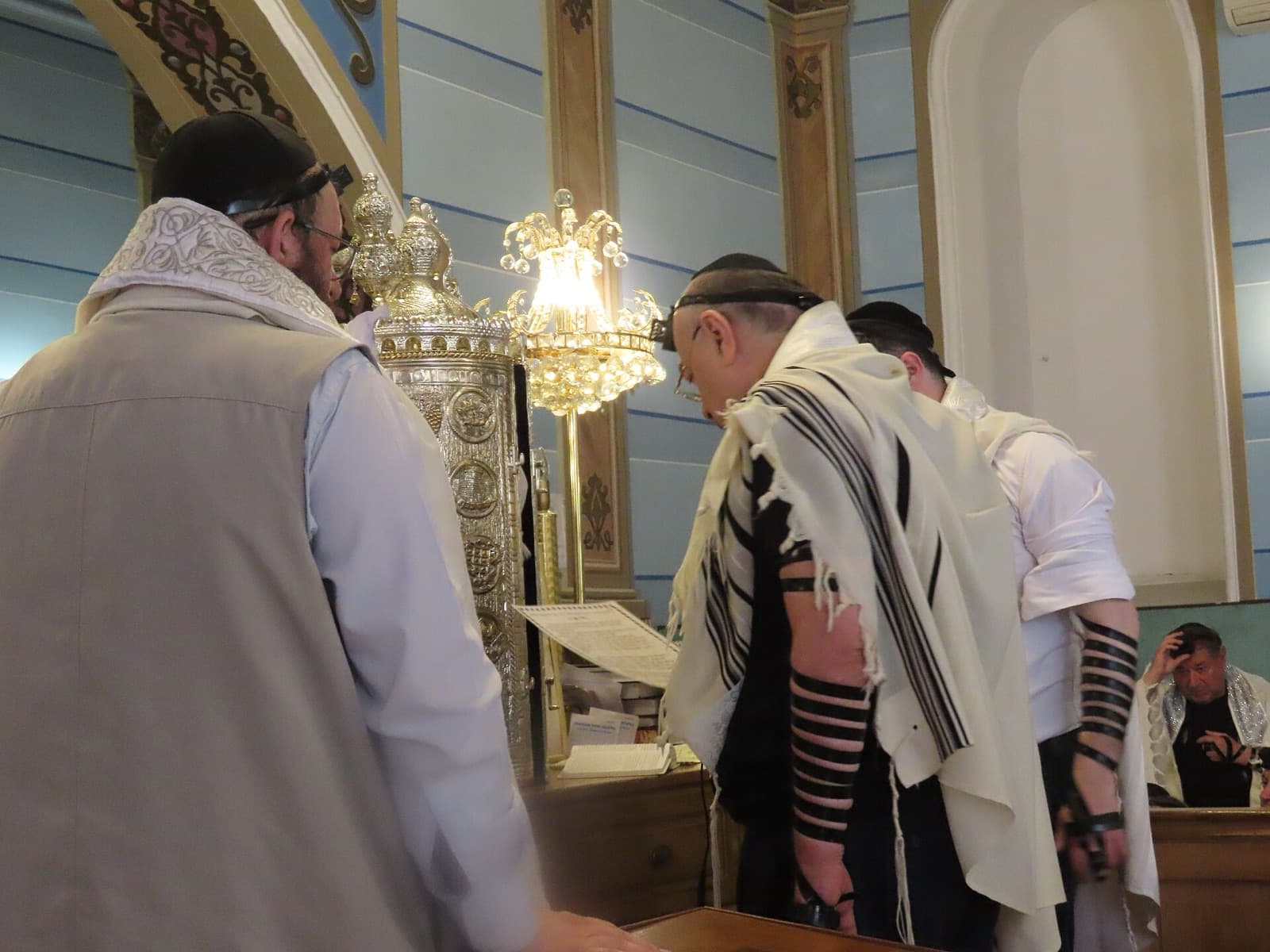
Synagogues are far more than buildings. They're architectural expressions of Jewish resilience, creativity, and community written in stone, stained glass, and the gathered voices of generations. From the black basalt ruins of ancient Capernaum to the soaring limestone facades that grace modern city blocks, every synagogue tells a story about who we are and how we've carried our heritage through time.
Why Synagogue Architecture Matters
When the Second Temple in Jerusalem was destroyed in 70 CE, Jewish life faced a fundamental question: how do we worship without the Temple? The answer was architectural, spiritual, and communal all at once. Synagogues became the answer, transforming from small gathering places into the architectural and social heart of Jewish communities everywhere.
This shift changed everything. Suddenly, a building wasn't just a shelter for prayer. It was a statement that Jewish identity could survive anywhere, adapt to any landscape, and flourish under any roof. That resilience lives in every arch, every window, every carefully chosen detail. When you walk into a synagogue, you're not just entering a space of worship. You're stepping into centuries of decisions about how to honor tradition while belonging fully to the place you call home.
The Ancient Foundation: Capernaum and Early Synagogue Design
 Photo: zeevveez, Wikimedia Commons (CC BY 2.0)
The ruins of Capernaum, perched on the northwestern shore of the Sea of Galilee, hold some of the oldest evidence of Jewish prayer spaces. The site reveals multiple layers of history, literally stacked on top of one another.
Beneath the white limestone synagogue visible today lies a first-century synagogue built from black basalt stone. This earlier structure, dating to somewhere between 50 BCE and 100 CE, predates the Second Temple's destruction. Archaeologists believe it stood as a gathering place for prayer and study while the Temple still stood in Jerusalem. The basalt itself speaks volumes: it's a local stone, practical and permanent, chosen by a community that intended to stay.
The white limestone synagogue that stands today was built between the third and fifth centuries CE, centuries after the Temple's fall. This structure is more elaborate than its predecessor. Its architectural ornaments are intricate, with Corinthian capitals and reliefs carved with the skill of craftspeople who had studied the grand Roman architecture surrounding them. Yet despite that grandeur, the basic layout remains recognizable: a prayer hall oriented toward Jerusalem, a structure built to gather a community.
Capernaum's synagogues were destroyed in the early seventh century, but not before they had already accomplished something profound. They proved that Jewish prayer could take root in local stone, that a community could gather anywhere and call it holy.
The Medieval and Early Modern Period: Adaptation and Artistry
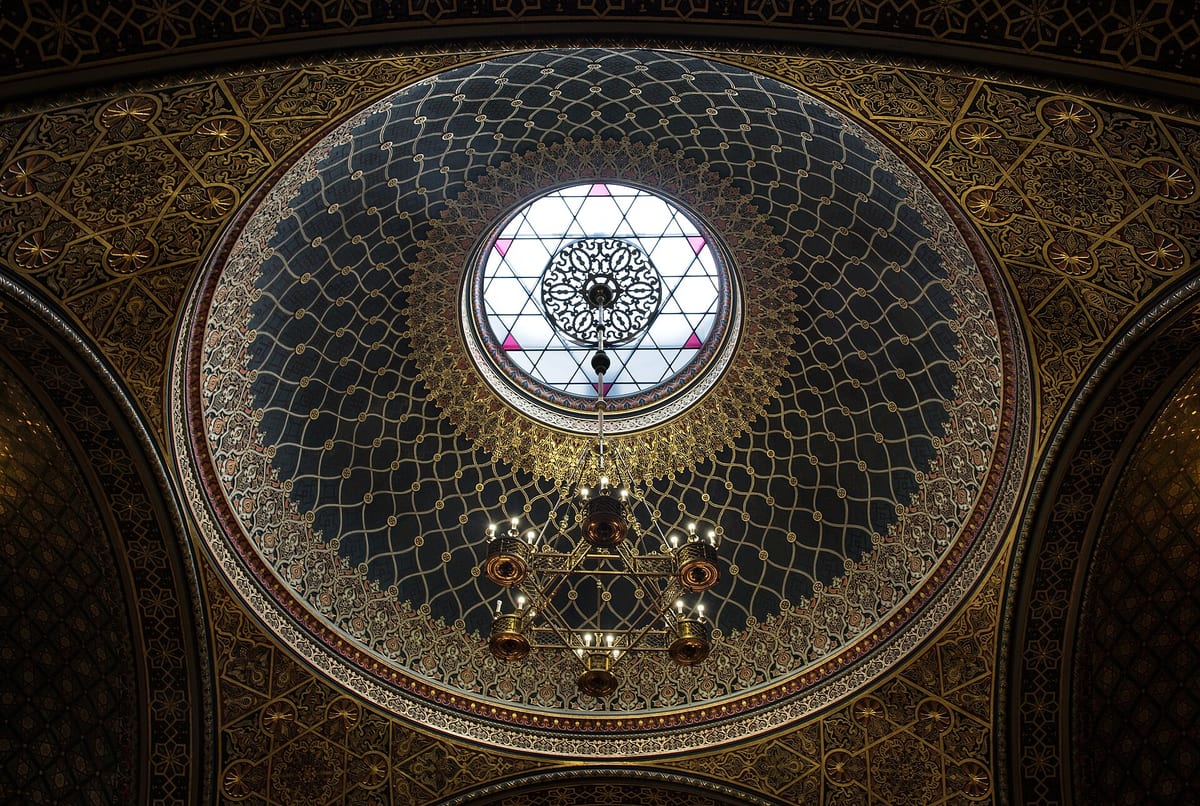 Photo: Uoaei1, Wikimedia Commons (CC BY-SA 4.0)
As Jewish communities spread across Europe and the Mediterranean, synagogue architecture became a conversation between Jewish tradition and local artistic movements. A synagogue in medieval Spain didn't look like one in Poland, and neither resembled one in North Africa. Yet all of them served the same purpose: creating a space where a scattered people could gather and remember who they were.
In medieval Spain, during the Golden Age of Sephardic culture, synagogues often featured Moorish influences. Intricate geometric patterns, horseshoe arches, and carved wooden details reflected the architectural vocabulary of the broader Muslim world in which Spanish Jews lived. These buildings were often hidden in plain sight, tucked into ordinary neighborhoods, their interiors far more elaborate than their modest exteriors suggested. That contrast speaks to a delicate reality: Jewish communities created beauty and celebration inside, even when the outside world demanded discretion.
In Eastern Europe, Gothic and Baroque elements dominated synagogue design. These were often the grandest buildings in their towns, though they served a minority population. Wooden synagogues in Poland and Lithuania became architectural masterpieces, their interiors soaring with frescoes and carved wooden vaults that rivaled the stonework of European cathedrals.
Middle Eastern synagogues took yet another path, incorporating intricate geometric patterns, vibrant colors, and the architectural traditions of their regions. The common thread across all these traditions was the same: each community took the architectural language of home and spoke it in a way that was unmistakably Jewish.
The Nineteenth Century: Grand Arrivals in New Cities
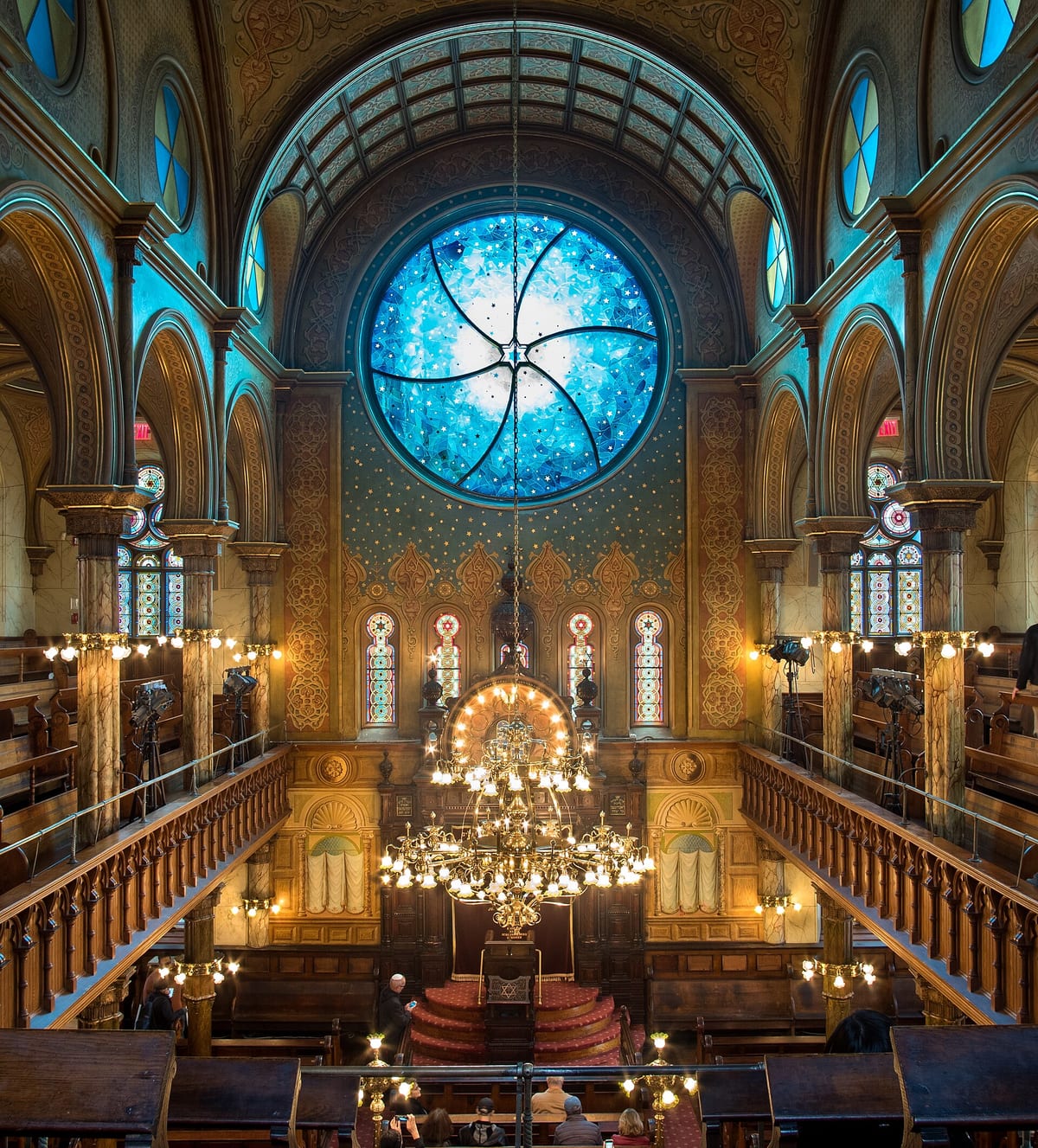 Photo: Rhododendrites, Wikimedia Commons (CC BY-SA 4.0)
The nineteenth century saw Jewish communities arriving in cities across the world with new legal rights and economic opportunities. They built synagogues that announced their arrival: grand, ornate, impossible to miss. These buildings said something bold: we are here, we are staying, and we built this with our own hands.
The Eldridge Street Synagogue in New York City is perhaps the most iconic example of this moment. Built in 1887 by the architecture firm Herter Brothers, it was the first great house of worship constructed by Eastern European Jewish immigrants in the United States. The Lower East Side of Manhattan was the primary gateway for Jewish immigration to America, and Eldridge Street became the architectural heart of that community.
The building combines Moorish, Gothic, and Romanesque elements in an eclectic fusion that was enormously popular for synagogues throughout the nineteenth and early twentieth centuries. Sixty-eight magnificent stained-glass rose windows fill the space with colored light. The ceiling rises seventy feet high, hand-painted with gilded stars and stenciled designs. Brass chandeliers cast their glow over marble columns and sweeping arches. Every detail announced that this community had arrived, that they had resources and taste, and that their tradition deserved a grand setting in their new home.
The Eldridge Street Synagogue wasn't unique in this ambition, but it's exceptional in its preservation. After decades of decline, a restoration project beginning in 1986 brought the building back to life. Today, it functions both as a museum and as an active Orthodox congregation, bridging past and present in the same space. The National Historic Landmark designation it received in 1996 acknowledges what visitors have always known: this building is a masterpiece of American Jewish history.
The Twentieth Century: Modernism and Meaning
The twentieth century brought architectural modernism, which challenged every assumption about what a building should look like. Clean lines replaced ornament. Function took precedence over decoration. Concrete and steel became materials of choice. Some feared modernist synagogues would lose the beauty and reverence of their predecessors.
They didn't. Modernist synagogues proved that austerity could be elegant, that simplicity could be sacred. A plain concrete wall could hold as much spiritual weight as carved stone. The absence of ornament could focus attention on the essential act of gathering.
Some of the most moving modernist synagogues are also the most restrained. A simple, luminous interior with carefully placed windows that frame views of the sky. A sanctuary where the architecture gets out of the way and lets prayer take center stage. This approach said something important: the architecture doesn't make the space holy. The community gathered inside does.
Yet modernism didn't erase the desire for beauty. Architects like Eero Saarinen and Louis Kahn brought modernist principles to synagogue design while creating buildings of unmistakable grace. Their work proved that contemporary design and Jewish tradition weren't in conflict. They were in conversation.
Regional Variations: How Place Shapes Form
One of the most fascinating aspects of synagogue architecture is how deeply it reflects the places where communities live.
Synagogues in the Middle East and North Africa often feature domed ceilings and intricate tile work that echo the broader architectural traditions of their regions. The use of geometric patterns reflects Islamic artistic principles, creating visual richness without representational imagery. These buildings demonstrate how Jewish communities adapted to and participated in the artistic traditions around them, creating spaces that were both deeply Jewish and fully of their place.
Synagogues in Eastern Europe, particularly the wooden synagogues of Poland and Lithuania, developed their own aesthetic entirely. These structures, many destroyed during the Holocaust, were architectural and artistic wonders. Their interiors featured hand-painted frescoes, elaborate wooden carvings, and soaring interior vaults constructed without metal fasteners, relying entirely on careful joinery. They were built by local craftspeople using local materials and local techniques, yet they created spaces of undeniable grandeur and beauty.
Sephardic communities in the Ottoman Empire created synagogues featuring the architectural sophistication of Ottoman design, with high ceilings, careful proportions, and ornate details. These buildings represented the height of Ottoman aesthetic achievement, places where Jewish communities were recognized as full participants in urban life.
Each regional variation tells a story about Jewish integration and identity. These buildings say: we are here. We belong here. We have made something beautiful in partnership with the place we call home.
Modern Synagogues: Tradition in Contemporary Context
Contemporary synagogue architecture faces a different challenge. Many modern communities are smaller than the grand congregations of the nineteenth century. Families are dispersed. Attendance is less predictable. Yet the need for community gathering is, if anything, more acute in an age of dispersion and digital connection.
Modern synagogue architects often look backward while building forward. They study what made historic synagogues work: orientation toward Jerusalem, clear sightlines to the Torah, acoustic design that allows voices to carry and blend together. They incorporate these lessons into buildings designed for contemporary worship, using contemporary materials and aesthetics.
Some modern synagogues are radical departures from tradition. Others are careful reinventions of historic forms. The best ones understand that architecture is always a conversation between past and present, between the community's inherited tradition and its current needs.
What Architecture Reveals About Jewish Identity
When you study synagogue architecture across centuries and continents, certain truths become clear. Jewish communities have always been creative. They've always been resourceful. They've always found ways to honor tradition while belonging fully to wherever they live. They've built in wood when stone was too expensive. They've adapted local architectural styles rather than importing foreign ones. They've created beauty with whatever materials were available, in whatever aesthetic language their neighbors spoke.
This adaptability isn't a compromise of identity. It's an expression of it. The Jewish commitment to making home, to gathering community, to creating sacred space and beauty wherever you land, that's written into every arch and window and carefully chosen detail. When you stand inside a historic synagogue, you're not just looking at architecture. You're looking at decisions made by communities about how to carry their heritage forward.
The Architecture of Today: Heritage Worn Daily
Understanding synagogue architecture connects us to something deeper than decoration or historical fact. It connects us to the decisions our ancestors made about how to live proudly as Jews in their own time. They built boldly. They adapted wisely. They honored both tradition and the places they called home.
Today, that legacy matters in unexpected ways. As we think about wearing our heritage, about making Jewish identity visible in everyday life, we're participating in the same conversation that synagogue architects were having centuries ago. How do you honor something precious while making it part of daily life? How do you translate tradition into a form that works for right now? How do you stay rooted while moving forward?
The answer, as synagogue architecture shows us, is to stay creative, stay connected to community, and stay proud of where you come from.
FAQ
What is the oldest synagogue still in use today? Several ancient synagogues have foundations dating back to Roman times, but Kahal Shalom in Jerba, Tunisia (believed to date to the sixth century BCE) is among the oldest continuously active synagogues in the world. The Capernaum site in Israel shows even earlier synagogue remains, though the white limestone structure visible today was built in the third to fifth centuries CE.
Why do some synagogues face Jerusalem? Facing Jerusalem honors the direction of prayer established in Jewish tradition and reinforces the spiritual connection to the Jewish homeland, even when communities are located far away. This orientation connects the local community to the broader Jewish people and their shared history.
What's the difference between a synagogue and a temple? In modern usage, "synagogue" and "temple" are often used interchangeably, though "temple" historically referred to the structure in Jerusalem where Jews made pilgrimage. Some communities prefer one term over the other based on tradition or denomination, but both refer to buildings where Jewish communities gather for prayer, study, and community life.
Are stained glass windows common in all synagogues? No. Stained glass became a popular feature in nineteenth-century and twentieth-century synagogues, especially in Europe and America, but it's far from universal. Many ancient, medieval, and modern synagogues feature other design elements entirely. The choice of decoration varies widely based on region, period, available resources, and aesthetic tradition.
Can non-Jews visit historic synagogues? Many historic synagogues, especially those now functioning as museums (like the Eldridge Street Synagogue), welcome visitors of all backgrounds. Some active congregations also welcome respectful visitors to services. It's always best to contact a synagogue directly to ask about visiting and to learn about any protocols or traditions they follow during services.


