
Purim Outfit Ideas: Beyond the Costume Aisle
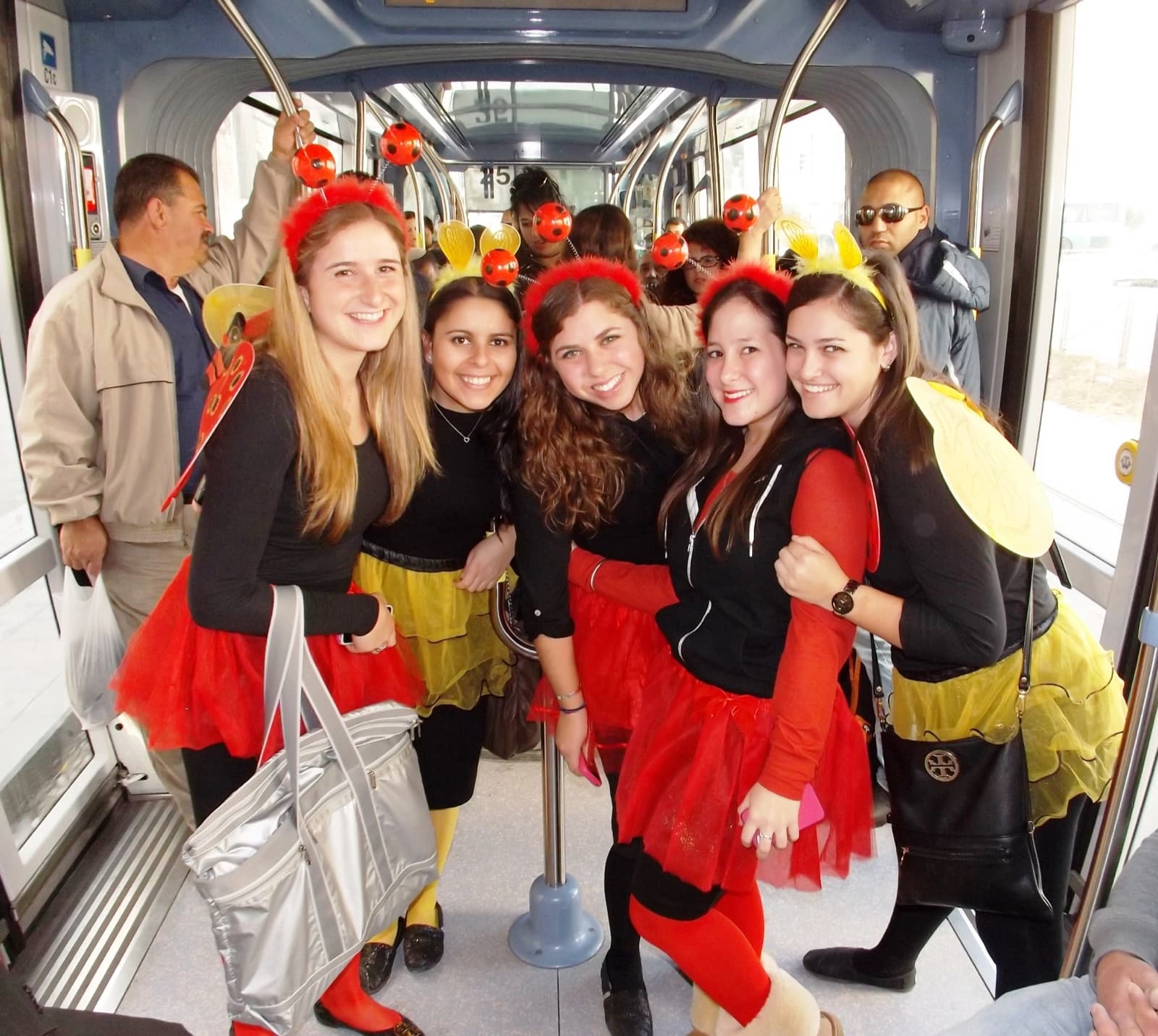
We dress up on Purim because Purim is the holiday of hidden things: God's name never appears in the Book of Esther, the heroine hides her identity, and the whole story flips upside down at the last moment, v'nahafoch hu. Costumes act all of that out. And no, you don't have to buy a plastic crown from the seasonal aisle to participate: Purim style runs from a clever T-shirt to full Persian-palace glamour, and every level counts.
That's the thesis. Now let's build you an outfit, whether you have three weeks of prep time or three minutes, because Purim is the one day of the Jewish year when the dress code is officially "anything, but make it joyful," and we take that assignment seriously.
Why We Dress Up at All: Hiddenness and the Great Reversal
Here's something that surprises people: dressing up on Purim isn't in the Megillah. Esther never puts on a costume (well, arguably she wears the biggest costume in the whole Tanach, but we'll get there). The masquerade is a custom that took root among European Jews centuries ago; by the time of Rabbi Moshe Isserles, the Rema, writing in 16th-century Krakow, it was established enough that he addresses it in his glosses on the laws of Purim. It stuck because it fits the holiday so perfectly that it feels like it was always there. Two big ideas underneath it:
Hiddenness. The Book of Esther is famously the book of the Hebrew Bible in which God's name never appears, not once. The salvation arrives through what looks like coincidence: a queen deposed at the right moment, a king's insomnia, a plot overheard. The rabbis heard the theme in the heroine's own name, connecting Esther to hester, hiddenness; the divine hand is hidden behind every event, working through people who look ordinary. And Esther herself spends most of the story concealing who she is, a Jewish woman hidden inside the Persian court until the moment revealing herself can save her people. When we put on a mask or a costume, we're reenacting the deepest mechanic of the story: things are not what they appear, and what's hidden may be the whole point.
V'nahafoch hu. The Megillah's own phrase for the plot twist: "and it was reversed." The day designated for the Jews' destruction becomes a day of celebration; Haman is hanged on the gallows he built for Mordechai; the decree flips. Purim is the festival of the great reversal, and costumes let us live it: for one day, the shy kid is a superhero, the accountant is a pirate, everything is turned delightfully inside out. Add the famous Talmudic teaching (Megillah 7b) that one should celebrate on Purim ad d'lo yada, until you can't tell "cursed is Haman" from "blessed is Mordechai," and you get a holiday that is structurally, on purpose, a little upside down.
There's also a warmer, simpler explanation we've always loved: costumes are equalizers. On a day built around sending food to friends and gifts to the poor, masks meant that givers and receivers couldn't always tell each other apart, and no one had to feel shame. Dignity, disguised as a party. That's about as Jewish as an idea gets.
The Effort Ladder: A Costume for Every Energy Level
Let's be honest about who's reading this: some of you have a glue gun and a dream, and some of you remembered Purim is tonight. We honor both. Here's the ladder.
Level 0: The statement tee (three minutes, full credit)
A great Jewish graphic tee on Purim reads as a costume the way a tuxedo T-shirt reads as a tuxedo: technically, spiritually, yes. Hebrew lettering, a bold pun, a design that says you showed up on purpose. Throw one on with jeans and you have officially participated. This is the move for the adult who "doesn't do costumes" but doesn't want to be the only civilian at the party; our Hebrew Script collection was practically engineered for it.
Level 1: One good accessory (ten minutes)
A crown. A mask. Absurd sunglasses. A single feather boa deployed with total confidence. The one-accessory costume works because Purim rewards commitment more than budget; a paper crown worn like you mean it beats a store-bought costume worn with apology. Raid the kids' dress-up bin first; the upgrade can come later.
Level 2: The closet costume (thirty minutes)
Everything you need is already in your home. All black plus a headband with pipe-cleaner antennae: bug. Denim head to toe: Canadian tuxedo, ironically formal. Bathrobe plus towel turban: either a Persian courtier or someone who just really loves self-care; refuse to clarify. Fisherman's vest and a hat covered in pins: your uncle. The closet costume's secret power is comedy: the humor comes from recognition, not from the price tag.
Level 3: The committed build (a weekend)
Cardboard, fabric glue, and hubris. This is the papier-mâché crown of Achashverosh, the full Mordechai-on-the-royal-horse situation (horse sold separately), the homemade grogger the size of a lawnmower. If you're this person, you don't need our ideas; you need us to get out of your way and admire the craftsmanship. We salute you. Send pictures.
Level 4: The full Shushan
Head-to-toe Persian-palace glamour. Keep reading; this one gets its own section, because it's ours.
Group and Family Themes That Actually Work
A coordinated family or friend group at a Purim carnival is a power move, and the best themes share one trait: each costume works alone, but together they tell a joke or a story.
The Megillah cast, obviously. Esther, Mordechai, Achashverosh, Vashti (a criminally underrated costume: first-wave royal defiance), and one relative who gets talked into being Haman and commits to the bit. Bonus points if the baby is the royal decree.
The food themes. A family of hamantaschen, each member a different filling, is a classic for a reason; the debate over which sibling is poppyseed builds character. A bagel-and-lox family. The entire mishloach manot basket, personified.
The pun platoon. Group costumes built on a shared visual gag: everyone in white as the Ten Days of Repentance ("we're here to atone for last Purim"), or the whole crew in matching Yiddish tees as "the kvetch section." Purim is the one day the pun is the outfit.
Reversal themes, for the scholars. Parents dress as the kids, kids dress as the parents; the rabbi's family comes as congregants; teachers as students. V'nahafoch hu, played completely straight. The deeper the reversal, the bigger the laugh, and you're doing midrash without anyone noticing.
A gentle note on theme choice: Purim humor punches with pride. Costumes that celebrate our story, our food, our heroes, our beautiful weirdness? Always. Costumes that turn another community into the punchline? Not our holiday, not our brand, not our table.
Shushan Chic: Persian-Palace Glamour, Explained
Here's a truth the costume aisle doesn't want you to know: the Purim story is set in one of the most opulent settings in the entire Hebrew Bible, and the Megillah wants you to know it. The first chapter alone lingers over the palace at Shushan like a cinematographer: hangings of white and blue linen, cords of fine purple, silver rods, marble pillars, couches of gold and silver, drinks in vessels of gold, no two alike. This is a text that opens with a 180-day royal banquet followed by a seven-day afterparty. The Megillah understood luxury before luxury had a marketing department.
Shushan Chic is what we call dressing into that world instead of around it: deep jewel tones (royal purple, lapis blue, pomegranate red), gold everywhere it will stay put, rich textures, velvet, brocade, silk or anything pretending to be silk, layered jewelry, dramatic eyes, and the posture of someone who has been invited to the palace and intends to stay. It's less "costume" than "aesthetic": Esther's world, worn as fashion.
The beauty of Shushan Chic is that it scales. A gold headband and dark lipstick over a black dress: Shushan Chic. A velvet blazer with an armful of bangles: Shushan Chic. The full regalia with a floor-length cape your friends will talk about until Pesach: extremely Shushan Chic. And unlike a costume, none of it dies on the fifteenth of Adar; the velvet blazer has a whole life ahead of it. We loved this aesthetic enough to build a collection around it: Shushan Chic is our love letter to the palace, designed to be worn to the seudah and then straight through the rest of the year.
There's chutzpah in it, too, the good kind: Esther walked into a throne room uninvited, dressed for the moment, and changed history. (We've written before about why chutzpah is our favorite inheritance.) Dressing like you belong in the palace is not vanity on Purim. It's exegesis.
What Adults Wear to the Seudah When They Don't Do Costumes
The Purim seudah, the festive meal on Purim afternoon, is the holiday's grown-up finale: a long table, good wine, singing, the meal drifting toward sunset. And at every seudah there's a contingent of adults who have aged out of costumes, or think they have, and are wondering what the dress code is.
Here's the honest answer from communities everywhere: festive Shabbat-adjacent clothes with one degree of extra joy. The suit, but with the loudest tie you own. The dress, but the fun one. Purim is a day for wearing the color you always talk yourself out of.
Some concrete plays for the costume-free adult:
- The one wink. Regular nice clothes plus a single Purim signal: a crown lapel pin, festive socks, a grogger in the jacket pocket like a pocket square with sound effects.
- Shushan Chic lite. As above: jewel tones and gold with regular tailoring. You'll read as festive, not costumed, and you'll be the best-dressed person at the table.
- The heritage tee, dressed up. A statement tee under a blazer is a completely legitimate seudah outfit in most communities, and it does the "I'm celebrating" work without a single safety pin.
- White-shirt solidarity. In some communities adults just wear Shabbat finery and let the kids own the costume lane. Also fine. The mitzvot of the day are the Megillah, the mishloach manot, the gifts to the poor, and the feast; the costume is the garnish.
Whatever you wear, remember the seudah runs long and joyful, wine flows as a mitzvah (within your own healthy limits, and there is zero shame in grape juice), and someone will absolutely start a kazatzka between courses. Dress with dancing in mind. This advice appears in everything we write about Jewish celebrations because it is always, always true.
Purim Outfit FAQ
Why do Jews wear costumes on Purim?
Costumes act out the holiday's core themes: hiddenness, since God's name never appears in the Book of Esther and the rescue hides inside seemingly natural events, and v'nahafoch hu, the great reversal, when the day of destruction flipped into a day of joy. The custom took hold among European Jewish communities centuries ago and is noted by the Rema in the 1500s. A beloved additional reason: masks let givers and receivers of Purim charity preserve each other's dignity.
Do adults have to wear costumes on Purim?
No. The obligations of the day are hearing the Megillah, sending mishloach manot, giving matanot l'evyonim (gifts to the poor), and the festive seudah; costumes are a cherished custom, not a requirement. Many adults wear festive holiday clothes, a single playful accessory, or jewel-toned Shushan Chic style instead of a full costume.
What is Shushan Chic?
Shushan Chic is Persian-palace glamour inspired by the Megillah's own descriptions of the royal court at Shushan: jewel tones, gold, velvet and brocade, layered jewelry, and unapologetic drama. It works as a full look or as accents on regular clothes, and unlike a costume, you can wear the pieces all year.
What's an easy last-minute Purim costume?
Build from what you own: all black plus antennae, a bathrobe-and-towel-turban courtier, a themed graphic tee worn with intent, or one bold accessory, a crown or mask, over regular clothes. On Purim, commitment counts more than construction.
When is Purim, and how long do I have to plan?
Purim falls on the 14th of Adar, usually in late February or March, with walled-city communities like Jerusalem celebrating Shushan Purim the next day. Costume-forward communities start planning right after Tu B'Shvat; the rest of us start the night before, and both approaches have a long and proud history.
Go Get Dressed, Esther Would Approve
Every other holiday asks us to dress with reverence. Purim asks us to dress with imagination, and that's a spiritual instruction too: for one day we practice seeing past surfaces, flipping expectations, finding the hidden hand in the ridiculous plot. The costume aisle was never big enough for that.
So wear the crown, the antennae, the velvet, the pun. And if your Purim this year calls for palace-grade glamour you'll still be wearing in June, come wander through Shushan Chic; the banquet's been going for 2,500 years and there's room at the table.


