
Judeo-Arabic: The Lost Voices of Jewish Heritage
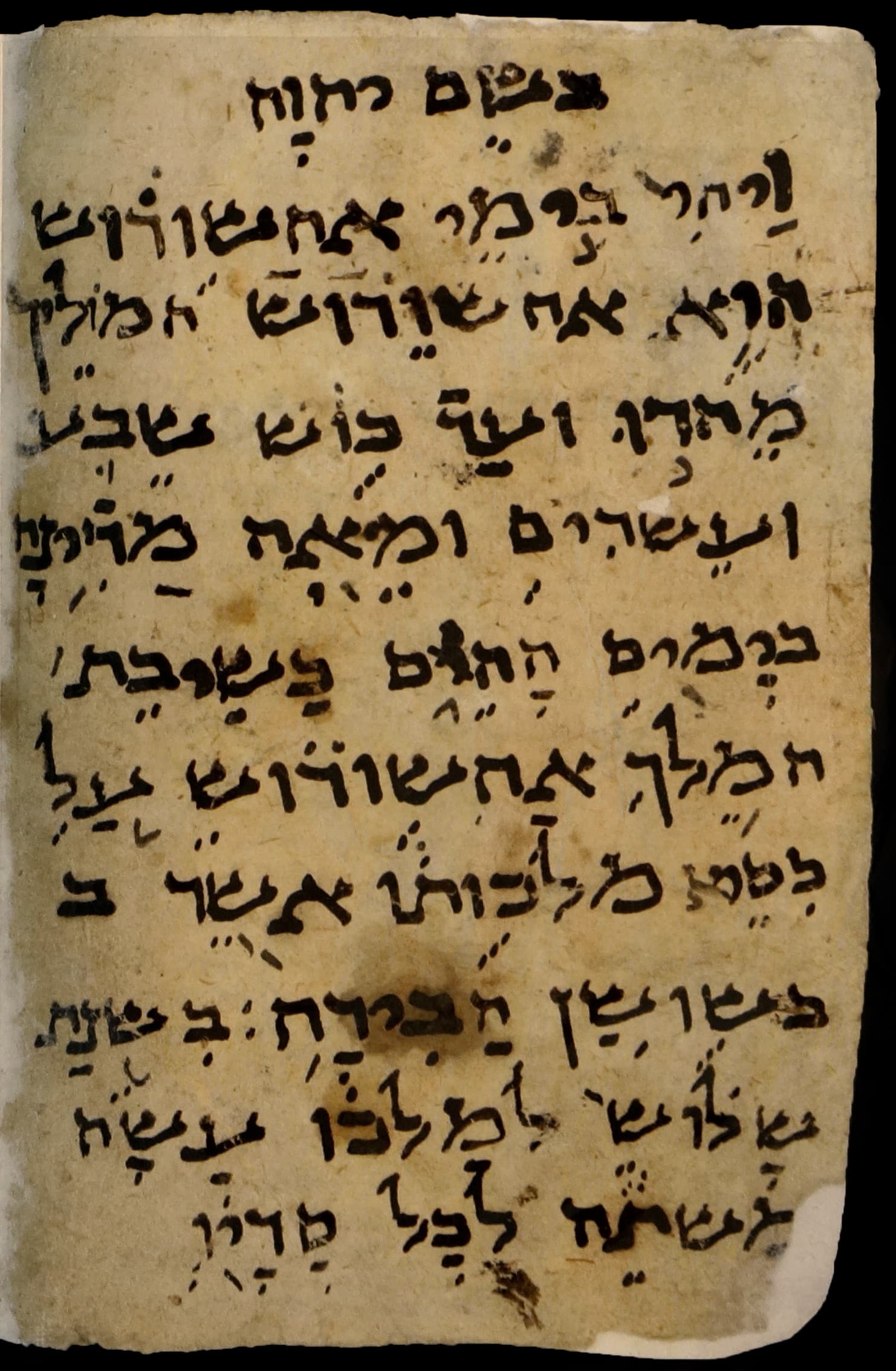
For centuries, Jews across North Africa, the Middle East, and beyond spoke dialects of Arabic that were distinctly their own. Written in Hebrew letters, infused with Hebrew vocabulary, and shaped by their unique communities, Judeo-Arabic dialects were living bridges between Jewish and Arab cultures. Today, nearly extinct, these languages represent one of the most urgent cases of linguistic endangered heritage, and a powerful reminder of how closely language, identity, and belonging are intertwined.
What Is Judeo-Arabic?
Judeo-Arabic isn't a single language. It's a family of Arabic dialects spoken by Jewish communities throughout the Arab world, each shaped by its specific geography and history. Evidence suggests that Jews in the Arabian Peninsula may have spoken some form of Arabic-Jewish dialect even before the Islamic conquests of the 600s, a dialect scholars call al-Yahūdiyya. But the Judeo-Arabic dialects we know today developed over centuries of Jewish life in Islamic lands.
The major Judeo-Arabic dialects include Judeo-Moroccan Arabic, Judeo-Yemeni Arabic, Judeo-Iraqi Arabic, and Judeo-Tripolitanian Arabic, along with significant varieties in Egypt, Syria, and Algeria. Each carried the linguistic fingerprint of its region. Baghdadi Judeo-Arabic, spoken in Iraq, became the most studied and is perhaps the best-documented example of the tradition.
What made Judeo-Arabic distinctive wasn't just its Arabic base. These dialects were written in modified Hebrew letters, Hebrew consonants with added dots borrowed from Arabic script to represent sounds that didn't exist in Hebrew. Into the Arabic vocabulary, Jewish speakers wove Hebrew and Aramaic words, creating a rich linguistic mixture that reflected their dual heritage. A speaker of Judeo-Arabic could move between Arabic and Hebrew seamlessly, code-switching in ways that felt natural within their community but would have sounded striking to an outsider.
These weren't corrupted versions of Arabic or broken Hebrew. They were complete languages, with their own grammar, pronunciation, and cultural expressions. For centuries, they were how Jews in the Arab world prayed, joked, argued, and loved.
The Rise of Judeo-Arabic Dialects
The story of Judeo-Arabic begins with settlement. After the Islamic conquests of the 7th century, Jewish communities across North Africa and the Middle East became integrated into Arab society. They participated in Arab intellectual life, took part in commerce and trade, and gradually adopted Arabic as their everyday language. By the early medieval period, this linguistic shift was well underway.
Yet the transition wasn't a simple replacement of one language with another. Jewish communities maintained Hebrew for prayer, study, and religious life. This created a bilingual reality that lasted for centuries. Hebrew remained the language of Torah, Talmud, and sacred practice; Arabic became the language of daily life, commerce, and secular learning. The result was Judeo-Arabic, a synthesis born from necessity and cultural continuity.
Different regions developed distinct flavors. Judeo-Yemeni Arabic, spoken in Yemen for over a thousand years, carried unique phonetic features and vocabulary shaped by Yemen's geography and Jewish community structures. Judeo-Iraqi Arabic, centered in Baghdad but also spoken in Mosul and other cities, became the most prestigious and widely documented dialect, perhaps because Iraq was a center of Jewish intellectual and cultural life for centuries. By the 10th century, Jewish scholars in Baghdad were contributing to the broader Islamic Golden Age of philosophy, science, and literature. Their language, Judeo-Iraqi Arabic, was part of that intellectual world.
For nearly 1,500 years, Judeo-Arabic dialects flourished. Speakers carried them across generations, through trade routes and migrations. They produced literature, poetry, religious commentary, and everyday conversation. They were languages of home and community, languages in which people told stories, taught their children, and made sense of the world.
The Rapid Decline: Emigration and Language Loss
The decline of Judeo-Arabic happened with stunning speed, compressed into just a few decades.
In 1948, the State of Israel was established. What followed was one of the largest forced emigrations in modern history. More than one million Jews lived in Iran and Arab countries before the 1960s, but most fled within two decades. The reasons varied: violence, discrimination, expulsion orders, and economic desperation drove Jews out of lands where their families had lived for centuries. By the 1960s, only an estimated 15,000 Jews remained in Arab countries, a collapse so severe it's often called the "exodus" or the "flight."
The overwhelming majority of these refugees went to Israel. This mass migration meant that Judeo-Arabic speakers were suddenly living in a nation that was building itself around Modern Hebrew. The pressure to assimilate was immense. Hebrew had been revived as a living language, and it was the language of the Israeli state, the schools, the government, and the future. Speaking Arabic, even Judeo-Arabic, your own community's dialect, carried complicated associations. You were speaking the language of the people you'd fled from, the people who had displaced you. There was shame attached to it, and pressure from institutions and society to abandon it.
By the mid-1990s, the devastation was clear. There were approximately 500,000 Judeo-Arabic speakers left globally. By some estimates, that number had fallen to roughly 400,000. In 2018, there were only about 94,000 speakers of Judeo-Iraqi Arabic in Israel. Modern Palestinian Judeo-Arabic, which had around 10,000 speakers in the 20th century, had dwindled to just five speakers in Galilee.
Language extinction is never only about numbers. Each dialect that disappears takes with it a complete way of expressing thought, emotion, and cultural experience. It's a unique perspective on the world, a particular sense of humor, a specific way of telling stories, an entire framework for understanding kinship, community, and identity.
Preservation: Racing Against Time
Recognizing the urgency, organizations have begun racing to document these languages before the last native speakers pass away. The Jewish Language Consortium, in partnership with Wikitongues, received a $54,000 grant from the Wikimedia Foundation specifically to document endangered Jewish languages. The initial focus is on Baghdadi Judeo-Arabic, Judeo-Shirazi, and Judeo-Hamadani.
The Oxford School of Rare Jewish Languages has stepped in to fill the educational void. Recognizing that resources for learning languages like Judeo-Arabic, Judeo-Italian, and Judeo-Malayalam barely exist, the school now offers free online courses. These courses bring together mentors (native or heritage speakers) and learners who meet regularly to practice, converse, and document the language through recordings and careful study.
Other efforts focus on collecting archives: oral histories, songs, literature, and family recipes written in Judeo-Arabic. Scholars are working with elderly speakers, interviewing them, recording their voices, and transcribing texts that might otherwise be lost. In Israel and around the world, there are grassroots initiatives where descendants of Judeo-Arabic speakers are learning their families' ancestral languages.
But the timeline is stark. Every day, speakers who hold these languages in their minds and on their tongues age. During the COVID-19 pandemic, this urgency intensified. Each speaker who passes before their dialect is documented means that particular way of speaking, that local vocabulary and grammar, that unique cultural voice, dies with them.
Why Judeo-Arabic Matters
To understand why Judeo-Arabic preservation matters, consider what a language carries. It's not just a tool for communication. It's an archive of how a specific community lived, thought, and survived. The words they chose, the grammar they developed, the idioms they treasured, all of these encode cultural values and historical memory.
Judeo-Arabic contains jokes and expressions unique to Jewish life in the Arab world. It includes religious and cultural terminology that have no direct English equivalent. It reflects centuries of adaptation, creativity, and resilience. When a dialect disappears, all of that vanishes.
For descendants of Judeo-Arabic speakers, many of whom are now Israeli, American, or part of diaspora communities worldwide, these languages represent a direct link to ancestral identity. Learning or reclaiming Judeo-Arabic can be a powerful act of cultural connection. It's a way of saying: my grandmother's language mattered. My family's story is worth remembering. My heritage is worth keeping alive.
The preservation of Judeo-Arabic also challenges the narrative that Jewish identity is monolithic. For centuries, Ashkenazi Jewish culture and Yiddish have dominated Jewish cultural representation in the West. Judeo-Arabic reminds us that Jewish heritage is diverse, multilingual, and deeply rooted in many lands. It says: there were Jews in Aleppo, Baghdad, Cairo, Marrakech, and throughout the Arab world, and they had their own languages, their own literature, their own ways of being Jewish.
Keeping Heritage Alive
The stakes of preserving Judeo-Arabic go beyond linguistics. They're about maintaining the full scope of Jewish cultural heritage and acknowledging the real, lived experiences of Mizrahi Jews (Jews from the Middle East and North Africa) whose stories are often marginalized or overlooked.
Heritage preservation takes many forms. For some, it's academic, studying the languages, documenting grammar and phonetics, publishing scholarly work. For others, it's deeply personal: learning to speak your grandmother's dialect, teaching your children a few phrases, finding community with others who share your linguistic heritage. There's power in both approaches.
And there's a broader truth here: heritage doesn't stay alive on its own. It lives because communities choose to keep it alive. They wear it, speak it, teach it, celebrate it, and pass it on. Whether it's a language, a holiday custom, a recipe, or a piece of clothing that carries cultural meaning, heritage endures when people actively choose to honor it.
Wearing your heritage, literally, through pride apparel that celebrates Jewish culture, is part of that same impulse. It's a daily affirmation: I am proud of where I come from. I want the world to know my identity. I want my children to see me wearing it. It's the same instinct that drives someone to learn their ancestral language or document their family's stories.
FAQ
What countries did Judeo-Arabic speakers live in? Judeo-Arabic dialects were spoken throughout the Arab world, including Iraq, Egypt, Morocco, Yemen, Syria, Algeria, Tunisia, and Libya. The most documented dialect is Judeo-Iraqi Arabic, spoken in Baghdad and other Iraqi cities, while Judeo-Yemeni Arabic and Judeo-Moroccan Arabic are also well-known varieties.
Is Judeo-Arabic the same as regular Arabic? No. Judeo-Arabic dialects were distinct from the Arabic spoken by Muslims in the same regions. They incorporated Hebrew and Aramaic vocabulary, were written in modified Hebrew letters, and reflected the unique cultural context of Jewish communities. A native Arabic speaker wouldn't fully understand Judeo-Arabic without specific knowledge of the dialect.
How many people speak Judeo-Arabic today? Very few. By 2018, there were approximately 94,000 speakers of Judeo-Iraqi Arabic in Israel, and most Judeo-Arabic dialects have only dozens of remaining speakers. Some dialects have fewer than ten native speakers left. The languages are considered critically endangered.
Can I learn Judeo-Arabic? Yes, though resources are limited. The Oxford School of Rare Jewish Languages offers free online courses in some Judeo-Arabic dialects, and the Jewish Language Consortium is creating new educational materials. Learning opportunities typically involve meeting with heritage speakers or using recorded resources. If your family spoke a Judeo-Arabic dialect, starting with older relatives is an invaluable first step.
Why did Judeo-Arabic speakers switch to Hebrew? The primary reason was mass immigration to Israel after 1948. Faced with pressure to assimilate into Israeli society and Hebrew-speaking institutions, and given the complicated associations with Arabic after fleeing Arab countries, most speakers abandoned their ancestral dialects in favor of Hebrew. This was a rapid, generational shift driven by both institutional pressure and personal choice.


