
Jewish Philosophy 101: Maimonides & Levinas Explained
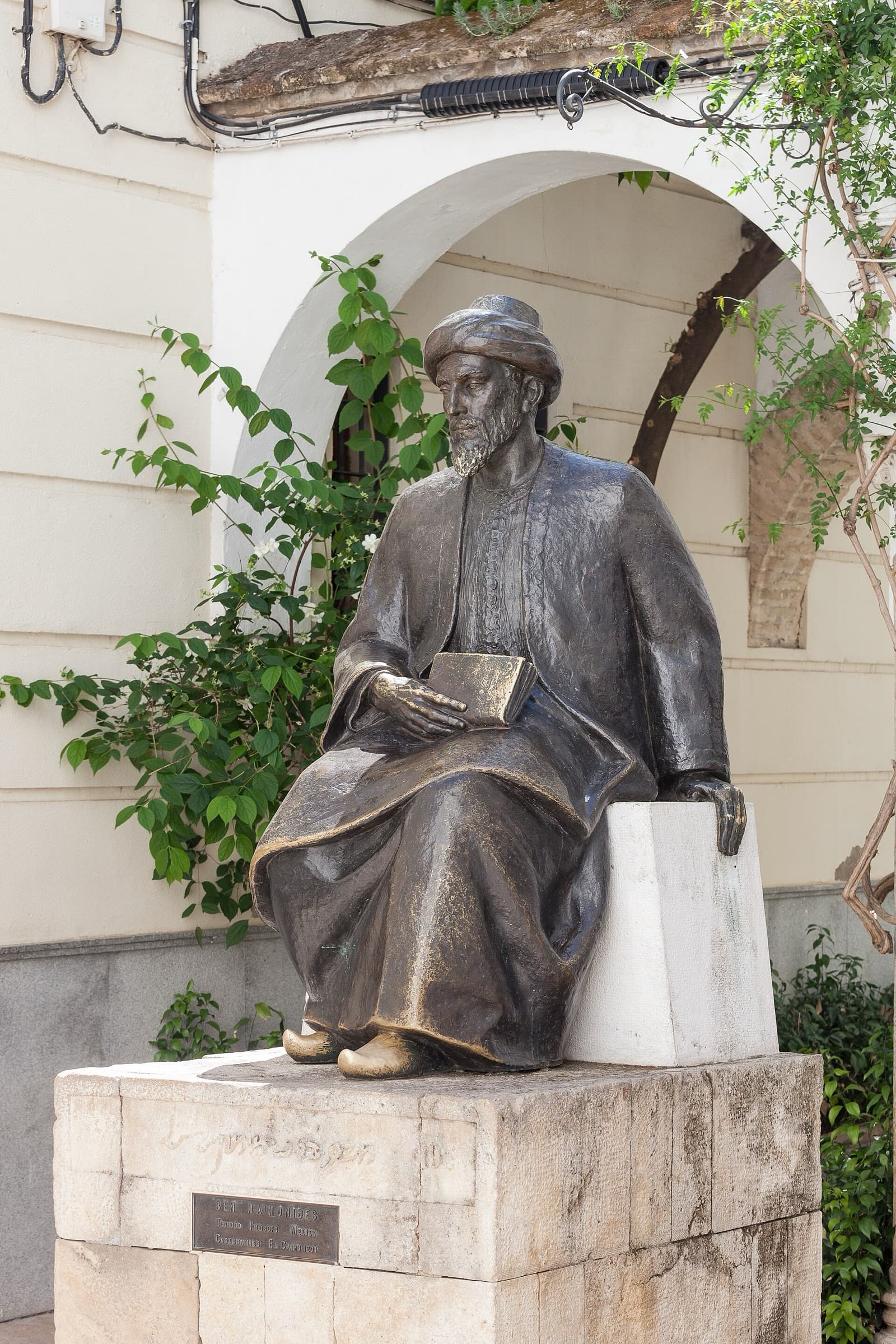
Jewish philosophy isn't dusty medieval scholasticism or abstract academic debate. It's a living, breathing tradition of people wrestling with the deepest questions: how do we know what's true? What do we owe each other? How do we balance reason with faith, the individual with the community? Two philosophers stand out as towering figures in this tradition: Maimonides (the Rambam), a medieval sage who harmonized Aristotle with Torah, and Emmanuel Levinas, a 20th-century thinker who flipped Western philosophy on its head by arguing that ethics, not being, is first philosophy. Understanding them means understanding Jewish intellectual pride itself.
Maimonides: The Rambam and the Marriage of Reason and Faith
Moses ben Maimon, known as Maimonides or the Rambam (1138 to 1204), lived in a time of intellectual ferment. Born in Córdoba, Spain, he spent much of his life in Fez (Morocco) and Cairo (Egypt), places where Jewish, Christian, and Muslim scholars were all grappling with the same ancient texts and modern ideas. Aristotle had been rediscovered in Europe. Science was advancing. And many Jews found themselves torn: how could they hold Aristotelian rationalism and Jewish faith in the same mind without one destroying the other?
Maimonides wasn't content to keep them separate. He dove in.
His masterwork, the Guide for the Perplexed (Moreh Nevuchim), written around 1190 and originally composed in Judeo-Arabic as a letter to his student Rabbi Joseph ben Judah of Ceuta, was his answer to this perplexity. The "perplexed" person wasn't stupid or faithless. They were educated, thoughtful, torn between worlds. The Guide speaks directly to them.
What Maimonides Actually Argued
Maimonides didn't argue that reason and revelation were opposites. Instead, he showed how they could dialogue. He tackled some of the hardest questions head-on: If God is incorporeal and infinite, how can the Bible describe God with a face, hands, and emotions? If God is perfect and unchanging, how can God be affected by human prayer? How do we square free will with divine omniscience?
His solution was neither capitulation to science nor rejection of philosophy. He developed what scholars call "negative theology," arguing that our language about God is fundamentally limited. We can say what God isn't (not corporeal, not limited by time, not subject to passion), but we cannot fully say what God is. The highest human knowledge isn't claiming to understand the divine directly, but recognizing the limits of our understanding.
This sounds abstract, but it was revolutionary. It meant that a serious Jew could study Aristotelian logic and physics, could think rigorously about the natural world, and not be betraying faith. Reason and revelation weren't enemies. They were different languages describing the same reality from different vantage points.
Why This Mattered in His Time
Maimonides' project was urgent. Jewish communities across the Mediterranean had begun fragmenting as some Jews embraced secular philosophy while others rejected it entirely. Some authorities wanted to ban Greek philosophical study altogether, seeing it as a threat. Others abandoned Jewish practice in pursuit of pure reason. Maimonides offered a third way: deep engagement with both.
His Guide for the Perplexed became the definitive text for educated Jews who refused to split themselves in two. You could read Aristotle. You could study medicine and astronomy. You could engage science. And you could remain authentically, richly Jewish. This wasn't a watering-down of either tradition. It was a genuine synthesis, hard-won through rigorous thought.
His Broader Legacy
Maimonides also codified Jewish law in the Mishneh Torah and wrote extensively on theology, medicine, and science. His influence on medieval Christian and Muslim philosophy was enormous. Thomas Aquinas drew on him. Dante cited him. But his deepest impact stayed within the Jewish tradition: he proved that intellectual rigor and Jewish identity could strengthen each other. He made Jewish thought an equal partner in the greatest philosophical debates of the medieval world.
Even today, when Jews struggle with how to be both modern and traditional, both secular and faith-holding, Maimonides offers a model. He shows that the struggle itself is fertile ground, not a problem to solve by choosing sides.
Emmanuel Levinas: Ethics Before Ontology
Fast forward seven centuries. Emmanuel Levinas (1903 to 1995) lived through World War II, survived the Holocaust, and emerged to ask fundamentally different questions than the medieval philosophers. His work doesn't reconcile faith and reason. Instead, it challenges the very foundation of Western philosophy itself.
The mainstream philosophical tradition, from Plato onward, starts with being, ontology. What exists? How does it work? But Levinas argues this is backwards. The first philosophy shouldn't be about being. It should be about ethics.
The Encounter with the Other
Levinas's core insight is stunning in its simplicity and its radicalism: the face of the other person makes an infinite demand on me before I've even thought about it. When you encounter another human being, face-to-face, you don't first analyze them or categorize them. You feel their vulnerability, their singularity, their claim on you. Their neediness precedes your reasoning.
This isn't sentimental. Levinas is describing something he calls "alterity," the otherness of the Other. The Other is not a reflection of me. They're not something I can fully know or reduce to my categories. They are irreducible. And that irreducibility creates an infinite ethical responsibility.
Think about it: if you truly meet another person, you've already admitted they can't be fully known by you. You can't reduce them to a set of facts or properties. And that gap, that alterity (their otherness, their singularity), is where ethics lives. It's in the moment you say yes to another person's vulnerability, before any calculation of what you owe them.
The Radical Break from Western Philosophy
For most of Western philosophy, ethics comes after ontology. First we ask what exists and how we know it. Then, based on that knowledge, we derive ethical principles. We build moral systems on rational foundations. But Levinas flips this entirely. Ethics doesn't flow from rational principles. Ethics is primary. It's the ground from which everything else grows.
This matters because it changes how we think about responsibility. In a rational system, I'm responsible for what I've chosen to do, for what I can control. But for Levinas, I'm responsible before choice, before reason. The Other's face creates a responsibility I never consented to. I'm responsible for what I didn't do, for what I couldn't even imagine not doing.
It sounds paradoxical. But Levinas lived it. As a Jewish survivor of the Holocaust, he experienced a world where rational systems failed catastrophically. Where German philosophy, culture, and science produced Auschwitz. Where reason alone couldn't explain or prevent unspeakable evil. His philosophy is his response to that catastrophe. He's asking: what can save us if reason cannot?
Why This Matters
For Levinas, this reorients everything. Traditional philosophy asked: "What can I know? What can I do? How do I organize society rationally?" Levinas flips the script. The prior question is: "What do I owe the Other? What is my infinite, asymmetrical responsibility to the person in front of me?"
This has implications for ethics, politics, even how we think about justice. A legal system based purely on rights and calculations might miss something deeper: the ethical encounter that precedes law. Responsibility to the Other comes before freedom. Knowledge comes after ethics.
In practical terms, Levinas's thought challenges us to see people as irreducible. Not as statistics, not as cases to be managed, not as problems to be solved. But as faces, as others who make infinite ethical claims on us. This applies to how we treat the poor, the stranger, the refugee, the prisoner, the person we've written off.
A Philosophy Born From Trauma
Levinas wrote out of the darkness of the Holocaust. He lost most of his family. The mid-20th century had shown, catastrophically, what happens when people stop seeing the Other as irreducibly human, as making infinite ethical claims on us. Philosophy, he believed, had to be rebuilt on the ground of this ethical encounter, this face-to-face recognition of the Other's alterity.
This isn't theoretical for Levinas. It's existential. He's not asking us to accept his philosophy as clever argument. He's asking us to feel the weight of another person's existence, to recognize that our freedom is secondary to our responsibility to that person.
From Medieval Spain to Modern Ethics: Themes That Connect
On the surface, Maimonides and Levinas seem to live in different universes. One is reconciling faith and reason in the 12th century. The other is rebuilding philosophy after catastrophe in the 20th. But they share a commitment to something profound: they both believe that Jewish thought grapples with problems that matter universally.
Maimonides showed that you could be deeply learned, rigorously rational, and authentically Jewish. Levinas showed that Jewish ethical experience, lived through trauma and survival, had something crucial to teach not just Jews but all of philosophy. Both refused the false choice between particularism and universalism. Both said: we are rooted in our tradition, and we have something to say to everyone.
The Question of Responsibility
There's an unexpected echo between them. Maimonides, in his legal codes and his writings on ethics, emphasizes the Jewish obligations to the poor, the stranger, the widow, the orphan. These aren't abstract duties. They're specific relationships where we are responsible to actual people.
Levinas takes this intuition and makes it the foundation of all philosophy. What Maimonides treated as one important category among others, Levinas makes primary: the ethical relationship to the Other precedes and grounds all other claims.
In Maimonides's framework, ethics flows from Jewish law and Jewish tradition. In Levinas's framework, ethics precedes law. But both arrive at the same place: our relationship to the Other, the vulnerable person, the one who can make no claim on us except the claim of their existence, is central to what it means to be human.
The Jew as Thinker
Both philosophers also embody what it means to be a Jewish intellectual. They inherit a tradition thousands of years old, engage it seriously and creatively, and speak out into the broader world. Maimonides didn't hide his thinking or water it down. Neither did Levinas. They trusted that rigorous, honest engagement with Jewish sources and Jewish experience would yield insights worth hearing everywhere.
This is a lesson for any tradition: your deepest particularities, your specific history and heritage, often contain your most universal insights. Maimonides thought Aristotle was important, but he thought Torah was deeper. Levinas thought German philosophy was important, but he thought the ethical awakening of the Jewish people, awakened by catastrophe, was more important. Both trusted their tradition enough to let it speak.
Why Jewish Philosophy Still Matters Today
We live in an age of fragmentation and calculation. We're encouraged to think of ourselves as isolated individuals making rational choices in a marketplace of ideas and goods. Everything gets reduced to transaction. Our relationships are quantified. Our impact is measured in metrics. We're encouraged to optimize, to scale, to rationalize.
Jewish philosophy pushes back. Maimonides reminds us that the deepest truths resist simple calculation. Our knowledge is limited. Mystery isn't a weakness of reason. It's where reason meets humility. There's a kind of intellectual humility in Maimonides that we desperately need: the willingness to say "we cannot fully understand this" rather than pretend our categories are adequate.
Levinas reminds us that ethics isn't a set of rules we apply to strangers. It's an infinite responsibility that begins in the face-to-face encounter with another person's vulnerability. Before there's a law, before there's a principle, there's this person in front of you, asking something of you. Not with words, but with their sheer otherness. Their irreducible humanity.
These aren't comfortable ideas. They don't fit neatly into how we're taught to think. But they're genuinely Jewish, and they're genuinely profound. Maimonides and Levinas show us what happens when intellectual rigor meets real human stakes. When you refuse to separate thinking from living. When you take both tradition and modernity seriously.
The Living Legacy
Maimonides' writings are studied in universities, synagogues, and study groups around the world. His influence on Jewish law continues to shape how communities understand halakhah today. His example of harmonizing reason and faith still speaks to people trying to hold both science and spirituality.
Levinas has influenced not just philosophers but theologians, political theorists, and anyone trying to think about justice and ethics in a post-Holocaust world. His work reminds us that philosophy isn't just for academics. It's about how we live with each other. It's about recognizing the Other. It's about taking responsibility seriously.
In both cases, the lesson is the same: Jewish thought isn't an artifact or a museum piece. It's alive. It asks questions we still need to ask. It speaks to problems we still need to solve. When we engage with Maimonides and Levinas, we're not simply studying history. We're joining a conversation that's been going on for centuries, a conversation about how to live with integrity, how to think rigorously, and how to take our responsibility to each other seriously.
FAQ
What is the main idea of Maimonides' Guide for the Perplexed? Maimonides argues that reason and faith don't contradict each other but speak different languages about the same reality. The "perplexed" reader is someone educated and thoughtful, torn between Aristotelian philosophy and Torah. The Guide shows how to hold both without either destroying the other.
What does Levinas mean by "the Other"? For Levinas, the Other is another person in their irreducible alterity, their otherness and singularity, their refusal to be fully known or categorized by me. Encountering the Other's face creates an infinite ethical responsibility before any rational deliberation.
Did Maimonides and Levinas influence each other? No, they lived in different centuries (Maimonides in the 12th, Levinas in the 20th). But they both represent a Jewish philosophical tradition of taking intellectual rigor and human ethics seriously as rooted in Jewish sources.
Is Jewish philosophy still taught today? Yes, extensively. Universities worldwide offer courses on Maimonides, Levinas, and other Jewish philosophers. Synagogues and Jewish learning centers study these thinkers in adult education programs. Their work continues to influence contemporary ethics, theology, and political philosophy.
How can I learn more about these philosophers? Start with accessible secondary sources like articles on Maimonides and Levinas on Stanford Encyclopedia of Philosophy. For Maimonides, The Guide for the Perplexed itself is now available in modern translations. For Levinas, Totality and Infinity is his major work, though Ethics and Infinity (interviews) is more accessible for beginners.


