
Jewish Music: Tradition, Soul, and Pride
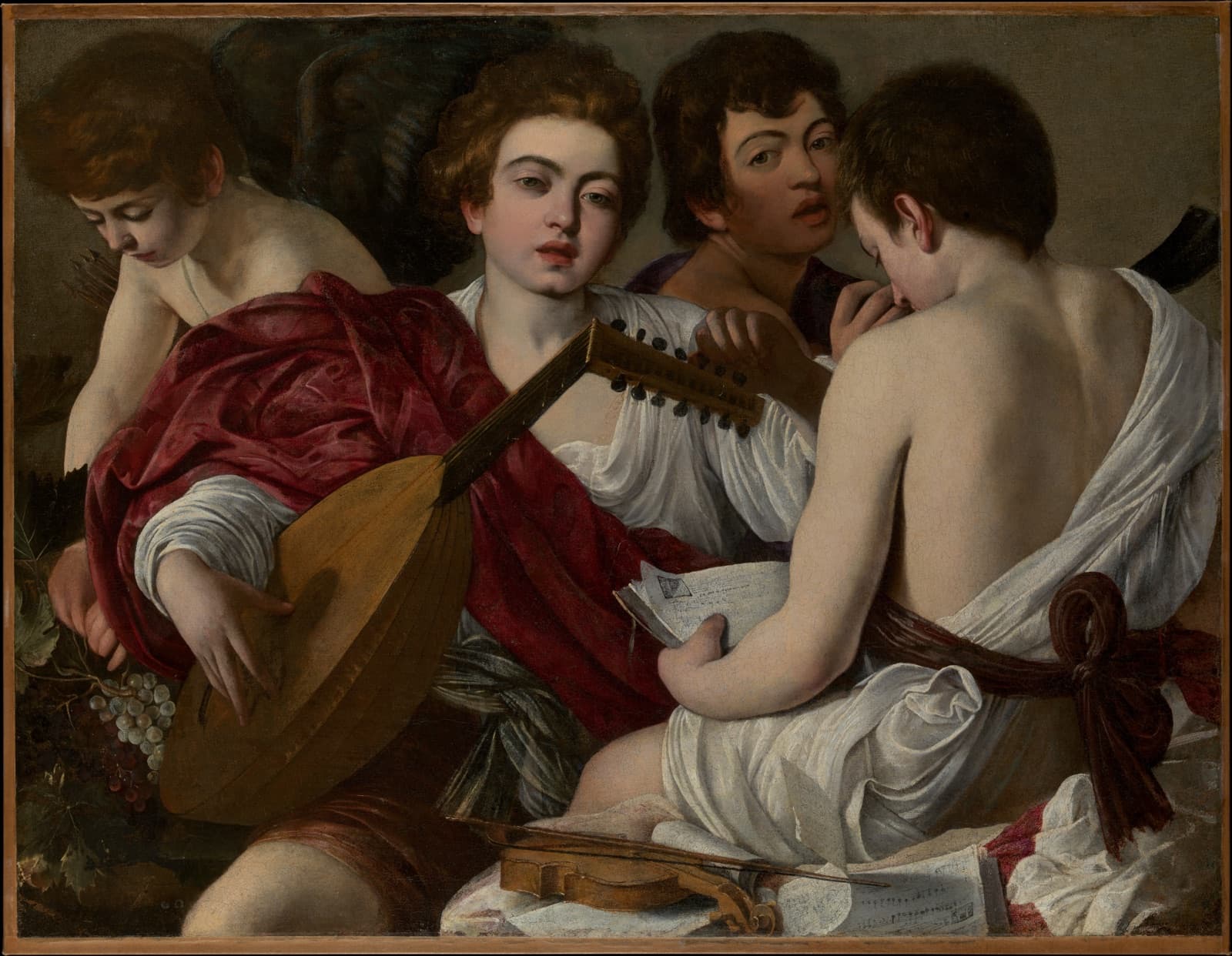
Jewish music is the emotional heartbeat of a people, and it has never been content to stay in the background. From the soaring prayers of cantorial tradition to the wordless niggunim of Hasidic tables, the frenetic fiddle of klezmer bands, and the experimental fusion of artists today, Jewish music tells the story of who we are: resilient, joyful, and unapologetically complex. It is a prayer, a party, and a statement of presence all at once, and it remains one of the most vital ways Jews of every level of observance connect to their heritage.
What Is Jewish Music, Really?
Jewish music spans genres that don't fit neatly into boxes. It's simultaneously sacred and social, ancient and cutting-edge, mournful and ecstatic. What binds it together is a lineage of meaning rather than a single sound. Each piece carries memory: exile and return, the holidays that mark time, the weddings that mark life, the communities that survived.
The Jewish diaspora spread music across every continent. Ashkenazi traditions from Eastern Europe, Sephardic melodies from the Mediterranean and North Africa, Mizrahi sounds from the Middle East: each tradition maintained distinct modes, instruments, and emotional signatures, and each absorbed the sounds of the places Jews lived. When these communities migrated and collided, the music evolved. The core never shifted. Jewish music serves connection. It's how we pray, how we celebrate, how we remember, and how we say "we are still here."
The instruments changed with geography. In Eastern Europe, the klezmer clarinet and violin became iconic. In synagogues across Christendom, the cantor's unaccompanied voice dominated. In Sephardic communities, oud and percussion wove themselves into Jewish song. Today, a Jewish musician might layer synthesizers over niggunim, or write a folk-punk song about Hebrew grammar. That range is the whole point.
The Cantorial Voice: Music of Prayer
Cantorial music (hazzanut) is the voice of Jewish prayer itself. The psalms sung in the ancient Temple shaped the synagogue song that followed, and for centuries cantors have led their communities in liturgy, transforming Hebrew texts into soaring vocal lines that express what words alone cannot. A cantor's job was never performance in the modern sense. The cantor is a vehicle for the congregation's collective devotion.
The cantorial voice is immediately recognizable to anyone who has sat in a synagogue during the High Holidays. It's ornate and deeply emotional, with sudden leaps and dramatic pauses that feel almost conversational with the Divine. The style uses modes and ornamentation called "krechts" (a kind of sigh or cry) that emerged directly from Eastern European Jewish tradition. Those sobs in the line are emotion encoded in sound. Different melodies mark different seasons, too: the haunting melody of "Kol Nidre" announces the solemnity of Yom Kippur.
Historically, becoming a hazzan meant years of apprenticeship, studying both the melodies and their spiritual weight. The role carried real status: a great cantor could move congregations to tears. In the 19th and early 20th centuries, famous cantors were celebrities in Jewish communities, recording on early gramophones and packing concert halls.
Yossele Rosenblatt, the Jewish Caruso
The greatest of that golden age was Yossele Rosenblatt (1882 to 1933), a Ukrainian-born cantor from a dynasty of cantors. He trained in Hungary and Bratislava before immigrating to America in 1912, where he became cantor at an Orthodox synagogue in Harlem. People called him the "Jewish Caruso" for his extraordinary range and technique, including a rare ability to move from full voice to falsetto with barely a perceptible break. When he was offered a leading opera role, Rosenblatt refused, declaring he would use his gift only in service to God and his religion. He composed approximately 200 pieces that remain part of the cantorial canon.
Modern cantorial music keeps evolving. You'll hear traditional liturgical chanting in many synagogues today, but cantors now often integrate contemporary compositional techniques, and female cantors have reshaped the tradition in recent decades, bringing new vocal colors and perspectives to roles historically held by men. The core remains: the cantor bridges heaven and earth through the human voice.
The Niggun: Melody Without Words
In the late 1700s and 1800s, Hasidic communities in Eastern Europe made a practice central to Jewish spiritual life: the niggun (plural: niggunim), a wordless melody used in prayer, meditation, and around the table. Hasidic rebbes created and passed down these tunes as a form of direct spiritual expression.
What made niggunim special was their democracy. You didn't need to be learned to sing one, and you didn't need to understand it intellectually to feel it. The melody did the work of the soul. As pogroms and oppression intensified, singing together also became a form of resistance, a way of saying that no one could silence this community. That thread runs through all of Jewish music history: when circumstances were darkest, the music grew louder.
The 20th century gave the niggun spirit a guitar. Rabbi Shlomo Carlebach (1925 to 1994), "the Singing Rabbi," born in Berlin and trained in Orthodox yeshivas in Brooklyn and New Jersey, is remembered as the foremost Jewish religious songwriter of his century. Over a 40-year career he composed thousands of melodies and recorded more than 25 albums, pairing brief lyrics, often drawn from Jewish texts or the weekly Torah portion, with simple tunes anyone could learn. His songs spread worldwide because they were memorable, moving, and fun to sing, and for many young Jews finding their way back to their heritage, a Carlebach melody was the first door that opened.
Klezmer: The Dancing Soul of Ashkenazi Tradition
Klezmer music emerged from the shtetls of Eastern Europe, small Jewish towns where professional musicians, the klezmorim, played for weddings, celebrations, and special occasions. The word comes from the Hebrew klei zemer, "vessels of song," meaning musical instruments. A klezmer band typically featured violin, clarinet, accordion, and percussion, and the music was infectious, energetic, and built for dancing.
Musicologists debate exactly when klezmer took shape; some place it around the turn of the 18th to 19th century, others earlier. What's clear is that it grew from a rich musical ecology: cantorial music, Hasidic niggunim, Yiddish theater, and the folk traditions of Romanian, Greek, Polish, Ukrainian, and Hungarian neighbors, with borrowings from Romani musicians and Ottoman music. The result was deeply hybrid, which is exactly what made it Jewish.
Klezmer lives on the social side of Jewish life. This is the music that gets people moving at a simcha. The melodies are sometimes melancholic, sometimes joyful, often both at once, what musicologists call "ornamentation within minor keys," patterns that make you want to dance while your eyes mist over. A klezmer melody is often recognizable by its use of the Dorian mode, expressive bends and slides on the strings, and sudden key changes that would make classical musicians uncomfortable but feel absolutely natural on a dance floor.
The history of klezmer is a history of immigration and adaptation. When Eastern European Jews arrived in America in the late 1800s and early 1900s, they brought their musicians. Early recordings from 1920s New York capture klezmer bands improvising and borrowing from the jazz and American folk music around them, while keeping the melodic DNA of the old country intact.
Klezmer nearly died during the Holocaust. The communities where it thrived were devastated. But a revival that began in the 1970s and accelerated through the 1980s brought it back, as a new generation of musicians, many not raised in traditional Jewish communities, studied old recordings to reconnect with their heritage. The Klezmatics, founded in New York City in 1986, became the face of that revival and remain the only Grammy Award-winning klezmer band, blending Yiddish tradition with jazz, gospel, punk, classical, Latin, and Balkan influences. Golem, founded in New York by Annette Ezekiel Kogan in 2000, calls itself "where Eastern Europe meets the Lower East Side" and sings in Yiddish, English, Russian, Ukrainian, French, Serbo-Croatian, and Romany. Today's klezmer ranges from purist reconstruction to klezmer-punk, klezmer-electronic, and klezmer-funk. The best of it still makes you understand why people danced at weddings even when times were hard.
Music at the Simcha: Weddings and the Circle Dance
Jewish weddings have always been musical events. Music marks the occasion as sacred time, separate from ordinary life. Three musical moments stand out in the traditional Ashkenazi wedding: the badeken (veiling of the bride), the processional, and the celebration afterward.
The music of the badeken is often quiet and intimate, a moment for reflection and anticipation. The processional tends toward the stately. The celebration that follows? That's klezmer territory. Guests dance the hora, a circle dance where everyone holds hands and moves together. The rhythm is hypnotic and the communal feeling profound. At a wedding you're part of a circle that extends backward through generations and outward through everyone in the room.
"Hava Nagila" has become almost synonymous with Jewish celebration. The title means "let us rejoice," and the melody began as a Hasidic niggun in Ukraine before musicologist Abraham Zvi Idelsohn adapted it with lyrics drawn from Psalms ("Let us rejoice and be glad") in Jerusalem in 1918. It spread worldwide as Jewish communities emigrated and became the go-to wedding song across the diaspora. Some musicians and cultural observers argue it's been oversimplified in mainstream use, but its staying power speaks to something real: a people asserting its right to joy, and the impulse to take an old melody and make it our own.
"Ma'oz Tzur" (Rock of Ages) is older still, written in 13th-century Germany and sung for over 700 years as families light the Hanukkah candles. To sing it is to join a chain of singers stretching back centuries.
Sephardic and Mizrahi weddings bring their own musical traditions: different modal systems, different instrumentation, different celebration styles. There's no single "Jewish wedding music." There are many, reflecting the diversity of Jewish communities across the world.
Songs of a Nation: Naomi Shemer
Some Jewish music belongs to a people; some also belongs to a country. Naomi Shemer (1930 to 2004), known as the First Lady of Israeli Song, was born on Kibbutz Kinneret, overlooking the Sea of Galilee, and those landscapes shaped everything she wrote. Her most famous song, "Jerusalem of Gold" (Yerushalayim Shel Zahav), was written in 1967, just before the Six-Day War. It gave voice to a longing millions of Jews held: to return to Jerusalem's Old City, closed to Jews for two decades under Jordanian rule. Weaving biblical references and Talmudic imagery into a meditation on exile and return, it became an anthem when the city was reunified weeks after the song's release. Shemer received the Israel Prize in 1983, and her songs remain part of the fabric of Israeli life.
Contemporary Jewish Music: Old Roots, New Branches
Modern Jewish musicians are living proof that heritage and innovation get along fine. They're weaving traditional sounds into folk, rock, hip-hop, electronic, experimental, and pop.
Matisyahu blended Hasidic prayer melodies with reggae, hip-hop, and rock production, introducing millions to Jewish music outside the concert hall or synagogue. Idan Raichel, an Israeli singer and producer, layers electronic production with Hebrew lyrics and Middle Eastern instrumental colors. Yael Naim, also Israeli, makes intimate, genre-bending pop with Israeli folk influences. Regina Spektor, a Russian-Jewish musician who faced antisemitism growing up in the Soviet Union, writes quirky, emotionally complex songs that draw from her Jewish identity, often with dark humor and unpredictable arrangements.
None of these artists are preserving Jewish music in amber. They're living it, which means reshaping it for their own time. A musician setting traditional Hebrew texts to electronic beats is doing what klezmer musicians did when they first encountered jazz: showing that the tradition is alive, and alive things grow.
The scene also includes a thriving experimental wing, with composers writing art music that engages Jewish themes, liturgy, or language, and festival organizers programming tradition and innovation side by side. At the grassroots, young Jews are learning old melodies and figuring out how to make them sound new. This is what cultural pride sounds like in practice: honoring what came before and making something your own, both at once.
Building Your Own Jewish Music Journey
You don't need specialized knowledge or community connections to go deeper anymore. Streaming services host entire playlists of klezmer, cantorial music, Sephardic traditions, and contemporary Jewish artists; you can explore the whole arc of a tradition in an afternoon. Mostly Music and the Milken Archive of Jewish Music offer deep collections of historical recordings and context.
Start with what calls to you. If you want to feel the weight of tradition, listen to legendary cantors like Yossele Rosenblatt or Jan Peerce. If you want to dance, put on the Klezmatics or any klezmer compilation. If you want to feel the longing of generations, play Naomi Shemer's "Jerusalem of Gold." For accessible spiritual melody, try Shlomo Carlebach. And YouTube is full of niggunim sung by different communities, where the meaning lives in pure melody.
Many Jewish communities offer concerts and educational events. Klezmer workshops teach the basics to anyone interested, and summer camps, retreat centers, synagogues, and Jewish music festivals bring musicians and audiences together. These resources exist because the community wants its music to survive and flourish.
Pride in your heritage shows up in what you listen to, what you celebrate, and what you pass forward. Collections like Chai Fashion and Yiddish Yarns from Kosher Couture let you wear that pride while you're hearing it. The music and the message are intertwined.
The Resilience of Melody
Jewish music endured what most cultures never had to survive. Entire musical traditions were wiped out in the Holocaust. Diaspora communities lost connection to home countries. Languages shifted and faded. Yet the melodies persisted. A cantor could sing ancient prayers in a new country with the same emotional intensity. A musician with only old recordings could reconstruct a tradition nearly lost. A teenager could learn a niggun and feel connected to generations of Jews across time and space.
Music carries memory in ways written words sometimes cannot. A melody gets into your body, your muscle memory, your sense of continuity. You can hear a klezmer tune your grandmother heard and know, in that moment, that you're part of something unbroken.
Jewish music is still being written, still being transformed, still connecting communities. Every time someone sings a niggun, learns a klezmer tune, or teaches a Carlebach melody to a new generation, they're choosing to be part of that chain. Call it memory with a beat, and a kind of power.
FAQ
What's the difference between Ashkenazi, Sephardic, and Mizrahi Jewish music?
These terms refer to different Jewish communities and their musical traditions. Ashkenazi music (from Eastern and Central Europe) features klezmer and cantorial styles. Sephardic traditions (from Spain, North Africa, and the Mediterranean) use different modal systems and Middle Eastern instruments. Mizrahi music comes from Middle Eastern Jewish communities. Each has its own melodic language, and all are part of the broader Jewish musical family.
What is a niggun?
A niggun is a wordless melody, used mainly in Hasidic prayer and gatherings. Niggunim are simple, often repetitive tunes that carry emotion and spiritual meaning without lyrics, and singing them together has long been a way to affirm joy and identity, especially in hard times.
Is klezmer only played at weddings?
No. Klezmer is historically tied to weddings and celebrations, but it's a complete musical tradition with many moods, from joyful dance tunes to introspective pieces, and today it includes concert music and fusion with other genres.
Can I learn klezmer music if I'm not Jewish?
Absolutely. Many klezmer musicians today learned the tradition as adults, outside a family context. What matters is respect for its cultural significance and a commitment to learning it well. Musicians of many backgrounds play klezmer professionally and teach workshops.
Is "Hava Nagila" really the most important Jewish wedding song?
It's the most famous, but Jewish weddings feature many songs depending on community tradition, family preference, and what the musicians know. "Ma'oz Tzur," "Erev Shel Shoshanim," the hora, and countless other pieces appear at celebrations. "Hava Nagila" became a global symbol partly through diaspora mixing and partly through popular culture, but it's far from the only choice.
How do I find live klezmer or Jewish music performances?
Look for Jewish music festivals in your region, check local synagogues and Jewish community centers for concert listings, and follow artists on streaming platforms for tour dates. Many cities also have klezmer or Jewish music ensembles that perform regularly.


