
Jewish Mourning Traditions Explained: Shiva & Kaddish
Jewish mourning follows a structured sequence of periods — aninut, shiva, shloshim, and, for a parent, a full year — each with its own customs for honoring the dead and caring for the living. Jewish mourning traditions are built around a simple, compassionate idea: grief needs structure, not silence, and a community's job is to show up for the bereaved in specific, practical ways rather than leaving them to grieve alone. This piece walks through what those traditions actually involve, and how to show up well if someone in your life is observing them.
What Happens Immediately After a Death?
The period between death and burial is called aninut, and Jewish law treats a mourner in aninut with particular gentleness. During this time, an onen (a mourner in aninut) is exempt from most positive religious obligations, including regular prayer, on the understanding that arranging a burial and absorbing fresh loss leaves no room for anything else. It's a quiet acknowledgment, built directly into Jewish law, that grief in its rawest hours isn't the moment to ask someone to perform normalcy.
Jewish tradition places a strong emphasis on burying the dead promptly, generally within a day or two whenever possible. That urgency traces back to Deuteronomy 21:22–23, which instructs that a body must not be left overnight but buried the same day — a law stated in the Torah about a specific case, but one the rabbis extended into a broader principle of k'vod hamet, honoring the dead by not letting burial be delayed without good reason. In practice, the body is cared for by a chevra kadisha (a burial society), volunteers who perform tahara, a ritual washing and preparation carried out with quiet dignity, and who traditionally accompany the body so it is never left alone before burial — a role called being a shomer, or guardian.
What Is Keriah?
Keriah (קְרִיעָה, "tearing") is the custom of tearing a piece of clothing — or, in many communities today, a small black ribbon pinned to clothing — as an outward expression of grief, usually done just before the funeral service. Immediate family members (a parent, spouse, sibling, or child of the deceased) perform keriah, typically on the left side, over the heart, for a parent, and on the right side for other relatives.
The gesture is old and deliberately visible: it marks a mourner as a mourner to everyone around them, in the same way a memorial candle or a covered mirror marks a house of shiva. Grief, in Jewish tradition, generally isn't meant to be private in the sense of invisible — it's meant to be seen, so the community knows how to respond.
What Is Shiva?
Shiva (שִׁבְעָה, "seven") is the seven-day mourning period observed by immediate family — a parent, spouse, sibling, or child — beginning right after burial. Shiva is the most well-known Jewish mourning custom: a structured week during which mourners largely remain at home while community members visit to offer comfort, share memories, and help meet practical needs, from meals to simply making sure someone isn't alone.
During shiva, mourners traditionally observe a cluster of customs meant to visibly set the week apart from ordinary life:
- Sitting on low stools or chairs, a physical posture of being "brought low" by grief
- Covering mirrors in the home, shifting focus away from personal appearance
- Wearing the torn garment or ribbon from keriah throughout the week
- Refraining from grooming, including haircuts and shaving
- Avoiding leather shoes, traditionally seen as a mark of comfort or luxury
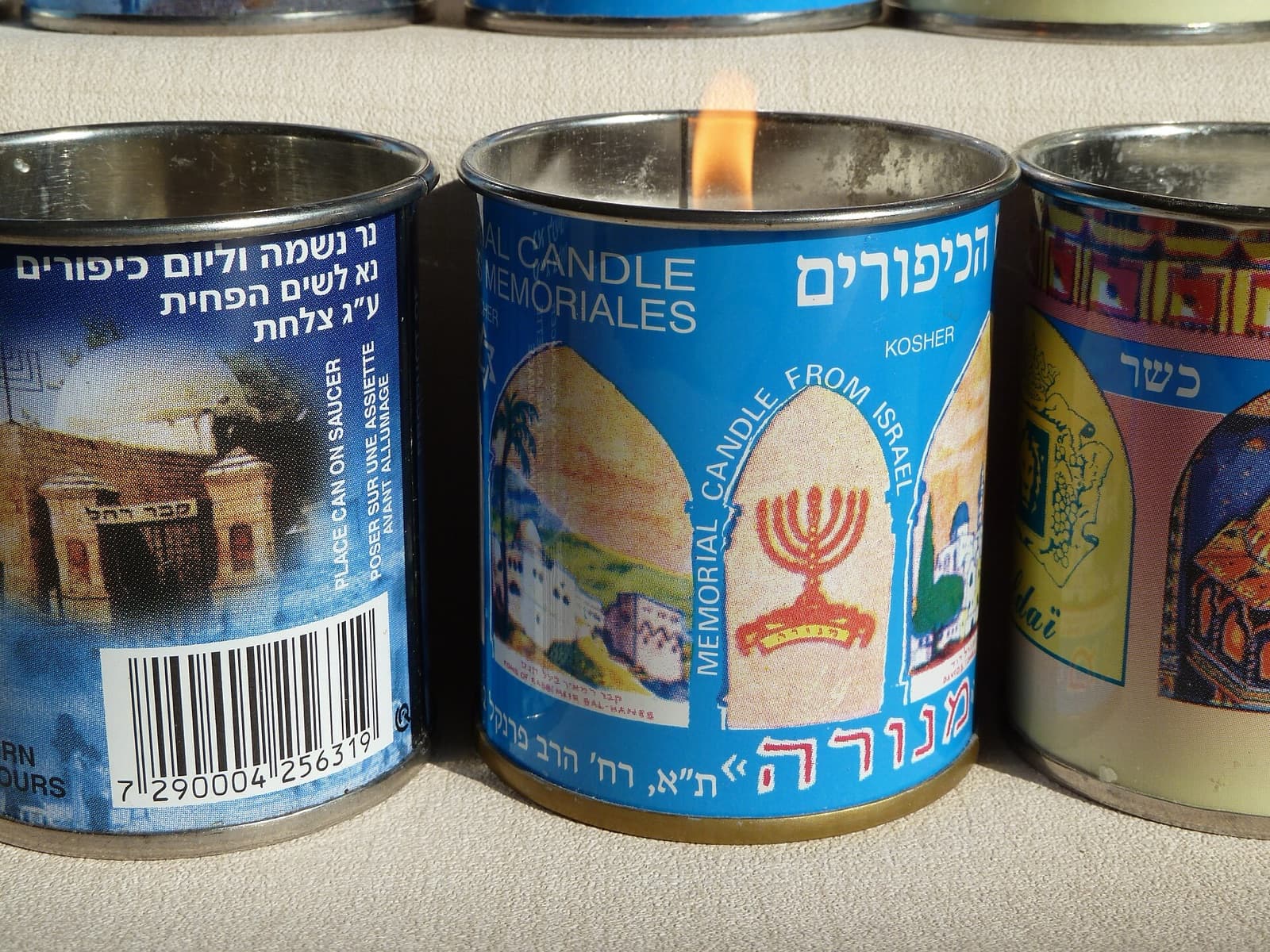
- Lighting a shiva candle that burns continuously for the full seven days
Visitors are traditionally asked to let the mourner set the tone rather than the other way around — waiting for the mourner to speak first, rather than filling the silence, and resisting the urge to offer explanations for the loss. The most well-known guidance for visiting a shiva house is simply to sit, to listen, and to let a mourner talk about the person they lost if they want to, without trying to fix or minimize the grief in front of you.
What Do You Say to a Mourner?
There's a specific phrase said upon first hearing that someone has died: Baruch Dayan HaEmet (בָּרוּךְ דַּיָּן הָאֱמֶת), "Blessed is the True Judge" — a brief acknowledgment of loss rather than an attempt to explain it. It's less a statement offered to the mourner directly and more something said by the person receiving the news.
When visiting a shiva house or offering condolences, a few phrases carry particular weight:
| Phrase | Meaning |
|---|---|
| Baruch Dayan HaEmet | "Blessed is the True Judge" — said on hearing of a death |
| HaMakom yenachem etchem b'toch she'ar avelei Tzion vi'Yerushalayim | "May God comfort you among the other mourners of Zion and Jerusalem" — traditionally said when leaving a shiva house |
| Zichrono livracha (for a man) / Zichronah livracha (for a woman) | "May his/her memory be a blessing" |
Beyond the set phrases, the most consistently repeated advice from Jewish grief counselors and rabbis alike is simple: your job isn't to make the mourner feel better or to explain the loss away. It's to be present, to acknowledge it plainly, and — if you knew the person who died — to offer a specific memory rather than a generic condolence. A story the family hasn't heard before is worth far more than a perfectly chosen sentence.
What Happens After Shiva Ends?
Shiva concludes on the morning of the seventh day, usually after a brief prayer service, at which point mourners traditionally take a short walk outside the home — a small, symbolic re-entry into the world. But the mourning period isn't actually over yet.
Shloshim (שְׁלוֹשִׁים, "thirty") extends the mourning period to thirty days from burial, counting the days of shiva within it. Restrictions ease significantly during shloshim — mourners return to work and most normal activity — but certain practices continue, most notably continuing to avoid haircuts, shaving, and festive events like weddings or parties. This structured, tiered wind-down has old roots: the Talmud, in tractate Moed Katan 27b, describes the classic framework of "three days for weeping, seven for eulogy, and thirty for pressing clothes and cutting hair," a staged loosening of restriction that Jewish mourning practice still generally follows today.
For those mourning a spouse, sibling, or child, formal mourning customs conclude at the end of shloshim. For a parent, Jewish tradition asks for something longer.
What Is the Mourner's Kaddish, and Why Eleven Months?
The Mourner's Kaddish is a prayer recited by mourners, traditionally in the presence of a minyan (a quorum of ten adults), that — notably — never actually mentions death. It's built almost entirely around praising and sanctifying God's name, which is part of what makes it such a distinctive piece of Jewish mourning ritual: rather than dwelling explicitly on loss, it affirms continued faith and connection to community at the exact moment that connection might feel hardest to hold onto.
Those mourning a parent traditionally recite Kaddish daily for eleven months (not the full twelve, based on a tradition that a full year of mourning would imply the harshest possible judgment of the deceased's soul, which custom prefers to avoid asserting even in the case of someone entirely innocent). For a spouse, sibling, or child, some communities observe a shorter thirty-day period of Kaddish recitation, though customs vary by community. In every case, the practice means mourners often find themselves attending daily prayer services for months, frequently alongside other mourners doing the same thing — which turns what could be an isolating obligation into an unplanned, ongoing support structure.
What Is a Yahrzeit?
A yahrzeit (יאָרצײַט, Yiddish for "time of year") is the annual anniversary of a death, observed on the Hebrew calendar date each year going forward. On a loved one's yahrzeit, it's customary to light a 24-hour memorial candle, recite Kaddish again, and, in many communities, to give tzedakah (charity) in the person's memory.
That last custom — giving in someone's memory — is one Jewish mourning practice leans on heavily, at every stage from shiva through the yahrzeit years later. It reflects a broader idea in Jewish tradition that a life well-lived can keep doing good in the world through the actions taken in its memory, long after the person themselves is gone.
What Is Yizkor?
Yizkor ("remembrance") is a memorial prayer service held four times a year — on Yom Kippur, and during the festivals of Sukkot, Passover, and Shavuot — for anyone who has lost a parent, spouse, sibling, or child, regardless of how long ago the loss occurred. Unlike shiva or shloshim, which are tied to the immediate period after a death, Yizkor is a recurring communal moment, woven permanently into the calendar, that gives mourners a structured place to return to their grief year after year, alongside a community doing the very same thing.
Why Does Jewish Mourning Lean So Heavily on Community?
One thread runs through nearly every custom described above: almost none of it is designed to be done alone. The chevra kadisha performs tahara so a mourner isn't left to handle a body's preparation themselves. A minyan gathers so Kaddish can be recited. Neighbors organize meals so a shiva house doesn't also have to run a kitchen. Even Yizkor, years later, is said in a room full of other people doing the same thing.
That's not incidental — it reflects a broader Jewish instinct that grief, left completely private, tends to curdle into isolation, while grief held partly in public, structured and witnessed by a community, has somewhere to go. It's the same instinct behind so much of Jewish communal life: simchas are celebrated together, holidays are observed together, and, it turns out, loss is carried together too. Here at Kosher Couture, we spend most of our time writing about the joyful side of that same instinct — holidays, weddings, simchas — but it comes from the identical root: a culture that has never been especially comfortable letting its people go through big moments by themselves.
What Objects Carry Special Meaning in Jewish Mourning?
A few physical objects recur across nearly every stage of Jewish mourning, each carrying meaning beyond its practical use:
- The memorial candle, lit at the start of shiva and again on each yahrzeit, burning for 24 hours as a quiet, continuous marker of remembrance
- The keriah ribbon or torn garment, worn through shiva as a visible sign of loss
- A plain wooden casket, traditional in Jewish burial practice, reflecting the value of simplicity and equality in death regardless of the wealth a person held in life
- A stone, placed on a grave during a visit rather than flowers — a durable, lasting mark of having been there, in contrast to something that wilts and disappears
None of these objects are elaborate, and that's very much the point. Jewish mourning customs tend to favor plain, durable, repeatable gestures over anything ornate, keeping the focus squarely on presence and memory rather than display.
Frequently Asked Questions
How long does Jewish mourning last? It happens in stages: aninut (before burial), shiva (seven days), shloshim (thirty days total), and, for the loss of a parent, an extended period of eleven months for Kaddish recitation. After that, the yahrzeit and Yizkor services mark the loss annually going forward.
What should you bring to a shiva house? Food is the most traditional gift, since mourners are not expected to cook for themselves or guests during shiva. Many families set up meal coordination for this exact reason. A card, a donation to charity in the deceased's memory, or simply your presence are also meaningful and always appropriate.
Is it true you shouldn't speak first at a shiva visit? That's the traditional guidance, yes — visitors are generally encouraged to let the mourner initiate conversation rather than filling silence for them, though in practice many families welcome warm conversation either way. When in doubt, following the mourner's lead is the safest and most respectful approach.
Why do mourners avoid haircuts and shaving? These restrictions, observed to varying degrees through shloshim, are part of a broader Jewish mourning custom of setting aside personal appearance and comfort as a visible sign that ordinary life has been interrupted by loss.
What is the difference between shiva and shloshim? Shiva is the intensive seven-day period immediately following burial, typically observed at home with visitors. Shloshim is the fuller thirty-day period (which includes shiva within it) during which some restrictions ease but others, like avoiding celebrations, continue.
Jewish mourning tradition asks a community to do something simple and hard at once: to show up, again and again, in specific and practical ways, for as long as grief actually takes. If you're looking for a way to honor someone's memory, our piece on what tzedakah really means is a good place to start — giving in memory of someone is one of the oldest and most enduring Jewish responses to loss.


