
Jewish Historical Artifacts & Their Legacy
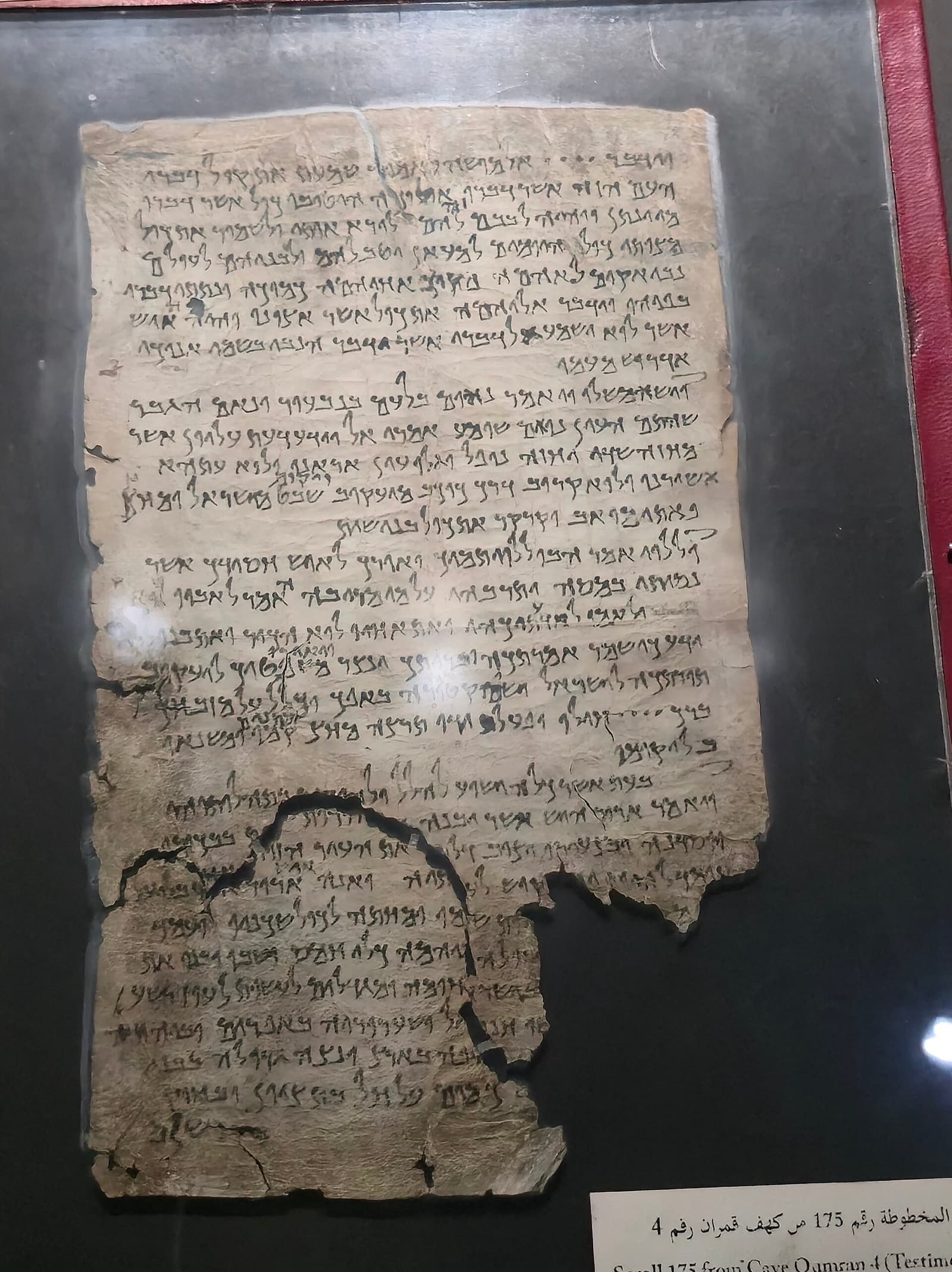
Jewish historical artifacts are tangible proof of a continuous story spanning thousands of years. From the Dead Sea Scrolls to temple coins, these objects reveal how Jewish identity persisted through diaspora, persecution, and cultural transformation. When you hold a connection to these artifacts, you're touching the same inheritance that shaped your people.
The Dead Sea Scrolls: Ancient Voices in Clay
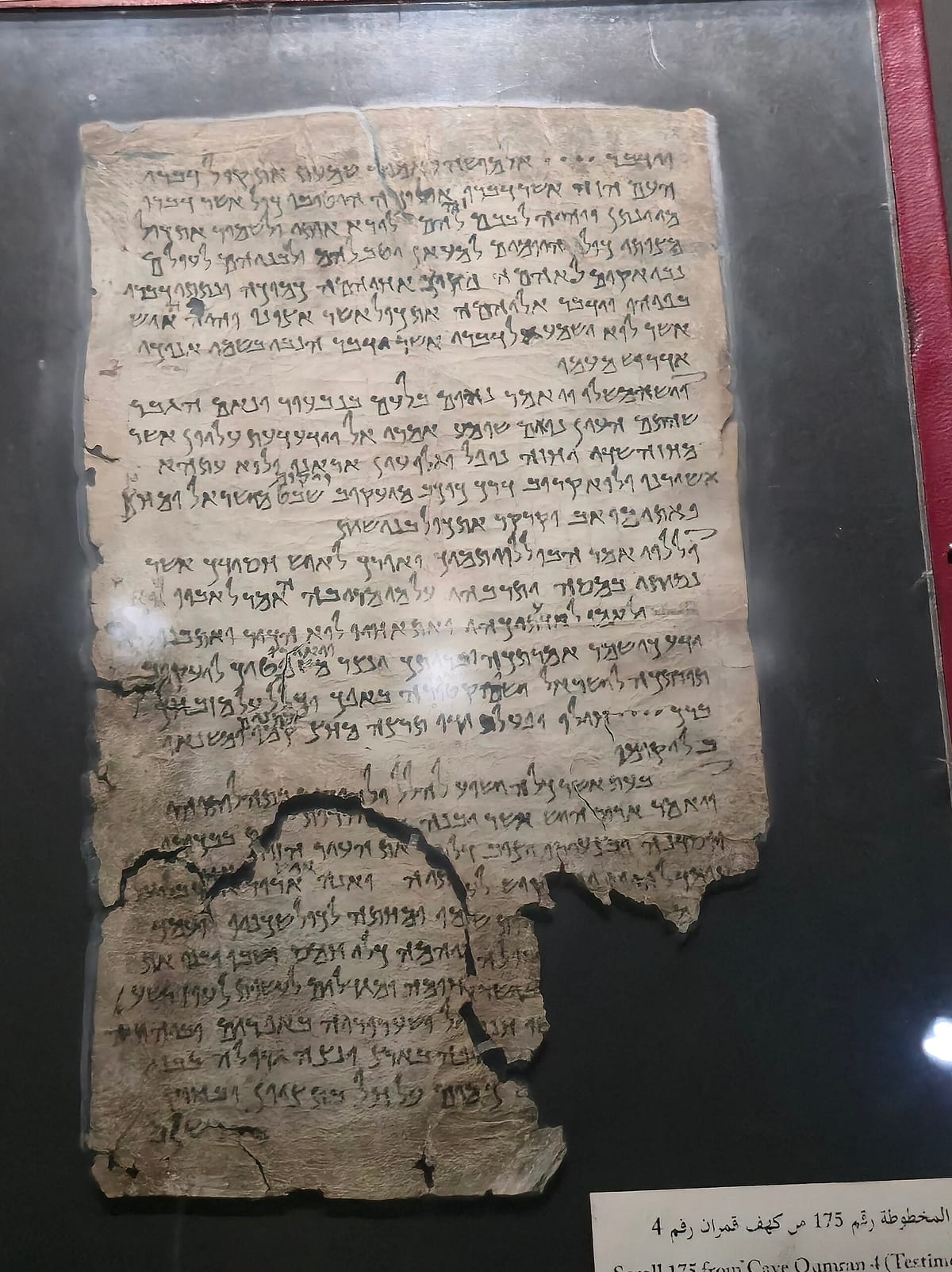 Photo: Mohammad hajeer, Wikimedia Commons (CC BY-SA 4.0)
In 1946, a Bedouin shepherd named Muhammad edh-Dhib was searching for a lost goat in the hills above the Dead Sea. He threw a rock into a cave and heard the sound of shattering pottery. What he found instead of a goat became one of the most significant archaeological discoveries of the twentieth century: the first of the Dead Sea Scrolls.
Over the next ten years, excavations revealed eleven caves containing more than 900 manuscripts. These weren't museum pieces destined for climate-controlled vaults. They were everyday documents of a Jewish community living between the 3rd century BCE and the 1st century CE, hidden away when invasion threatened their existence.
The scrolls contain portions of every book of the Hebrew Bible except Esther, alongside apocryphal texts and writings unique to the Qumran community. Some are biblical commentaries. Others are rules for communal living. A few are so fragmentary that scholars still debate what they once said. What ties them together is this: they're our oldest surviving manuscripts of the Hebrew scriptures, older by centuries than anything else we had.
Before Qumran, the oldest complete Hebrew Bible text we could point to dated to around 900 CE. The Dead Sea Scrolls pushed that back over a thousand years. They showed that the biblical text we inherit today is recognizably the same text ancient Jews were studying and copying. They weren't starting from scratch each generation. They were part of an unbroken chain of transmission.
The scrolls also revealed theological diversity in ancient Jewish life. One cave held texts from a sect that lived communally, practiced ritual purity obsessively, and saw themselves at odds with the Jerusalem priesthood. Another held biblical texts alongside mystical writings. This wasn't monolithic Judaism. It was Judaism in motion, wrestling with identity during the tumultuous Second Temple era.
Preservation happened by accident. Qumran sits in a climate where moisture is so rare that papyrus and parchment simply don't decay. The dry air and sealed caves created conditions closer to ancient Egypt than to anywhere else in the Middle East. The community that hid these scrolls didn't know they were creating a time capsule. They were protecting their library from Roman legions.
Beyond Qumran: Artifacts Across the Ages
The Dead Sea Scrolls dominate popular imagination, but the full picture of Jewish material culture is far richer. Coins, manuscripts, household objects, and ritual items all tell the story of how Jews lived, worshiped, and understood themselves.
Coins as Declarations: The Bar Kokhba Revolt
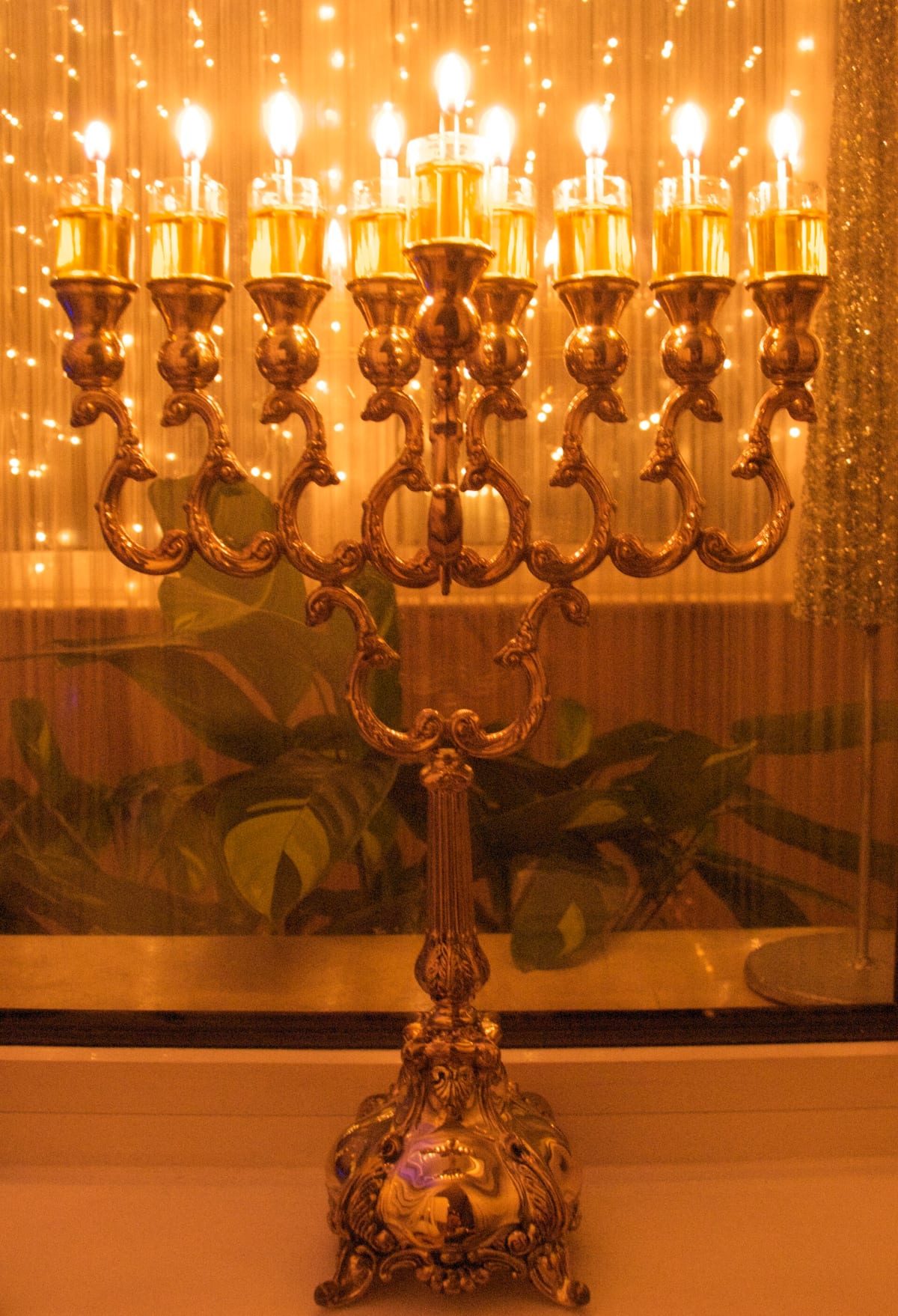 Photo: Daniel Dimitrov, Wikimedia Commons (CC BY-SA 4.0)
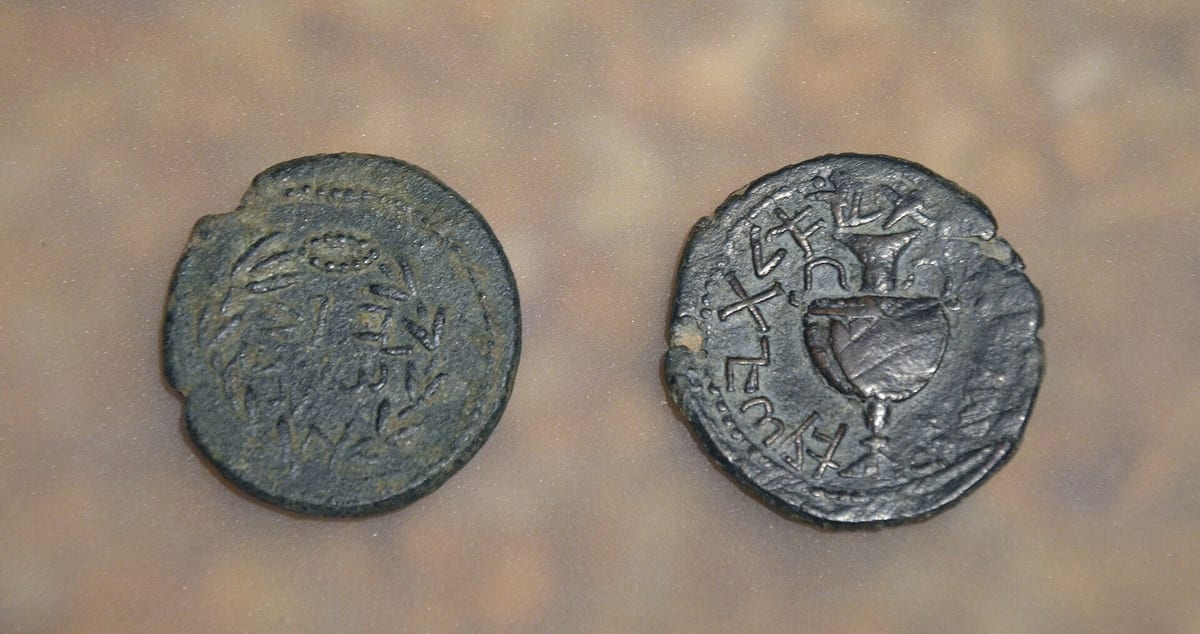 Photo: Carole Raddato, Wikimedia Commons (CC BY-SA 2.0)
In 132 CE, a Jewish leader named Simon bar Kokhba led an uprising against Rome. It was the last major Jewish military attempt to achieve sovereignty in Judea, and it failed catastrophically by 135 CE. But before it was crushed, the rebel government minted its own coins.
These coins are stunning archaeological evidence. They bear Hebrew inscriptions reading "Shimon" or "For the Freedom of Jerusalem." And they depict something unprecedented on Jewish coinage: the seven-branched menorah, the sacred lamp that stood in the Jerusalem Temple.
This wasn't accidental imagery. Bar Kokhba chose the menorah deliberately. It symbolized not just the Temple that Romans had destroyed in 70 CE, but the restoration his rebellion hoped to achieve. Every coin was a statement of defiance and faith rolled into bronze. Soldiers and merchants carrying them carried a political and religious message in their pockets.
The menorah on Bar Kokhba's coins became a historical template. It showed future generations what the Temple's most sacred object actually looked like. When Hanukkah later commemorated the Maccabees' rededication of the Temple, the menorah was already embedded in Jewish consciousness as a symbol of resistance and reclamation.
Archaeological teams have found these coins in cave refuges where Bar Kokhba's supporters hid from the Roman army. In one cave, refugees scratched a seven-branched menorah into the plaster walls using charcoal. They didn't have coins in their pockets anymore. They drew the symbol from memory, keeping the image alive for themselves and for history.
Sacred Objects and Ritual Texts
The Bar Kokhba refuge caves held more than coins and hope. Excavators found fragments of Torah scrolls, documents in Aramaic and Greek, weapons, pottery, glassware, jewelry, textiles, sandals, and keys. These weren't treasures. They were a life interrupted. Someone left behind a sandal, a ring, a scroll in the middle of reading or study. The caves preserve an instant of Jewish existence under siege.
Other sites have yielded ritual objects of extraordinary age. A nine-branch menorah oil lamp from near Beer Sheba dates to the 1st century CE, making it one of the earliest depictions of the menorah form we know. Ancient incantation bowls, inscribed in Aramaic and used for protective magic, show how Jews engaged with the supernatural through text. Coins bearing religious symbols alongside secular ones tell us how Jewish identity moved between private faith and public life.
Torah scroll fragments found in the Judean Desert show continuous practice over centuries. Each fragment is labor. Parchment is expensive. Scribes trained for years. The dedication required to produce, use, hide, and sometimes re-hide these scrolls speaks to how central these texts were to Jewish survival.
The Cairo Genizah: Centuries in a Room
Jump forward to medieval Cairo, and the story shifts from preservation by accident to preservation by tradition. In the Ben Ezra Synagogue, there was a storeroom called a genizah (from a root meaning "to hide" or "to store"). Jewish law forbids throwing away objects bearing God's name. So for centuries, Cairo's Jews placed worn-out texts, fragments, and documents into this room rather than discard them.
When scholars opened the genizah in the late 19th century, they found approximately 140,000 fragments. They included biblical manuscripts, liturgical texts, business letters, marriage contracts, court documents, shopping lists, prescriptions, and poetry. They covered a thousand years of Jewish life from around 870 CE onward.
The genizah documents show us what ancient Jewish life sounded like in its dailiness. Here's a letter from a merchant complaining about the quality of spices he received. Here's a marriage contract with detailed financial terms. Here's a medical recipe for treating gout. Here's a woman writing to her son asking him to send money. These aren't grand historical pronouncements. They're ordinary people whose ordinary lives became extraordinary evidence.
The genizah also preserved early Hebrew poetry and philosophical works that existed nowhere else. Scholars studying these fragments have had to rebuild entire libraries from scraps. It's like assembling a 1,000-year-old jigsaw puzzle where most of the pieces are missing. Yet enough remains to reconstruct how Jews thought, what they valued, how their legal systems worked, and how their communities were organized.
What Artifacts Reveal: Continuity and Change
These artifacts, taken together, tell a story of remarkable continuity across dramatic disruption. Jews lost the Temple in 70 CE. They lost their homeland. They lived under foreign occupation, fled to deserts, hid in caves, and built new communities elsewhere. Yet the texts remained. The rituals persisted. The symbols, the menorah, the scrolls, the Hebrew language itself, lived on in new forms.
The Dead Sea Scrolls prove that Hanukkah's story about religious freedom and rededication wasn't invented after the fact. Jews in the Second Temple era were already thinking about temple restoration, spiritual purity, and resistance to cultural assimilation. These concerns were so important they were written down and hidden carefully for two thousand years.
The Bar Kokhba coins show that even when rebellion failed militarily, the vision didn't die. The same menorah symbol appears again and again in Jewish art and practice for two millennia after the rebellion was crushed. Defeat didn't erase the memory. Memory itself became an act of defiance.
The genizah documents prove that Jewish culture didn't exist only in scribal centers or elite circles. Ordinary people were reading, writing, composing poetry, conducting business, raising families, and maintaining legal traditions. When we think of Jewish history, we tend to think of rabbis, mystical texts, and high-minded theology. The genizah reminds us that behind those traditions stood countless people maintaining them. The words became precious because they were used, taught, and lived.
Preserving the Living Legacy
These artifacts don't belong only to museums. They belong to the ongoing story of Jewish identity today. Every time a Jewish person lights a menorah at Hanukkah, they're reenacting the symbol that Bar Kokhba stamped on his coins. Every time someone wears a Hebrew letter or a Magen David, they're participating in the visual language that ancient Jews chose to express their faith.
Modern scholarship has made these artifacts more accessible than ever. High-resolution images of Dead Sea Scroll fragments are available online. Academic teams continue to reconstruct and translate genizah documents. Archaeological digs continue to uncover new evidence. But accessibility creates a responsibility: to understand these artifacts not as dusty relics but as conversations across time.
Jewish historical artifacts speak across centuries because they represent an unbroken commitment to continuity. A community that hides its texts in caves rather than burn them. A government that mints coins bearing sacred symbols. A tradition that preserves fragments instead of discarding them. A people who didn't just survive; they carried their culture forward.
This is what makes artifacts matter to contemporary Jewish identity. They're not just historical curiosities. They're proof that the choices Jews make about how to live and what to preserve have always been deliberate. Every artifact is an ancestor saying: this matters enough to save. This is worth passing on. This is part of who we are.
When you wear your heritage proudly, whether that's Hebrew script on a tee, a symbol of resilience, or a piece that honors your lineage, you're participating in the same impulse that drove ancient Jews to hide scrolls, mint coins with sacred symbols, and carefully preserve fragments for future generations. You're saying these traditions matter. You're carrying forward what people risked everything to preserve.
FAQ
What exactly are the Dead Sea Scrolls? The Dead Sea Scrolls are over 900 manuscripts discovered in 1946-1956 in eleven caves near Qumran, on the shores of the Dead Sea. They date from the 3rd century BCE to the 1st century CE and include portions of every book of the Hebrew Bible except Esther, plus apocryphal texts and writings from a Jewish sectarian community. They're the oldest surviving manuscripts of the Hebrew scriptures by over a thousand years.
Why is the menorah on Bar Kokhba coins historically significant? Bar Kokhba's coins from 132-135 CE bore the menorah, making them the earliest known depictions of the Temple's sacred lamp on Jewish coinage. The imagery was deliberate: it symbolized resistance to Rome and hope for Temple restoration. The symbol became so embedded in Jewish consciousness that it appears in art and ritual for two thousand years afterward.
What was the Cairo Genizah? The genizah in the Ben Ezra Synagogue in medieval Cairo was a storeroom where Jews placed worn-out documents and texts rather than discard them, following Jewish law against destroying objects bearing sacred names. When opened in the late 19th century, approximately 140,000 fragments were found, providing an unparalleled glimpse into Jewish life and learning from around 870 CE onward.
How do ancient Jewish artifacts relate to Jewish identity today? These artifacts show that Jewish identity has been maintained through deliberate choices about what to preserve and pass forward. They reflect commitments to literacy, religious practice, community, and continuity that continue to shape Jewish life. They're proof that Jewish culture survived not by accident but through conscious effort across generations.
Where can I see Dead Sea Scrolls or other ancient Jewish artifacts? Major museum collections include the Israel Museum in Jerusalem, which houses the Dead Sea Scrolls. The British Library holds thousands of Cairo Genizah fragments. The Shrine of the Book (Israel Museum) is specifically dedicated to displaying and studying the scrolls. Many academic libraries and universities with Judaica collections hold related materials and scholarship.


