
From Tradition to Innovation: Jewish Family Businesses
Jewish family-run businesses have shaped entire industries for over a century by combining innovation with deep-rooted values of community, ethics, and education. From the jeans that clothe the world to the delis that define neighborhoods to the navigation apps that guide billions, these enterprises show how heritage and forward-thinking can thrive together.
What Makes a Jewish Family Business Distinctive
A Jewish family business isn't just a company that happens to be owned by Jewish people. These enterprises often operate within a cultural framework that prioritizes several interconnected values. At their core is the principle of tzedakah, or righteous giving, which extends beyond individual charity into corporate responsibility. This means reinvesting in communities, supporting education, and ensuring that business success translates into shared prosperity.
The tradition of Jewish business stretches back centuries, rooted in the historical circumstances of diaspora life. When Jewish communities faced restrictions on land ownership and certain professions, commerce became both a necessity and a way to preserve community ties. Families developed business practices built on trust, transparency, and the understanding that reputation matters more than a single transaction.
This isn't folklore. The values are measurable. Honesty in dealing, fairness in wages, and responsibility to suppliers aren't nice-to-haves in Jewish business culture; they're foundational. The Torah teachings that underpin these values created a kind of competitive advantage: if you're known as fair and trustworthy, people want to work with you, invest in you, and stay loyal to you.
The Levi Strauss Legacy: From Bavaria to Denim Icon
 Levi's 501 jeans, Wikimedia Commons (CC0)
Levi Strauss (born Loeb Strauss) arrived in New York in 1846, emigrating from the Bavarian town of Buttenheim as a young man. Like many Jewish immigrants of his era, he began in the merchant trade, initially working with his brothers in the family business. But Levi had ambitions that stretched beyond the East Coast.
In 1853, he relocated to San Francisco and established Levi Strauss & Co., capitalizing on the Gold Rush economy. What sets his story apart from other American entrepreneurs of the era is how he built the company on partnership and innovation. In 1873, Levi Strauss and tailor Jacob Davis obtained a U.S. patent for reinforcing work pants with metal rivets at stress points, creating the first durable denim jeans. The innovation wasn't accident; it came from listening to workers and solving real problems.
But Levi Strauss was equally committed to giving back. He was involved in the Reform Judaism movement and helped establish Congregation Emanu-El, the first Jewish synagogue in San Francisco. He established scholarship funds, donated to orphan charities, and the Levi Strauss Foundation, started by an 1897 donation to UC Berkeley, has continued his legacy of educational investment for over a century.
What makes the Levi Strauss company a true family business model is that the company remained family-controlled for generations after his death, and the values embedded in its founding continued to shape its operations. The business didn't just make jeans; it made them responsibly and gave back to the communities that supported it.
Katz's Delicatessen: A Century of Pastrami and Pride
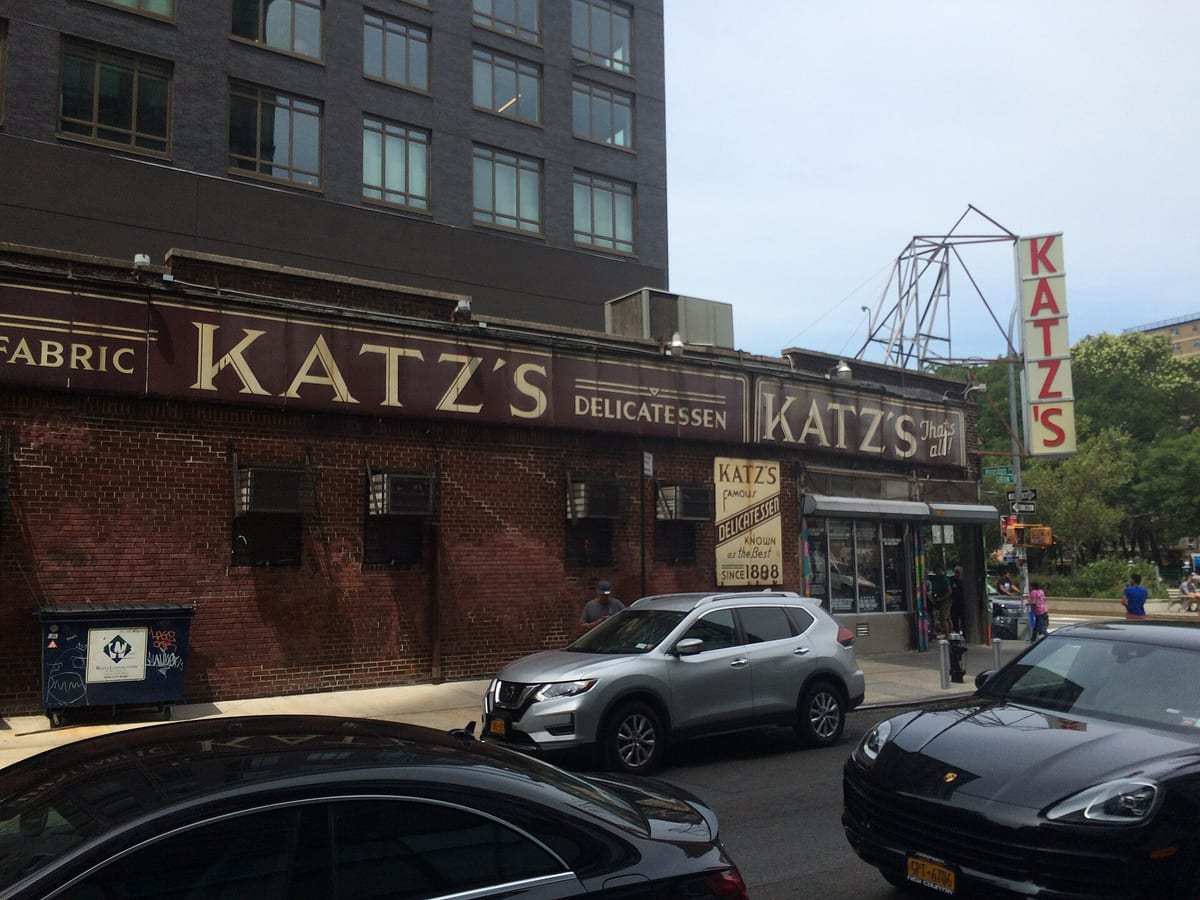 Katz's Delicatessen, Wikimedia Commons (CC BY-SA 4.0)
Katz's Delicatessen opened in 1888 in New York City's Lower East Side. But the story most people know comes later: in 1912, when the Katz family took ownership of the business and transformed it into a neighborhood institution. Willy Katz arrived in 1903 and, together with his cousin Benny, officially established what became Katz's Delicatessen. That decision to invest in a small deli became a multi-generational commitment.
What's remarkable about Katz's isn't just that it's still operating over 130 years later. It's that the business has remained a family concern through wars, economic depressions, and radical shifts in New York's demographics. During World War II, the Katz family became famous for sending salami and pastrami to their sons serving overseas, a tradition that spawned the iconic slogan "Send A Salami To Your Boy In The Army!"
The deli changed hands within the family through the decades, but the commitment to quality ingredients and customer service remained constant. When the original Katz and Tarowsky families realized they had no immediate heirs to pass the business to in the 1980s, they brought in the Dell family, who have stewarded the business forward and ensured that Katz's remains a living piece of New York Jewish heritage.
Katz's is more than a business. It's a gathering place where three generations of families have celebrated, mourned, and simply lived. The corned beef and pastrami served there carry the weight of continuity. This is what a family business rooted in community looks like: not a corporation extracting value, but an institution that feeds its neighborhood and remembers everyone who walks through the door.
Innovation Meets Heritage: Waze and Israeli Entrepreneurship
While Levi Strauss and Katz's represent traditional family or immigrant business models, Waze represents something different: modern Israeli innovation rooted in diaspora entrepreneurship and Jewish identity. Founded in 2007 by Uri Levine, Ehud Shabtai, and Amir Shinar, Waze became the world's first community-driven navigation app, allowing real-time crowdsourced traffic updates.
Uri Levine, the most publicly visible founder, is an Israeli entrepreneur who served in the Israeli Army's prestigious Unit 8200 intelligence unit. His co-founders brought complementary skills and the same commitment to solving real problems that Levi Strauss brought to durable workwear. By 2013, when Google acquired Waze for over $1.1 billion, the app had fundamentally changed how billions of people navigate their cities.
What connects Waze to the older examples is less about family structures and more about values. Israeli entrepreneurship has deep roots in collective problem-solving and the "tikkun olam" principle of repairing the world. The founders built Waze around community contribution; every user was both consumer and contributor. The business model reflected a philosophy that value is created through shared effort.
After the Google acquisition, Levine went on to invest in other ventures, including Moovit (acquired by Intel for $1 billion), and founded The Founders Kitchen, a company-builder fund. His continued commitment to mentoring and building an entrepreneurial ecosystem reflects a pattern common in Jewish business: success isn't the end goal; it's a platform for enabling others.
The Thread Connecting Three Centuries: Tzedakah and Community Responsibility
Zoom out from individual success stories, and a pattern emerges. Levi Strauss created scholarship funds. Katz's fed its neighborhood. Waze founders reinvested in the Israeli startup ecosystem. None of this is incidental to their business success; it's central to it.
Tzedakah, often translated as charity but more accurately meaning "righteousness" or "justice," is a cornerstone of Jewish business ethics. Unlike charity in the Western sense, which implies voluntary generosity, tzedakah is understood as an obligation. In Jewish tradition, there are eight levels of tzedakah, with the highest being helping someone establish means to support themselves, through a loan, employment, or business opportunity.
This isn't just a historical artifact. Modern Jewish family businesses continue this tradition. Many dedicate a percentage of annual profits to community causes, from educational initiatives to charitable organizations. This isn't virtue signaling; it's embedded in the business structure. When you build a company within a framework where you're accountable to community standards, philanthropy isn't optional.
The result is that Jewish-owned businesses, particularly family-run enterprises, tend to have staying power. They invest in employees, they support their communities, and they build reputations that attract loyal customers and partners. In a world of quarterly earnings calls and short-term thinking, businesses grounded in long-term community investment are countercultural. They're also often more resilient.
Supporting Small Businesses: The Hanukkah Connection
Hanukkah, the Festival of Lights, carries a particular resonance in a business context. The holiday celebrates the Maccabees' resistance and the miracle of the oil that burned for eight days. Throughout Jewish history, small businesses, particularly family enterprises, have represented a similar miracle: survival against the odds.
In the weeks leading up to Hanukkah, there's growing momentum around supporting small Jewish-owned businesses. The idea connects historical memory with contemporary action. When you buy from a family-run Jewish deli, a Jewish-owned bookstore, or a small Jewish apparel brand, you're participating in a tradition that stretches back generations.
This isn't just nostalgia. Small, family-operated businesses create jobs within their communities, model ethical practices, and keep cultural traditions alive. A third-generation bakery doesn't just make bread; it preserves recipes and memories. A family-run bookstore doesn't just sell books; it becomes a gathering space. An independent apparel brand, rooted in Jewish pride, doesn't just make clothing; it gives people a way to wear their heritage daily.
The Hanukkah impulse to support small businesses is an impulse to invest in continuity. When you choose a small family business over a corporate alternative, you're making a choice about what kind of economy you want to live in. You're saying that community matters. That quality matters. That survival and thriving for small enterprises matters.
The Modern Jewish Business Landscape
Today, Jewish entrepreneurs and family businesses operate across every sector. From tech startups in Tel Aviv to restaurants in Brooklyn to fashion brands celebrating Jewish pride, the pattern holds. These businesses succeed not because they're Jewish-owned but because they bring particular values and practices to their work.
Contemporary Jewish female entrepreneurs are building businesses at a remarkable rate, from fitness platforms to nutrition companies to design ventures. The barriers that historically excluded women from business leadership have fallen, and women are bringing their own perspectives and innovations to Jewish entrepreneurship.
What's changed is the speed. A business that took Levi Strauss decades to build from a single store can now scale globally in months, thanks to digital platforms. A deli that served a neighborhood for a century can now preserve its legacy online. A navigation app can become a global platform in years.
What hasn't changed is the framework. Success still depends on solving real problems well. Building trust with your community. Treating employees and partners fairly. Giving back. Investing in the next generation. Remembering where you came from.
These aren't just nice ideas. They're competitive advantages. In an era of corporate scandals and fast-fashion waste, consumers increasingly want to support businesses that share their values. They want to know where their money goes. They want to support enterprises that treat people right and give back to communities.
For Jewish business owners, this plays to an existing strength. The values that made Levi Strauss & Co. and Katz's Delicatessen last aren't accidental; they come from a cultural tradition thousands of years old.
Passing the Torch: Family Business Transitions and Values
One of the biggest challenges family businesses face is succession. How do you pass a company to the next generation while preserving what made it work? Many Jewish family businesses have navigated this successfully by being intentional about values transfer, not just financial transfer.
When Katz's brought in the Dell family, they didn't hand over a company; they initiated a partnership based on shared commitment to quality and community. When the Levi Strauss company evolved over generations, it maintained the founder's commitment to ethics and education.
The successful transitions share a pattern: the older generation mentors the younger not just in operational details but in why the business exists. The business isn't primarily about making money; money is a byproduct of doing something well and serving customers and community faithfully.
This requires explicit conversation. It requires documenting values and decisions. It requires asking hard questions about what the business exists to do. Many Jewish family business consultants work with families on exactly this: clarifying shared values, creating governance structures that preserve what matters, and preparing the next generation not just to run a business but to steward a legacy.
The Pride of Ownership: Wearing Your Values
There's a particular kind of pride that comes with wearing heritage daily. Whether that's someone wearing a Levi Strauss 501 jean, visiting Katz's Delicatessen for a pastrami sandwich, or wearing a piece of apparel that celebrates Jewish identity, these choices connect us to stories of perseverance, innovation, and community.
This is why brands that ground themselves in heritage and values have staying power. They're not just selling a product; they're offering a way to participate in a cultural narrative. You don't just own a pair of jeans; you own a piece of innovation history. You don't just eat at a deli; you become part of a multi-generational community gathering.
This principle extends to contemporary Jewish businesses as well. A fashion brand rooted in Jewish pride, a bookstore that centers Jewish voices, a restaurant that serves traditional recipes with modern technique, these are all ways of saying: your heritage matters. Your pride matters. Your community matters.
The pride in these choices isn't incidental; it's the whole point. Business, at its best, serves something beyond profit. It preserves culture. It strengthens community. It creates meaning.
FAQ
What makes a business a "Jewish family business"? A Jewish family business is an enterprise owned and operated by Jewish family members that often incorporates Jewish values of ethics, community responsibility, and tzedakah into its operations. The business doesn't need to be directly related to Jewish culture to qualify, though many are identity-forward.
How long have Jewish family businesses been operating? Jewish merchants and craftspeople have operated family businesses for centuries, particularly since restrictions on land ownership in medieval and early modern Europe pushed Jewish communities toward commerce. The modern examples most people recognize, like Levi Strauss and Katz's, emerged during the 19th and 20th centuries.
Is tzedakah the same as charity? Tzedakah is often translated as charity, but it means something closer to "righteousness" or "justice." The key difference is that in Jewish tradition, tzedakah is an obligation, not optional generosity. The highest form of tzedakah is helping someone become self-sufficient.
Why do Jewish family businesses have strong reputations for longevity? Jewish business culture emphasizes long-term relationships, ethical practices, and community investment. These practices create loyal customer bases and employee retention, which contribute to business longevity. Additionally, the expectation of giving back to community means the business develops roots beyond profit.
How can I support Jewish family businesses today? Look for businesses owned by Jewish families in your area, particularly during Hanukkah. Read the founder stories. Choose to shop at small, independent retailers rather than corporate chains. If you're a consumer of digital products and services, research the founders and values behind them.


