
Jewish Cinema: Stories of Survival, Identity, and Pride
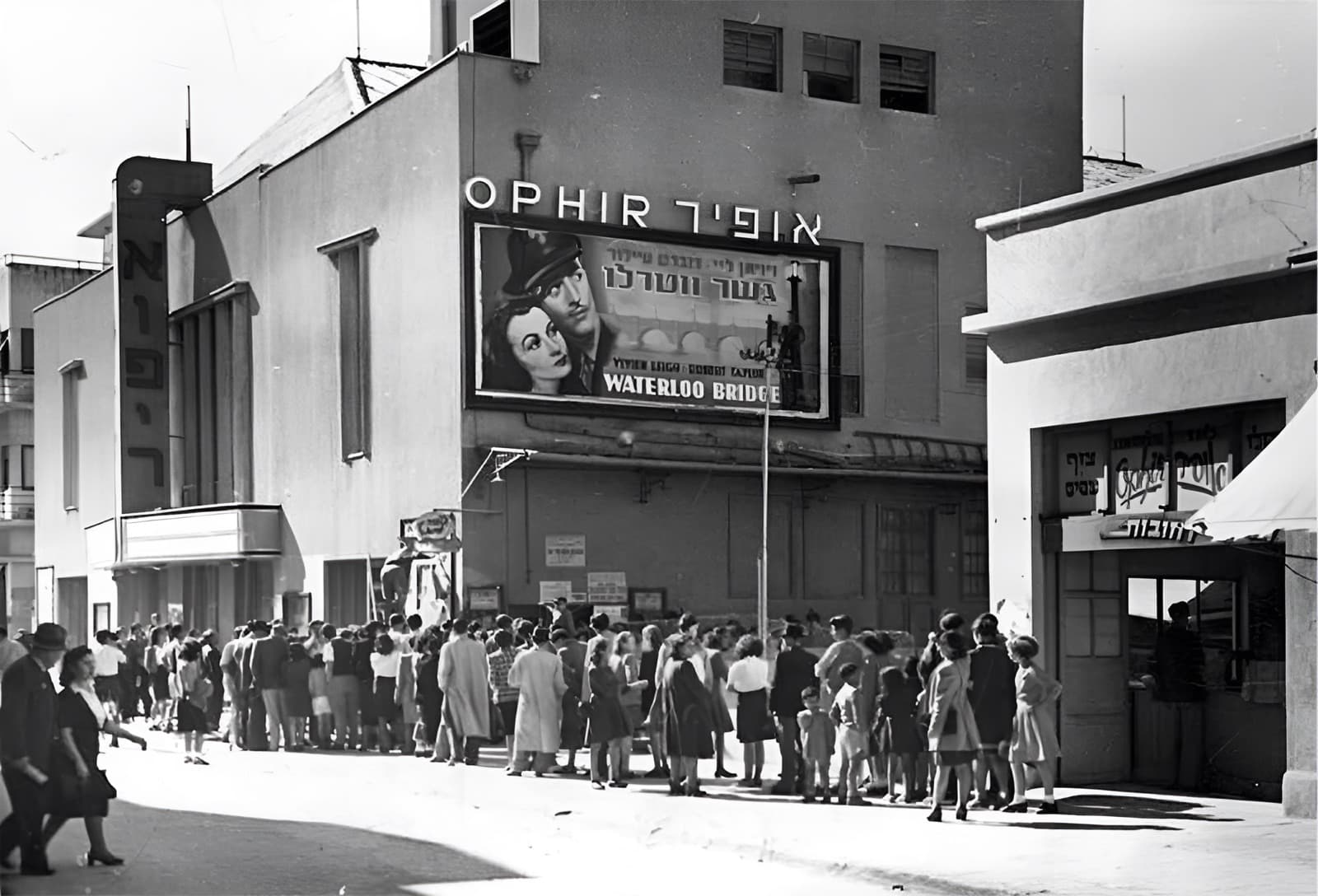
Jewish cinema stands as one of cinema's most enduring and powerful forces. From intimate character studies to sweeping historical dramas, Jewish filmmakers have shaped global cinema while telling stories of identity, resilience, and pride that resonate across cultures and generations. Whether through the lens of survival, humor, or the complexities of modern life, Jewish cinema invites audiences to witness humanity at its most honest.
What Makes Jewish Cinema Matter
Jewish cinema isn't a genre defined by a single theme or style. Instead, it's a body of work created by Jewish filmmakers and exploring Jewish identity, history, and experience, that has fundamentally changed how stories are told on screen. These films don't exist in isolation; they're woven into the broader conversation about who we are and how we see ourselves.
The power of Jewish cinema rests in its unflinching honesty. Jewish filmmakers have never shied away from complex, uncomfortable truths. Whether exploring the Holocaust, the immigrant experience, or the confusion of navigating identity in a changing world, these stories speak to something deeply human: the tension between who we are and who the world expects us to be.
Cinema became central to the Jewish experience after World War II, in particular. Where books had once been the primary keeper of Jewish stories, film offered something immediate and visceral. It allowed entire communities to see themselves reflected on screen, often for the first time. This shift was profound. Suddenly, Jewish identity wasn't abstract or confined to holiday observance; it was alive, complex, and undeniably visible.
Cinema gave voice to experiences that had gone untold for generations. It created a shared cultural reference point for Jewish audiences worldwide. When you watch a Jewish film, you're not just seeing a story. You're participating in an ongoing conversation about what it means to be Jewish in different times and places, what it means to remember, and what it means to survive and thrive.
The Classics: Holocaust Memory and Historical Witness
When people think of award-winning Jewish cinema, two films immediately come to mind: Schindler's List and The Pianist. These are not easy watches, but they are essential ones.
Schindler's List (1993), directed by Steven Spielberg, stands as a landmark in cinema history. The film follows Oskar Schindler, a German businessman who risks everything to save his Jewish workers from Nazi persecution during the Holocaust. Spielberg's decision to shoot in black and white heightens the film's emotional gravity; there's no visual escape into color, no distance from the reality of what's unfolding. The cinematography forces viewers to confront history directly, without the buffer of aesthetic beauty. At the 1994 Academy Awards, the film won seven Oscars, including Best Picture and Best Director, becoming a cultural touchstone for how the Holocaust could be portrayed with both rigor and compassion. The film's impact extends beyond awards. It fundamentally changed how survivors' stories are told, and it educated millions of people who might otherwise never have learned the details of this dark period in history.
The Pianist (2002), directed by Roman Polanski, offers a different but equally devastating perspective. The film follows Wladyslaw Szpilman, a Polish-Jewish pianist navigating the Warsaw Ghetto during the Nazi occupation. Adrien Brody's performance is spare and haunting; the film's power lies in its quietness, in the small moments of connection and survival. At the 75th Academy Awards, Polanski won Best Director and Brody won Best Actor (Polanski received the award in absentia). The film also won the Palme d'Or at Cannes and seven French César Awards. What makes this film distinctive is its focus on individual resilience rather than collective resistance. Szpilman's story is one of musicianship, luck, and human kindness in the midst of systematic evil.
Both films serve a similar cultural function: they bear witness. They refuse to let the Holocaust become abstract or historical in a way that distances us from its human cost. They remind us that resilience and dignity are possible even in the darkest circumstances. These aren't comfortable films, but comfort isn't their purpose. Their purpose is remembrance, accountability, and the preservation of truth.
Beyond Survival: Identity and Belonging
While Holocaust films hold an important place in Jewish cinema, they represent only one chapter in a much larger story. Jewish cinema also explores the ordinary complexities of Jewish life, the search for belonging, and the particular humor that emerges from being an outsider navigating the world.
Fiddler on the Roof (1971), directed by Norman Jewison, brought Tevye's world to life in a way that resonated globally. The film captures the tension between tradition and change, faith and doubt, family and individual desire. With a score by John Williams and starring Topol, the film won three Academy Awards and was nominated for eight others. What made it remarkable wasn't just its technical achievement; it was how it made Yiddish culture, Jewish spirituality, and the immigrant experience feel both specific and universal. Audiences of all backgrounds could recognize themselves in the struggle between honoring the past and embracing the future. The film became a gateway into Jewish culture for many non-Jewish viewers, and for Jewish audiences, it served as a moving portrayal of a world that the Holocaust had destroyed. The production design drew inspiration from photographs of pre-war Eastern European shtetls, grounding the fantasy musical in historical reality.
Woody Allen's Annie Hall (1977) took a different approach, using comedy to explore Jewish neurosis, identity, and the awkwardness of dating and relationships. The film is deeply Jewish, from its sensibility to its humor to its treatment of antisemitism, yet it never alienates the viewer who isn't Jewish. Allen's genius lies in the specificity of his observations; the more particular he becomes about being a neurotic Jewish intellectual in New York, the more universal the film becomes. The film won the Academy Award for Best Picture, and it remains a masterclass in character-driven comedy that's rooted in cultural particularity. The famous dinner scene with Annie's WASP family is particularly masterful, using subtle humor to explore the anxiety of cultural difference without ever becoming preachy.
Israeli Cinema: A Nation's Conversation With Itself
While much American Jewish cinema is shaped by immigrant experience or Holocaust memory, Israeli cinema speaks to a different set of concerns (nation-building, militarism, family, politics, and the permanent state of tension that characterizes Israeli society). Israeli filmmakers explore the complexities of living in a nation built on conflict, where personal identity is inseparable from national identity.
Waltz with Bashir (2008), directed by Ari Folman, exemplifies the innovative and fearless approach of Israeli cinema. The film is an animated documentary, in which Folman reconstructs fragmented memories of his service as a soldier during the 1982 Lebanon War. The animation allows the film to venture into dream logic, trauma, and the unreliable nature of memory itself. The film was nominated for the Academy Award for Best Foreign Language Film and won the Golden Globe for Best Animated Feature Film. It represents Israeli cinema's willingness to interrogate national identity and military service with complexity and self-criticism. The film's innovation lies not just in its use of animation, but in its willingness to confront uncomfortable truths about Israeli military actions and their psychological toll on soldiers.
Israeli cinema has produced filmmakers who think boldly about form and content. The nation's histories, conflicts, and cultures are endlessly fertile ground for storytelling. From intimate family dramas to sweeping political critiques, Israeli filmmakers have contributed immensely to global cinema's vocabulary. Directors like Atom Egoyan and others have used cinema to explore identity, displacement, and the search for home across borders and generations.
The Art of Jewish Humor
One of the most distinctive elements of Jewish cinema is its approach to humor. Jewish comedy in film carries a particular genealogy, rooted in the tradition of the Borscht Belt and the clever, self-deprecating wit that emerged from Jewish immigrant experience in America.
The statistics are telling: in the mid-20th century, a disproportionate number of American comedians were Jewish. This wasn't accidental. Jewish humor, with its emphasis on wordplay, irony, and the outsider's perspective, proved to be a powerful tool for navigating a society in which Jewish immigrants were often marginalized. Humor became a way to acknowledge pain without being crushed by it, to comment on power without directly challenging it, and to build community through laughter. The Borscht Belt resorts of the Catskill Mountains became finishing schools for comedians who would later define American comedy.
Mel Brooks, Gene Wilder, Marty Feldman, and countless others brought this sensibility to film. Whether in Young Frankenstein or Brooks' own directorial work, Jewish humor on screen carries an edge. It's never innocent; it's always aware of history and hierarchy. At its best, it's the humor of people who have survived exclusion and found a way to laugh at the absurdity of it all. This humor served an important function after the Holocaust: it helped Jewish Americans process trauma and assert their place in American culture through laughter rather than silence.
This comedic tradition isn't nostalgic. Contemporary Jewish comedians and filmmakers continue to mine Jewish identity for material, not to mock, but to celebrate the particular way Jewish culture combines neurosis, intellectualism, family loyalty, and an irreverent attitude toward authority. Shows like Schitt's Creek and filmmakers like Greta Gerwig (whose work engages with Jewish themes) continue this legacy of using specificity to achieve universality.
Jewish Filmmakers: Shaping Cinema Itself
The influence of Jewish filmmakers on cinema extends far beyond explicitly Jewish films. Filmmakers like Steven Spielberg, the Coen Brothers, Billy Wilder, and William Wyler fundamentally shaped how cinema works as an art form. Spielberg's work spans genres and continents, but questions of morality, survival, and the human capacity for good and evil run through his films. The Coen Brothers have created a distinct aesthetic (dark, complex, morally ambiguous) that has influenced contemporary cinema broadly.
These filmmakers didn't just make great films. They changed what was possible on screen. They brought new visual vocabularies, new narrative structures, and new ways of understanding character to cinema. Their contributions have been so fundamental that it's easy to forget how revolutionary they once were.
This is partly a story of achievement and recognition. It's also a story of perspective. Jewish filmmakers, many of them children or grandchildren of immigrants, often brought a particular angle to storytelling. They understood displacement, identity, and the gap between appearance and reality. These themes became central to modern cinema because they're deeply human. The outsider's perspective that Jewish filmmakers brought to their work enriched cinema for everyone.
Why Jewish Cinema Matters Today
In a moment when identity feels fragmented and contested, Jewish cinema offers something valuable: proof that specific, rooted stories resonate universally. The films that emerge from Jewish experience, whether traumatic, comedic, or quietly introspective, touch audiences across backgrounds because they're honest about what it means to be human.
Jewish cinema also insists that culture can be worn proudly on the outside. The films that celebrate Jewish heritage, humor, and history do so without apology. There's an unflinching confidence in them, a refusal to explain or soften Jewish identity for mainstream consumption. This is part of what makes Jewish cinema so vital. It says: this is who we are, and it's worth paying attention to.
For those seeking to deepen their connection to Jewish culture or explore it for the first time, cinema offers an accessible and powerful entry point. These films, whether award-winners or beloved classics, carry within them the full spectrum of Jewish experience: struggle and resilience, humor and heartbreak, memory and hope. They remind us that stories matter, that representation matters, and that the act of telling our own stories is itself an act of resistance and affirmation.
FAQ
What is Jewish cinema? Jewish cinema includes films created by Jewish filmmakers and those exploring Jewish identity, history, and experience. It encompasses Holocaust films, Israeli cinema, comedies rooted in Jewish humor, and intimate character studies. These films exist across all genres and traditions.
What are the most important Jewish films? Schindler's List, The Pianist, Fiddler on the Roof, and Annie Hall are widely considered essential works. Waltz with Bashir represents contemporary innovation in Israeli cinema. These films have achieved both critical acclaim and cultural staying power.
Is Israeli cinema different from American Jewish cinema? Yes. Israeli cinema emerges from a different context (nation-building, military service, and political tension) rather than immigrant experience or Holocaust memory. Both traditions are rich; they simply speak from different vantage points.
Where can I learn more about Jewish cinema? Film festivals like the Jerusalem International Film Festival (held annually in July) showcase Israeli and Jewish cinema. Streaming platforms increasingly carry a wide range of Jewish films. Academic resources and books on Jewish cinema also offer deep dives into the subject.
Can I understand these films if I'm not Jewish? Absolutely. The best Jewish films work because they're rooted in the universal human experiences of identity, belonging, loss, and resilience. You don't need to be Jewish to recognize yourself in these stories.


