
Jewish Art History: Medieval Manuscripts to Grand Synagogues
The History of Jewish Art
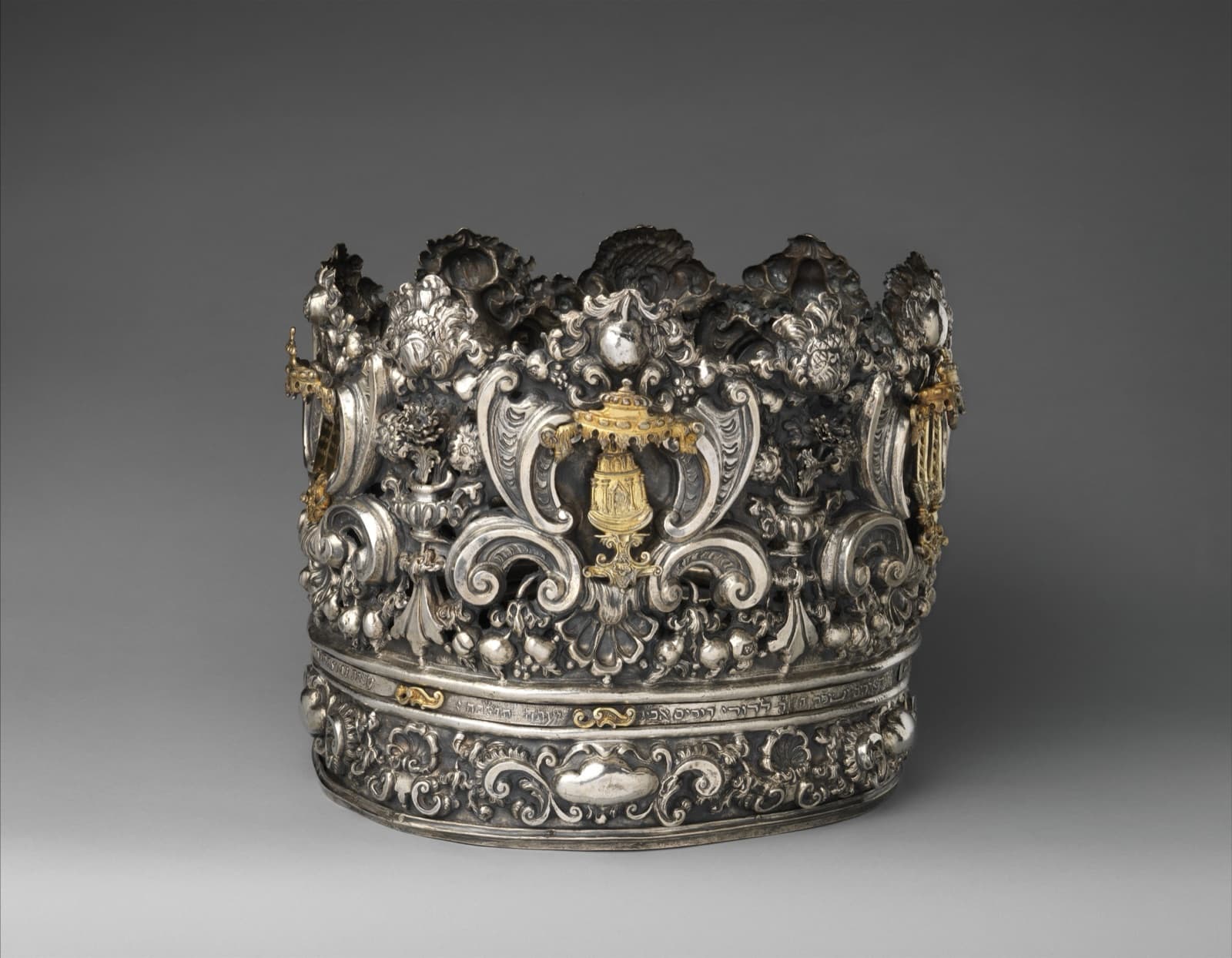
Jewish art history spans thousands of years of cultural achievement. From illuminated medieval manuscripts to soaring synagogue interiors that shimmer with gold and color, artists throughout Jewish history have expressed faith, identity, and resilience. These works offer a window into how Jewish communities honored their heritage while pushing creative boundaries.
A Rich Tradition of Visual Expression
For much of history, people assumed that Jewish tradition discouraged visual art altogether. That's a myth. While Jewish law does caution against certain kinds of idol worship, it never prohibited artistic expression in service of faith and community. In fact, Jews have been creating stunning visual art since ancient times. They adorned synagogue mosaics, decorated burial sites, illuminated religious texts, and designed sacred spaces with care and skill.
The evidence is everywhere if you know where to look. Late antique synagogues were decorated with figural mosaics depicting biblical scenes. Medieval Hebrew manuscripts glowed with gold leaf and intricate illustrations. Jewish craftsmen designed some of Europe's most breathtaking buildings. The tradition wasn't a side project or a compromise with secular culture. It was central to how Jewish communities expressed their values and passed down their story.
Medieval Manuscripts: The Sarajevo Haggadah
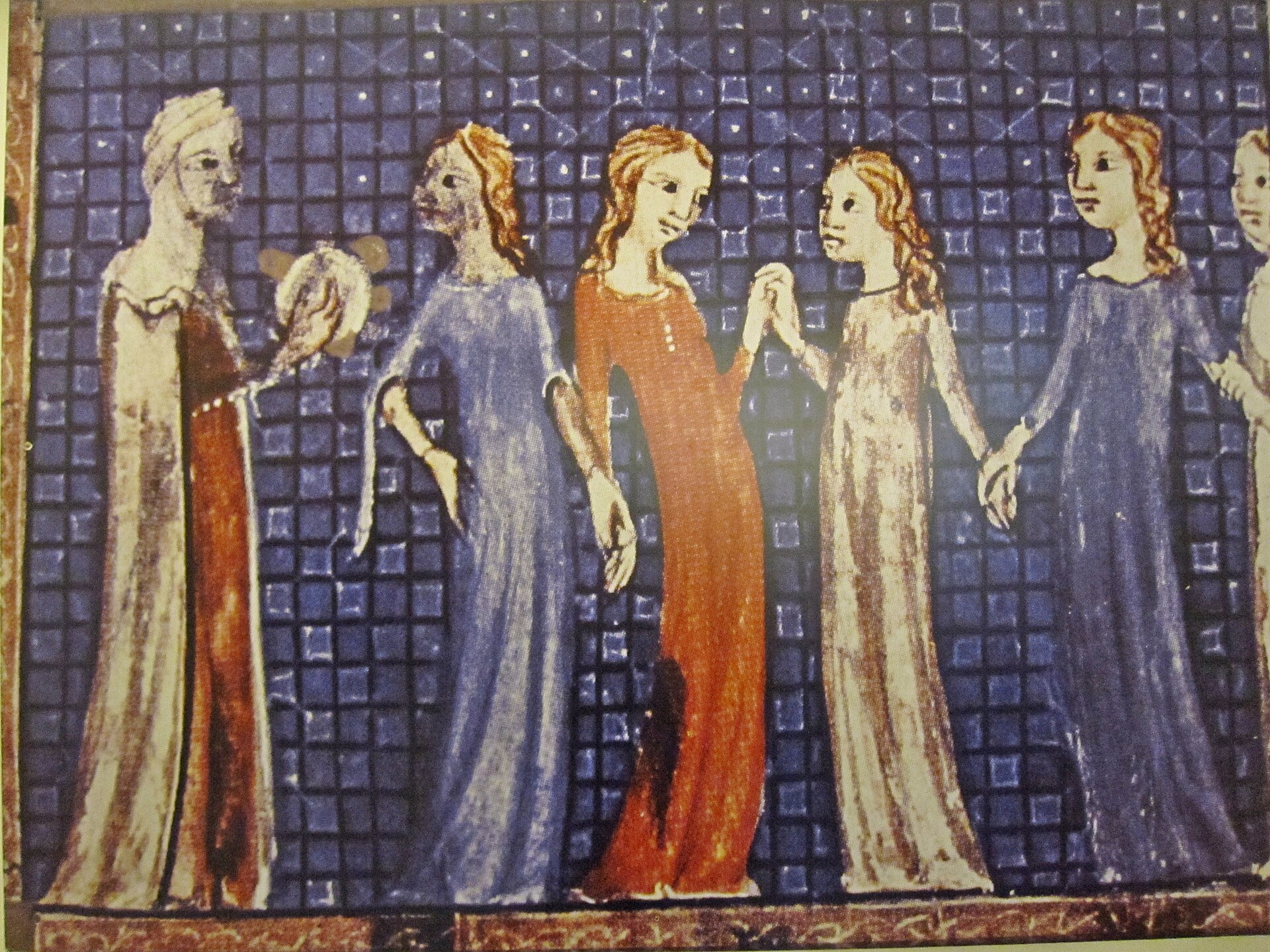 Sarajevo Haggadah, 14th century manuscript, Wikimedia Commons (Public Domain)
If one artwork embodies the beauty and defiance of Jewish art history, it's the Sarajevo Haggadah. Created in Barcelona around 1350, this illuminated manuscript is one of the most magnificent Jewish artworks ever made. It's also one of the most traveled and most tested.
The Sarajevo Haggadah was likely commissioned as a wedding gift for two prominent Jewish families in medieval Spain. It was written on parchment in the Sephardic Hebrew script of the time. What makes it extraordinary are the 34 full-page miniatures that accompany the text. These aren't simple illustrations. They're a comprehensive visual narrative of the Jewish story, beginning with the Creation and moving through to the Exodus: the heart of Passover.
Each page is a masterwork of color and detail. The miniatures show biblical scenes rendered with the sophistication of Christian manuscripts of the era, yet distinctly Jewish in their subject matter and sensibility. Figures wear the clothing and live in the architectural styles of medieval Iberia. Gold leaf catches the light. The colors (deep blues, reds, greens) still glow after 675 years.
Then came the Spanish Inquisition. The Haggadah was hidden, smuggled, lost, and found again. It survived the Holocaust. It survived the Yugoslav Wars. It ended up in Sarajevo, where it has been housed since the 19th century in the National Museum of Bosnia and Herzegovina. In 2017, UNESCO registered it in the Memory of the World program, a recognition that this single manuscript holds the memory of centuries.
What makes the Sarajevo Haggadah so powerful isn't just its artistic skill (though that's undeniable). It's what it represents: a moment when Jews in medieval Spain could create openly, lavishly, and brilliantly. A moment when art wasn't a luxury or a distraction. It was a way of saying: we are here, our story matters, and we will remember.
Synagogue Architecture: Walls That Speak
Synagogues are where Jewish communal identity and artistic vision converge most visibly. After the destruction of the Second Temple and the Jewish diaspora, synagogues became the center of religious and community life. Medieval synagogue architecture often borrowed from the architectural styles of surrounding Christian cultures, yet Jewish communities began to develop their own visual languages.
By the 19th century, Jewish communities across Europe had the wealth, freedom, and confidence to commission truly monumental synagogues. These weren't modest prayer halls. They were declarations of belonging and pride.
The Spanish Synagogue in Prague
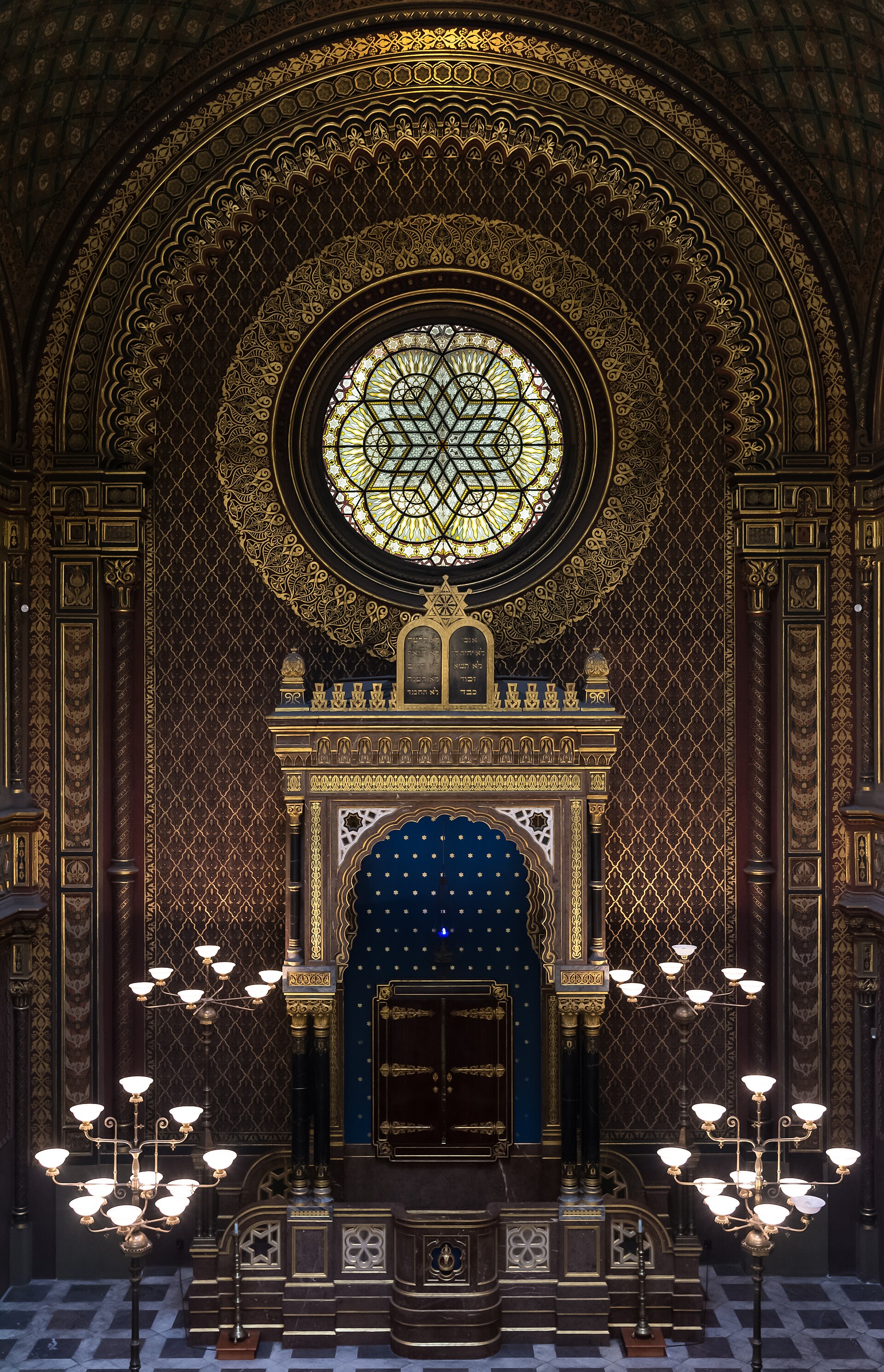 Photo: Uoaei1, Wikimedia Commons (CC BY-SA 4.0)
Built in 1868, the Spanish Synagogue in Prague sits on the site of the Old Shul (Altschul), the oldest house of worship in Prague's Jewish Quarter. Its architects, Vojtěch Ignác Ullmann and Josef Niklas, chose a style that looked backward to medieval Spain and forward to their own era: Moorish Revival, inspired by the Alhambra.
Walk inside and you understand why. The interior is designed to overwhelm the senses in the most beautiful way possible. Stucco arabesques in stylized geometric and plant forms cover the walls in low relief. All rendered in gold and polychrome colors inspired by Islamic art. Stained glass windows filter light across the space. The overall effect is of a room shimmering with light and ornament. Every surface is crafted to create a sense of the sacred without depicting religious figures directly.
The ornamental approach matters theologically and aesthetically. Jewish tradition emphasizes the beauty of pattern and geometry over figurative representation. The Spanish Synagogue's designers understood this deeply. They created a space where geometric precision and visual richness work together to elevate the spirit of prayer.
The Dohány Street Synagogue in Budapest
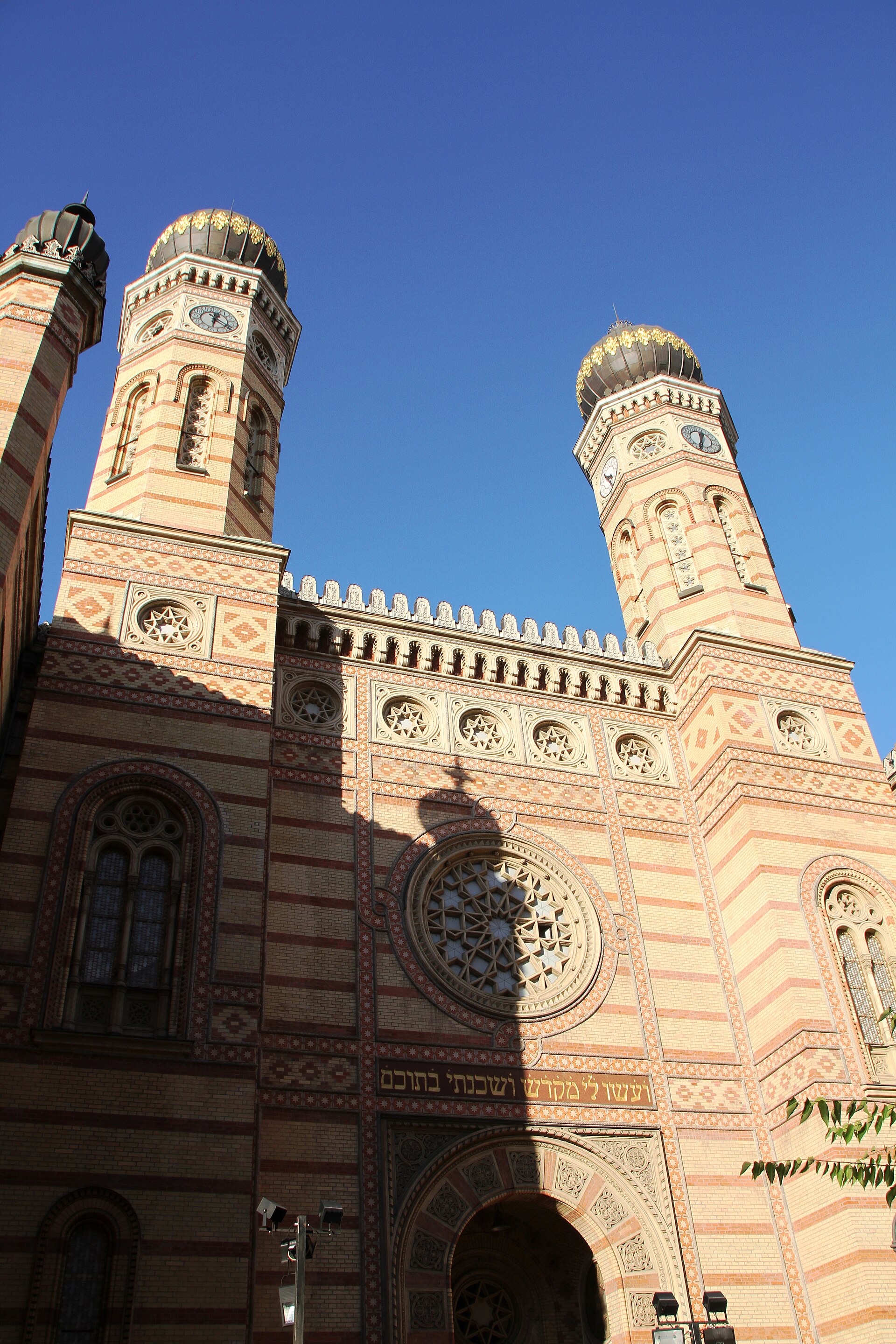 Photo: Bjoertvedt, Wikimedia Commons (CC BY-SA 4.0)
If Prague's Spanish Synagogue expresses quiet, intricate beauty, the Dohány Street Synagogue in Budapest makes a statement. Built between 1854 and 1859, it's the second-largest synagogue in the world. Its twin octagonal towers rise 43 meters into the Budapest skyline, topped with onion-shaped domes that became one of the city's most recognizable silhouettes.
Architect Christian Friedrich Ludwig Foerster designed the building in Moorish Revival and Romantic Historicist styles. The interior was brought to life by Frigyes Feszi, who created the magnificent Torah ark and elaborate internal frescoes of golden and colored geometric shapes. The sanctuary glows with gold-and-blue Moorish mosaics. The Heroes' Temple within the complex carries Byzantine-inspired tilework and mosaics.
The sheer scale tells you something about Budapest's 19th-century Jewish community. They had arrived, they were thriving, and they wanted to build something that would endure. The artistic choices (the blend of Hungarian romanticism with Islamic ornament, the use of gold and geometric precision, the way light is choreographed throughout the space) show a community that understood how to use architecture to express identity.
Both the Spanish Synagogue and Dohány Street Synagogue share an artistic vocabulary rooted in Islamic and medieval Spanish art. This wasn't accidental. Sephardic and Central European Jews were deliberately referencing their histories, the periods when Jewish culture had flourished, the moment before persecution drove them north and west. These 19th-century synagogues were acts of historical memory built in stone and glass and gold.
The Language of Illumination
Hebrew illuminated manuscripts represent a distinct artistic tradition within European medieval art. From the 10th through the 16th centuries, Jewish scribes and artists created manuscripts that served both spiritual and social functions. A beautifully illuminated manuscript wasn't just a text; it was an object of pride. Often commissioned for major life events like weddings or to mark a community's wealth and learning.
The artists who created these manuscripts worked in dialogue with Christian manuscript traditions, yet developed their own aesthetic. Jewish manuscripts often featured geometric borders, intricate Hebrew lettering, and scenes from Jewish religious life rendered with remarkable detail. The Kennicott Bible (15th century) depicted biblical kings and prophets with the same skill employed in Christian royal manuscripts. The Birds' Head Haggadah (early 14th century, Germany) used an unusual artistic convention (rendering human figures with the heads of birds). This may have helped navigate complex questions about figural representation while still creating dynamic, expressive art.
These manuscripts were not rare oddities. They were part of a living, creative tradition. Wealthy Jewish families commissioned them. Communities treasured them. They were read aloud at Passover seders and weddings, becoming part of the fabric of Jewish life.
Jewish Art and Identity
What all of these artworks share is a deep commitment to expressing Jewish identity through visual means. Jewish artists were not retreating into abstraction or hiding behind religious law. They were finding ways to say: this is who we are, this is what we believe, this is how we remember.
Art became a form of resilience. When communities faced persecution, their art endured. The Sarajevo Haggadah survived expulsion, inquisition, war, and genocide. The great synagogues of Prague and Budapest were built in periods of relative freedom and became monuments to Jewish presence in Europe. The illuminated manuscripts circulated through diaspora communities, carrying stories and prayers and aesthetic values across geography and time.
In Jewish artistic traditions, you also see a deep engagement with questions of community. A synagogue isn't built for an individual; it's built for a congregation. An illuminated manuscript might be a personal possession, but it was created to be shared and to be used. It connects the family reading it to the larger Jewish people. Art was never purely aesthetic in Jewish culture. It was always in conversation with law, theology, community, and history.
This is why Jewish art matters beyond the museum or the history book. It speaks to how a people understand themselves, how they express pride without arrogance, how they remember without being imprisoned by the past. It shows creativity flourishing even in constraint, beauty emerging even from exile, identity expressed with precision and joy.
The Continuity of Creative Expression
The tradition of Jewish art didn't end with the 19th century. The 20th and 21st centuries have seen Jewish artists working in every medium: painting, sculpture, photography, film, textile design, and fashion. Contemporary Jewish artists continue the ancient conversation between identity and creativity, between personal vision and collective memory.
What ties it all together is a commitment to heritage expressed authentically. Whether through a medieval manuscript or a modern garment that lets you wear your identity proudly, the impulse is the same. Make something beautiful that says: "I am Jewish, and I'm not hiding it."
FAQ
What is the Sarajevo Haggadah? The Sarajevo Haggadah is a 14th-century illuminated manuscript created in Barcelona and now housed in the National Museum of Bosnia and Herzegovina. It contains 34 full-page miniatures depicting biblical stories from Creation through the Exodus and is considered one of the most magnificent examples of medieval Jewish art ever made.
Why did Jewish artists create illuminated manuscripts? Illuminated manuscripts served both spiritual and social purposes. They were commissioned for major life events like weddings, displayed a family's or community's wealth and learning, and were read aloud at seders and other religious celebrations. They were part of living Jewish tradition, not museum pieces.
What is the relationship between Jewish art and Jewish law? While Jewish tradition cautions against certain kinds of idol worship, it does not prohibit artistic expression in service of faith and community. Jewish artists have always found ways to create visually stunning works, from mosaics to manuscripts to architecture, while honoring religious principles.
Why do synagogues like the Dohány and Spanish Synagogue use Islamic and Moorish design? These 19th-century synagogues deliberately referenced medieval Spain and Islamic art traditions to honor the history of Sephardic Jewry and periods when Jewish culture had flourished. The artistic choices were acts of historical memory and cultural pride.
Can I wear my Jewish heritage proudly today? Absolutely. Jewish pride and identity are expressed in countless ways, from wearing meaningful apparel to participating in community, celebrating holidays, and supporting causes that matter. Just as historical Jewish artists used their medium to express faith and identity, contemporary Jews can wear their heritage openly and authentically.