
From Masada to Warsaw: Jewish Resistance
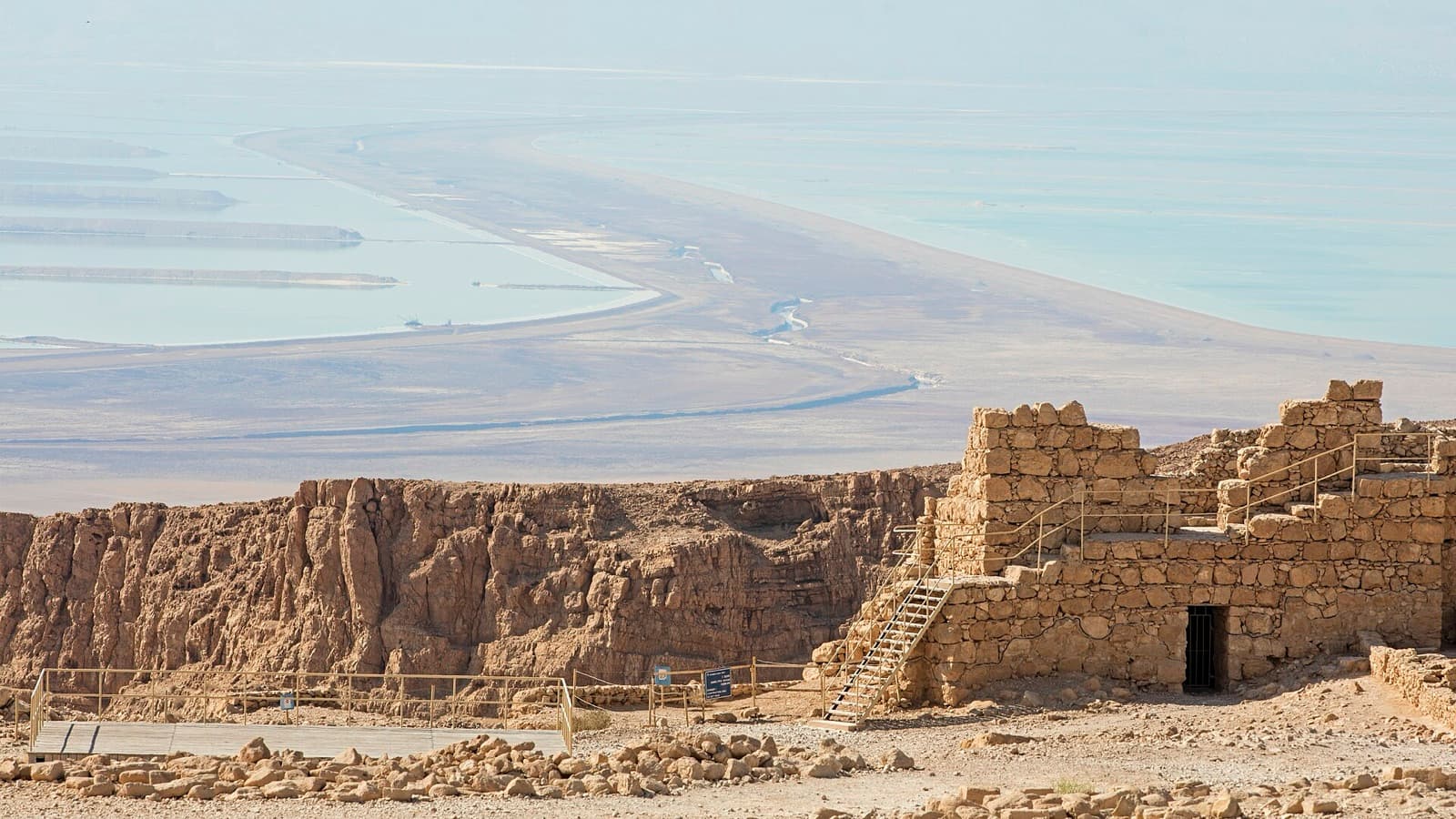
Jewish resistance movements have shaped history across two millennia, proving that resistance takes many forms. From ancient rebellion to partisan courage in the forests of Belarus, the story of Jewish defiance is one of resilience, dignity, and an unwillingness to surrender identity in the face of oppression. Understanding this legacy matters not just as history, but as the living inheritance of anyone who wears their Jewish identity proudly today.
What Does Jewish Resistance Really Mean?
Resistance doesn't always look like what we expect. It's not just swords and armies. Sometimes resistance is refusing to forget. Sometimes it's choosing to survive. Sometimes it's building a community in the dark and feeding the hungry when every system tells you to stay small and silent. For Jewish people across history, resistance has meant standing up for the right to be Jewish, to practice faith, to maintain culture, and to exist on their own terms. That's the throughline from ancient Judaea to modern times.
The Maccabees: Where Hanukkah Begins
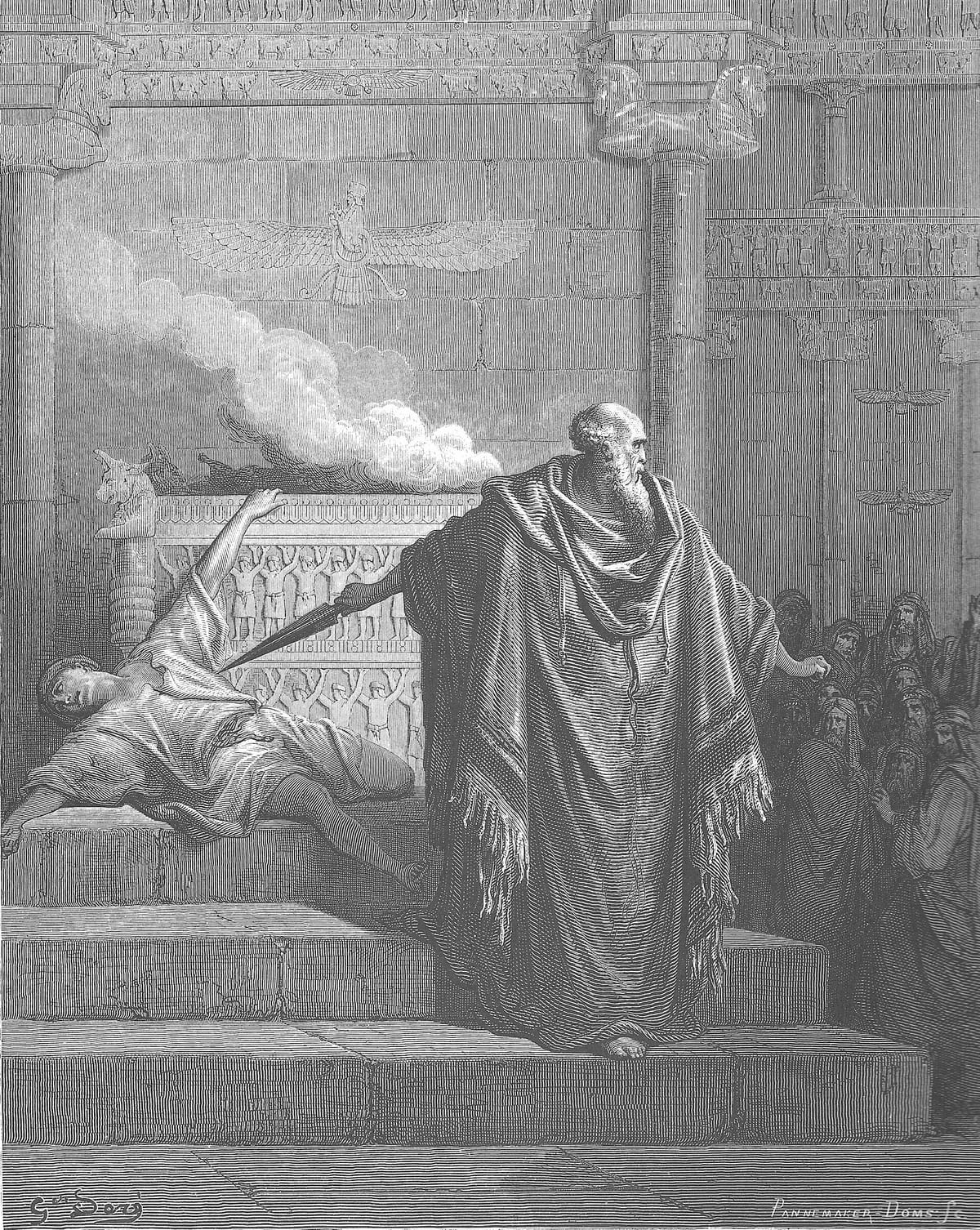 Illustration: Gustave Doré, Doré's English Bible (1866), public domain
The story starts with the Maccabees, a family of Jewish rebels who fought against the Seleucid Empire in the second century before the common era. Around 167 BCE, the Seleucid king Antiochus IV Epiphanes decided that Jewish practice was the problem. He banned circumcision. He forbade Sabbath observance. He sent soldiers into villages to force Jews to worship Greek gods and leave pork offerings on Jewish altars.
Mattathias, a Jewish priest, decided this wasn't happening on his watch. When a Seleucid official ordered him to sacrifice to a pagan god, Mattathias refused, killed the official, and fled to the hills with his sons. That act of refusal sparked a full rebellion.
What makes the Maccabean Revolt remarkable is that it actually worked. Judas Maccabeus (Judas the Hammer, the soldiers called him) led a ragtag force of guerrillas against one of the ancient world's major empires and won. By 164 BCE, after three years of fighting, the Jewish rebels had reclaimed Jerusalem and rededicated the Temple. That rededication is what Hanukkah celebrates: the insistence that Jewish practice, Jewish identity, and Jewish faith matter enough to fight for.
The miracle isn't just the military victory (though that's remarkable enough). The miracle, as the tradition tells it, is the oil lamp that burned eight days on one day's worth of oil. But the real miracle might be simpler: a people who refused to disappear, even when everything was stacked against them.
Masada: The Last Stand
Fast forward to 70 CE. Rome has destroyed Jerusalem and its Temple. Thousands of Jews are dead. The Jewish state, as it existed, is gone. But a group called the Sicarii, Jewish rebels who had fought against Rome, held one last fortress: Masada, a mountain fortress overlooking the Dead Sea.
For two years, around 1,000 Jews, including women and children, held Masada against the Roman Empire. A Roman army of approximately 15,000 soldiers surrounded them, building a massive ramp of earth and stone up the mountain's side. The defenders knew the Romans would eventually breach the walls. They knew the outcome was inevitable.
When the breach came, the defenders chose death over surrender. Led by Eleazar ben Ya'ir, they decided they would not be enslaved by Rome. Masada has become a symbol in Jewish consciousness: the refusal to submit, the choice of dignity over subjugation, the insistence that some things matter more than survival itself.
It's important to note that the details of Masada come to us from Flavius Josephus, a Jewish historian who wasn't present at the siege. The exact nature of what happened has been debated by historians for centuries. But the symbolic weight remains: a small force holding out against empire, refusing to break.
The Bar Kokhba Revolt: Unity Against Rome
By 132 CE, Rome's grip on Judaea remained absolute, and Jewish resentment ran deep. The Roman Emperor Hadrian had begun building a new city, Aelia Capitolina, directly on the ruins of Jerusalem, and had banned circumcision and other Jewish religious practices.
Simon Bar Kokhba led a massive uprising across Judaea. Unlike previous revolts, this one had unprecedented Jewish unity. Bar Kokhba was proclaimed the Nasi (leader, literally "prince") of the "House of Israel." Many Jews believed he was the Messiah. For over three years, the Jewish state existed again, with Bar Kokhba's forces controlling the territory and minting coins bearing his name and messianic imagery.
Rome crushed the revolt with overwhelming force. Emperor Hadrian assembled six full legions and potentially elements from up to six additional legions to suppress the rebellion. The Roman commander Julius Severus led a brutal campaign that devastated Judaea. Tens of thousands died (the ancient sources claim 580,000, though modern historians debate this figure). Fifty fortresses fell. Nearly 1,000 villages were destroyed.
Rome even renamed the province: no longer Judaea, but "Syria Palaestina," an attempt to erase the Jewish name from the land itself. But they couldn't erase the people. The Bar Kokhba Revolt marked the end of Jewish sovereignty in ancient Judaea, but it also marked something else: the moment when Jewish identity became portable, able to survive anywhere, bound not to land but to practice, memory, and community.
Medieval and Early Modern Resistance
After the Roman period, resistance took different forms. There were no armies, but there was persistent defiance. Jews in medieval Europe, facing expulsions and pogroms, maintained their culture through intensive study and tightly knit communities. Scholars preserved ancient texts. Families kept traditions alive despite centuries of displacement. The Marranos of Spain and Portugal practiced Judaism in secret for generations, refusing to let conversion decrees erase their identity.
In the 1600s and 1700s, Jewish communities in Poland and Eastern Europe experienced pogroms, particularly the Chmielnicki Massacres of 1648-49, which killed hundreds of thousands. Communities rebuilt. Generations continued. The resilience was quieter than military resistance but no less real: the determination to survive as a people, to raise children in Jewish practice, to maintain the chain of tradition even when external forces tried to shatter it.
The Warsaw Ghetto Uprising: Armed Defiance in the Darkness
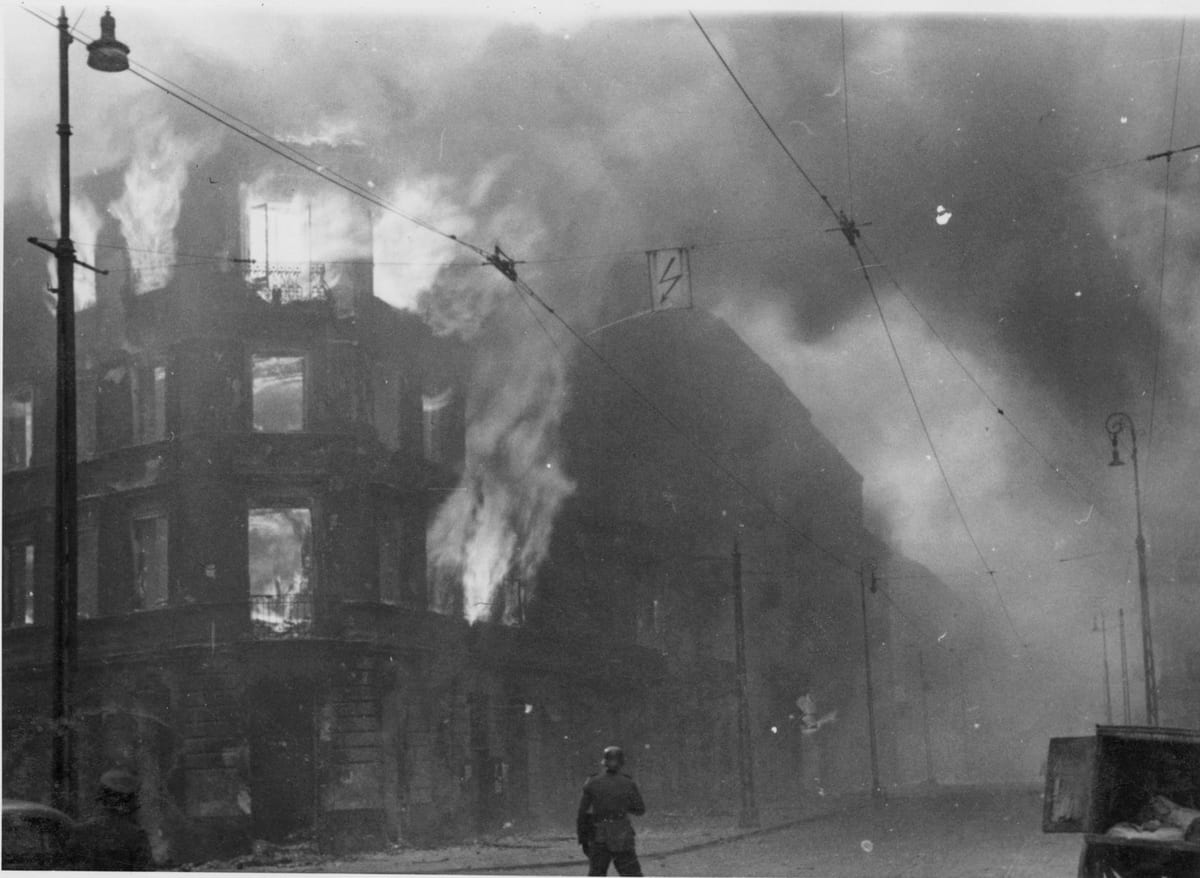 Stroop Report Archive, public domain
The Holocaust represents industrial genocide: the systematic attempt by Nazi Germany to erase the Jewish people from Europe. Against this mechanized evil, armed resistance seemed almost impossible. The odds were incomprehensible.
But on April 19, 1943, the Warsaw Ghetto Uprising began.
The Warsaw Ghetto held about 400,000 Jews in October 1940. By 1943, most had been deported to Treblinka or murdered. About 55,000 remained, packed into an area of 1.3 square miles. When Nazi forces entered the ghetto to deport the final inhabitants, they found 700 young Jewish fighters waiting.
Mordechai Anielewicz led the Jewish Combat Organization (ŻOB). The fighters had almost no weapons, no armor, no military training, no realistic chance of victory. They fought anyway. They held out for 27 days, blocking streets, moving through sewers, organizing the civilian population, resisting with whatever they had.
The Nazis eventually used overwhelming firepower and gas to suppress the uprising. On May 16, 1943, after nearly a month of fighting, the ghetto fell. Anielewicz died in his bunker, either by suicide or from Nazi gas. The remaining fighters were deported to death camps.
The Warsaw Ghetto Uprising never had a chance of military success. That wasn't the point. The point was refusal. It was saying no to the system designed to erase them. It was proving that even in the darkest hour, even facing absolute odds, Jews would fight for dignity and humanity. "It is now clear to me," Anielewicz wrote in a letter in April 1943, "that what I have been afraid of has happened. The Germans are not able to break our resistance by military force."
The Bielski Partisans: Rescue as Resistance
While fighters in ghettos waged armed rebellion, other Jews fought a different kind of resistance in the forests of Western Belarus. The Bielski brothers, Tuvia, Asael, Zus, and Aron, had lost their parents and family members in a massacre of 5,000 Jews in December 1941. They escaped into the forest with about 30 people and built something unprecedented: a partisan unit that prioritized survival and rescue over military conquest.
The Bielski group grew to about 1,200 people by liberation in 1944. They accepted not just fighters, but women, children, elderly, and sick people. Everyone who could escape the ghettos and reach the forest was welcomed. Tuvia Bielski ran this operation like a community, not an army. The group included carpenters, tailors, bakers, a doctor, even a rabbi. They established workshops, maintained discipline, built shelters, and organized food distribution.
The Bielski unit did engage in armed resistance: they attacked German soldiers and collaborators, sabotaged Nazi operations, and ambushed convoys. But their primary mission was protection. They saved over 1,200 Jewish lives, people who would have been murdered in ghettos or camps if not for the Bielskis' insistence that everyone mattered.
This form of resistance is often overlooked in history books, which tend to focus on armed combat. But it might be the most profound form: choosing to build community and preserve life when every system tells you to abandon the vulnerable. It's resistance through humanity.
What Resistance Means Today
These movements, spanning 2,000 years, share a common thread: the refusal to accept erasure. From the Maccabees refusing to abandon Jewish practice, to Masada's last stand, to the Warsaw Ghetto fighters saying no in the face of genocide, to the Bielski partisans choosing to shelter the vulnerable, Jewish resistance has always been about the same thing: maintaining the right to be Jewish, in whatever way that looks like.
Today, that resistance continues in different forms. It's wearing your heritage proudly. It's teaching your children Jewish history and culture. It's supporting the communities that matter to you. It's displaying Jewish identity publicly without apology. It's gathering for holidays, telling stories, keeping traditions alive.
That's why Kosher Couture exists: because heritage matters most when it's worn daily, not locked away for special occasions. When you wear a t-shirt that celebrates Yiddish humor, or displays Hebrew script, or references Jewish culture, you're participating in a 2,000-year legacy of saying, "I'm Jewish, and I'm proud." That's its own form of resistance. It's the quieter cousin of the Maccabees' rebellion, but it comes from the same place: the insistence that Jewish identity is worth claiming, celebrating, and passing on.
Collections like our Hebrew Script and Chai Fashion lines exist because this matters. Because pride wear shouldn't be expensive. Because your heritage deserves to be visible, wearable, and genuinely yours.
FAQ
Q: What is Jewish resistance? Jewish resistance refers to any action by Jewish people standing up against oppression, discrimination, or attempts to erase Jewish identity. This includes armed rebellion (like the Maccabees or Warsaw Ghetto Uprising), cultural preservation through generations, and modern assertions of pride and identity. Resistance takes many forms across history.
Q: What exactly did the Maccabees do? The Maccabees were a family of Jewish rebels who led a successful armed uprising against the Seleucid Empire (167-164 BCE) when the king tried to ban Jewish religious practice. They reclaimed Jerusalem, rededicated the Temple, and established a period of Jewish independence. Hanukkah celebrates this victory and the rededication of the Temple.
Q: Did the Warsaw Ghetto Uprising accomplish anything? While the uprising didn't stop the Holocaust or prevent deportations, it accomplished something crucial: it proved Jewish resistance was possible even under genocide. The fighters demonstrated dignity, courage, and refusal in the face of absolute evil. That legacy has inspired generations and remains a symbol of human defiance.
Q: What made the Bielski partisans different from other resistance fighters? The Bielski brothers prioritized rescue and community-building alongside armed resistance. Their partisan unit accepted women, children, elderly, and non-combatants, ultimately saving over 1,200 Jewish lives. They built workshops, maintained medical care, and organized as a community, not just a military unit.
Q: How does historical Jewish resistance connect to modern Jewish identity? Historical resistance proves that Jewish identity is worth fighting for, maintaining, and celebrating. Modern expressions of Jewish pride, culture, and community are direct continuations of that legacy. Wearing your heritage, telling Jewish stories, and supporting Jewish communities are contemporary forms of the same commitment to survival and identity that has defined Jewish history.


