
From Exile to Home: The Jewish Diaspora and Zionism
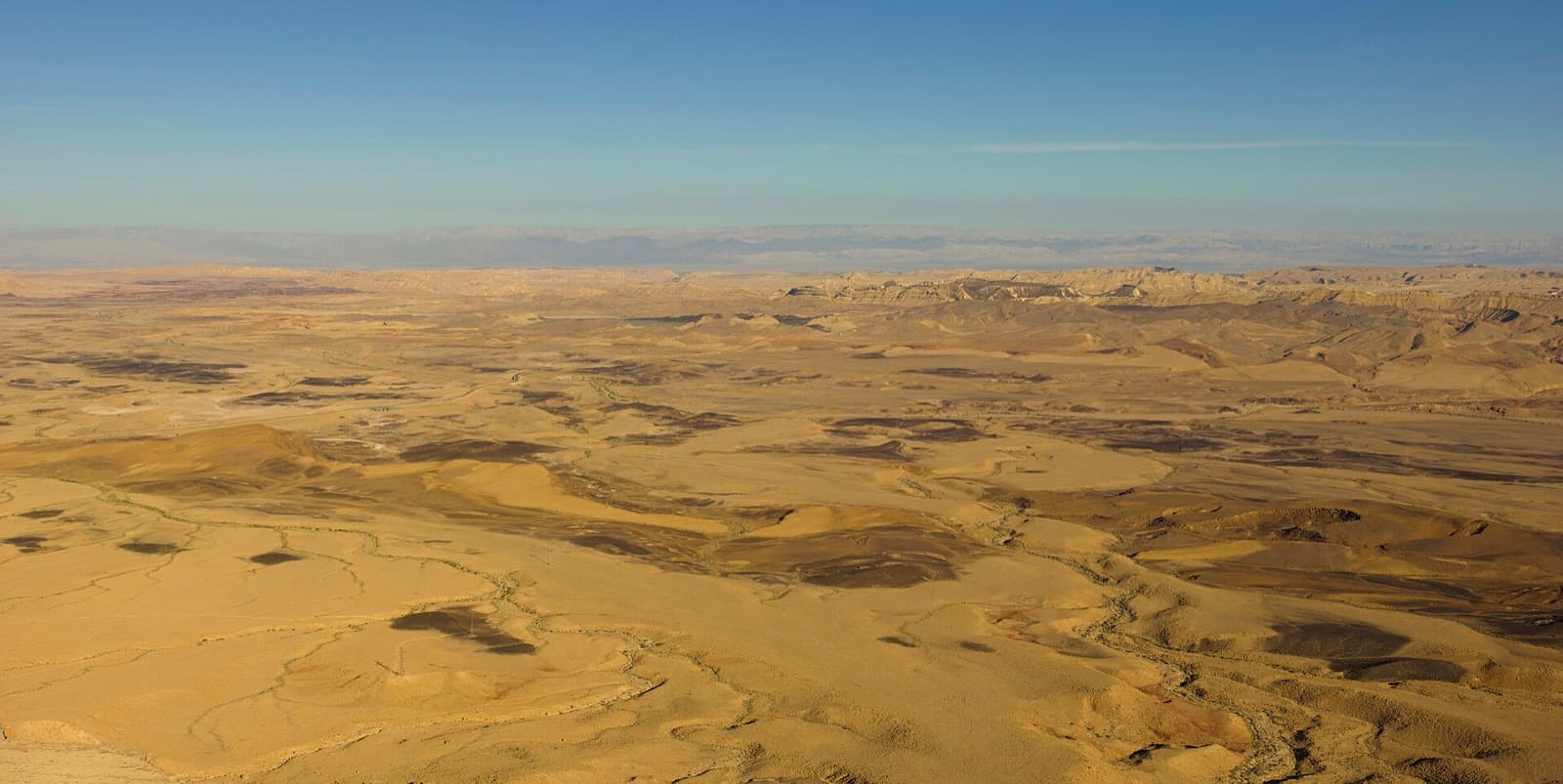
When the Romans destroyed the Second Temple in Jerusalem in 70 CE, they set in motion one of history's longest and most complex migrations. Jewish communities scattered across the Mediterranean, the Middle East, Europe, and eventually the entire world. Yet for nearly 2,000 years, these dispersed communities maintained a shared identity, language, and connection to a homeland they couldn't return to. The story of the Jewish diaspora is a story of resilience, adaptation, and the enduring power of cultural memory. It's also the foundation from which Zionism emerged as a modern movement seeking to restore Jewish sovereignty in the ancient homeland. Understanding this history isn't just academic, it explains how Jewish identity itself evolved, and why heritage matters so deeply to Jewish communities today.
What Happened to the Jewish People After Ancient Israel?
The Jewish diaspora didn't begin suddenly with the Temple's destruction. Jews had begun settling outside their homeland centuries earlier, establishing communities in Egypt, Mesopotamia, and the Greek world. But the Roman destruction of the Second Temple was a watershed moment that accelerated dispersion on an unprecedented scale.
The Romans didn't just destroy a building. They shattered the religious and political center of Jewish life. For centuries, the Temple had been the heart of Jewish practice. Jews from across the known world made pilgrimages to Jerusalem. Sacrifices were offered. Laws were interpreted. But after 70 CE, all of that ended. Survival meant adapting Judaism to exist without a central physical location or a unified political structure.
This adaptation was radical. Jewish sages developed what became known as Rabbinic Judaism, a tradition that replaced Temple sacrifice with study, prayer, and the observance of Jewish law. The Torah and Talmud became the portable foundation of Jewish life. A Jew could pray, study, and observe commandments anywhere. This shift didn't happen overnight, but it made survival in diaspora possible.
The Medieval Period and Jewish Communities Across Europe and the Islamic World
By the Middle Ages, Jewish communities flourished in remarkably different contexts. In the Islamic world, particularly in Spain during the era known as Al-Andalus (roughly 700s-1400s), Jews, Muslims, and Christians coexisted in cities like Córdoba and Granada. Jewish scholars produced some of history's greatest works in philosophy, science, medicine, and poetry. Figures like Maimonides and Judah Halevi contributed to intellectual life while maintaining distinctly Jewish traditions.
In Christian Europe, the picture was far darker. Jews faced severe restrictions, forced conversions, and periodic violence. Whole communities were expelled from kingdoms. Yet even under these harsh conditions, Jewish life persisted. In Eastern Europe, Yiddish-speaking communities developed rich cultural traditions. In North Africa and the Middle East, Sephardic and Mizrahi Jews maintained their own distinct practices and heritage.
What's striking across all these diverse communities is how they remained connected to Judaism and to the memory of Zion, Israel, and Jerusalem. They observed the same holidays. They read the same Torah. They prayed facing Jerusalem. And despite living in vastly different cultures and languages, they saw themselves as part of a single Jewish people.
The Great Expulsions and Forced Migrations
The expulsion of Jews from Spain in 1492 marked the beginning of a dark chapter. Entire communities were forced out. Some fled to the Ottoman Empire, others to North Africa, others to Europe. The expulsion traumatized Spanish Jewry but paradoxically strengthened Jewish communities in other regions that welcomed them.
Similar expulsions happened across Europe over the centuries. In England, France, and various German kingdoms, Jews were systematically expelled and then sometimes allowed back, only to be expelled again. This instability shaped Jewish life and reinforced the experience of diaspora as something permanent and painful.
Yet through all of this, Jewish communities maintained their identity. They didn't assimilate into the broader cultures around them, or if they did, they maintained a core of Jewish practice and connection. They kept Hebrew alive as a liturgical language even as they adopted local languages (Yiddish, Ladino, Arabic). They maintained halacha (Jewish law) as a binding framework. And they kept alive the hope of return to Zion.
How Did Jewish Communities Adapt and Thrive?
The resilience of the diaspora communities is worth pausing on, because it wasn't automatic. Adapting to radically different environments while maintaining identity requires intentional effort and cultural strength.
Language and Culture
One of the most fascinating aspects of diaspora Jewish history is the development of distinct Jewish languages and cultural traditions. Yiddish, which emerged in Central and Eastern Europe, became a rich literary and spoken language. It combined Hebrew and Aramaic elements with German and Slavic roots. By the early modern period, Yiddish was the everyday language of millions of Eastern European Jews, while Hebrew remained the language of study and prayer.
Ladino, the language of Sephardic Jews expelled from Spain, served a similar function. It preserved Spanish elements while incorporating Hebrew and later absorbing local languages from the communities where Sephardic Jews settled.
These languages were more than practical tools. They were expressions of cultural pride and continuity. A Yiddish prayer book, a Ladino poem, a Hebrew letter of learning, these were ways diaspora Jews maintained connection to their heritage while living fully in their adopted homes.
Organizational Structure and Community Life
Diaspora communities developed sophisticated internal structures to preserve Jewish life. Jewish communities (called kehillot in Hebrew) had formal governance. They maintained synagogues for prayer, schools for children, ritual baths (mikvaot), and communal institutions for charity and social support.
The concept of tzedakah (charitable giving as an obligation, not a choice) became central to diaspora Jewish life. Communities supported widows, orphans, and poor members. They ransomed Jews from captivity. They provided dowries for orphan girls. This wasn't charity in the modern sense, it was understood as communal responsibility and justice.
These structures varied by region and time period, but the pattern was consistent: diaspora Jews created self-governing communities that could maintain Jewish practice and identity even in hostile or indifferent environments.
Intellectual and Artistic Traditions
Despite (or perhaps because of) the precarity of diaspora life, Jewish communities produced extraordinary intellectual and artistic achievements. Medieval Jewish philosophers grappled with questions of how to reconcile Greek philosophy with Jewish tradition. Kabbalah, the Jewish mystical tradition, flourished in both the Islamic world and later in Europe. Jewish poets, composers, and artists created work rooted in Jewish experience and heritage.
These traditions kept Jewish culture alive and vibrant. They gave diaspora Jews not just rules to follow but beauty to admire and ideas to explore. They made Jewish identity something rich and worth preserving.
The 19th Century: Modernity and Zionism Emerge
By the 1800s, the context for Jewish life was changing dramatically. The Enlightenment had challenged the notion of absolute authority, religious and political. Emancipation movements in Europe were beginning to offer Jews citizenship and rights. At the same time, new forms of antisemitism were emerging, rooted in pseudo-scientific racism rather than religious doctrine.
Jews faced a profound question: if they could participate in European society, did they need a separate homeland? Or could they be citizens of their nations while maintaining Jewish identity?
Different thinkers arrived at different answers. Some, like Moses Mendelssohn in the 18th century, argued that Jews could be fully integrated into European society while preserving Jewish practice. Others, particularly as 19th-century nationalism swept across Europe, became convinced that Jews needed their own nation-state.
The pogroms and ongoing persecution of Jews in Eastern Europe made one thing clear: emancipation was not guaranteed. Antisemitism persisted despite Enlightenment values. And in some places, it was getting worse.
The Origins of Modern Zionism
Theodor Herzl, an Austro-Hungarian journalist, crystallized these concerns into a political movement. After witnessing the Dreyfus Affair in France (where a Jewish officer was falsely accused of treason), Herzl became convinced that Jewish emancipation would never be secure. Jews needed a homeland where they could govern themselves.
In 1896, Herzl published "The Jewish State," outlining the vision of a Jewish homeland. He organized the First Zionist Congress in 1897 in Basel, Switzerland. These meetings brought together Jews from across the diaspora with a specific, political goal: to establish a Jewish state.
Herzl's vision was not universally accepted. Many Jews believed in assimilation and integration. Others questioned whether Zionism was compatible with traditional Judaism or modern citizenship. But the movement gained traction, particularly among Jews in Eastern Europe facing severe persecution.
Why Zionism Emerged When It Did
Zionism was not a return to an old idea. The medieval Jewish communities didn't have a political movement seeking sovereignty. What changed in the 19th century was the context.
First, nationalism itself had become the dominant organizing principle in Europe. The idea of nation-states based on shared ethnicity or culture was the modern norm. Jews, who existed across multiple nation-states without their own, seemed to violate this logic.
Second, Jewish emancipation, while real in some places, was always conditional and fragile. Jews in Western Europe might have legal rights, but they faced social discrimination and barriers to full participation. In Eastern Europe, Jewish life was frequently under threat.
Third, the concept of Zion had always been central to Jewish consciousness. For 2,000 years, Jews had prayed "Next year in Jerusalem." Now, with new technologies (railways, steamships) making migration feasible, and with the Ottoman Empire (which then controlled Palestine) in decline, the possibility of return seemed less like fantasy and more like a political project.
Zionism and Modern Jewish Identity
The establishment of the State of Israel in 1948 was the culmination of the Zionist movement. But it's important to note that Zionism didn't create modern Jewish identity, it was itself created by the conditions of Jewish diaspora life and modernity. It was one response to the question of how Jews could maintain identity, safety, and self-determination in the modern world.
Today, Jewish identity is complex. Some Jews see Zionism as essential to Jewish self-preservation. Others have complicated relationships with Zionism. Some criticize Israeli government policies while supporting the concept of Jewish self-determination. These debates are legitimate and ongoing within Jewish communities.
What's undeniable is that the Jewish diaspora shaped everything about Jewish culture, language, and practice that we know today. Yiddish literature, Sephardic music, the flexibility of Jewish law and practice, these emerged from diaspora communities' need to adapt while maintaining identity.
Diaspora as Lived Reality Today
For many Jews, the diaspora is still the everyday reality. The majority of Jews worldwide live outside Israel. Diaspora communities in the United States, Europe, Latin America, and elsewhere remain vibrant and culturally productive. They're not temporary, they're home.
Contemporary diaspora Jews often celebrate their heritage not by leaving it for another place, but by wearing it proudly in the present. They wear t-shirts with Hebrew text. They celebrate Shabbat and Jewish holidays. They tell stories of their family histories and cultural traditions. They support Jewish institutions and organizations. They raise children with Jewish education and identity.
In this sense, the historical diaspora's legacy isn't one of loss or waiting for return. It's a legacy of adaptation, resilience, and the ability to build rich, meaningful Jewish life anywhere. It's a model of how cultural identity can be portable, transmitted across generations, and celebrated daily.
The Heritage We Wear
Understanding the Jewish diaspora and Zionism matters because these histories explain why heritage is so important to Jewish identity today. For nearly 2,000 years, Jewish communities maintained connection to their heritage despite living in different countries, speaking different languages, and facing different challenges.
That same commitment to maintaining and celebrating heritage is alive today. Whether you're lighting Hanukkah candles, studying Torah, speaking Hebrew with your kids, or wearing a t-shirt that celebrates your cultural pride, you're participating in a tradition of refusing to let heritage fade.
The diaspora taught Jewish communities that heritage is not about a place you have to return to. It's something you carry with you. It's in the languages you speak, the holidays you observe, the stories you tell, the community you build. It's something you can pass on to the next generation, and the next, no matter where in the world you are.
That's why heritage matters. And why wearing it, literally and figuratively, is an act of cultural continuity that stretches back centuries.
FAQ
Q: What exactly is the diaspora? A: The Jewish diaspora refers to the dispersion of Jewish people away from their ancestral homeland (Israel/Judah), beginning with ancient migrations and accelerating after the Romans destroyed the Second Temple in Jerusalem in 70 CE. For nearly 2,000 years, most Jews lived outside Israel, in communities across Europe, the Middle East, North Africa, and eventually worldwide.
Q: How did Jews maintain their identity while living in so many different places? A: Diaspora communities maintained identity through several mechanisms: they preserved Jewish law and practice (which didn't depend on a centralized temple), developed distinct cultural traditions and languages (like Yiddish and Ladino), created community institutions to preserve Jewish life, and maintained religious and cultural connection through prayer, study, and shared holidays. Hebrew remained a unifying language for study and prayer even as communities spoke local languages daily.
Q: What is Zionism? A: Zionism is a modern political movement that emerged in the late 19th century, advocating for the establishment of a Jewish homeland where Jews could have self-determination and sovereignty. The movement was shaped by 19th-century nationalism, European antisemitism, and the desire to create a secure Jewish state. It culminated in the establishment of Israel in 1948, though debates about Zionism's meaning and implications continue today.
Q: Is Zionism the same as Judaism? A: No. Judaism is a religion and culture with traditions stretching back thousands of years. Zionism is a modern political movement that emerged in the 1800s in response to specific historical conditions. While many Jews are Zionists (supporting Jewish self-determination in Israel), Judaism itself existed and flourished for nearly 2,000 years without Zionism. Not all Jews identify as Zionist, and non-Jews can support Zionist ideals. They're related but distinct concepts.
Q: Why does diaspora history matter today? A: Understanding diaspora history explains how Jewish identity, culture, and practice developed. It shows how communities maintained connection to heritage across vast distances and centuries. It also provides context for contemporary Jewish life, including why heritage, community, and cultural continuity matter so deeply to Jewish identity today.


