
What Happens at a Bar or Bat Mitzvah? Ceremony Explained
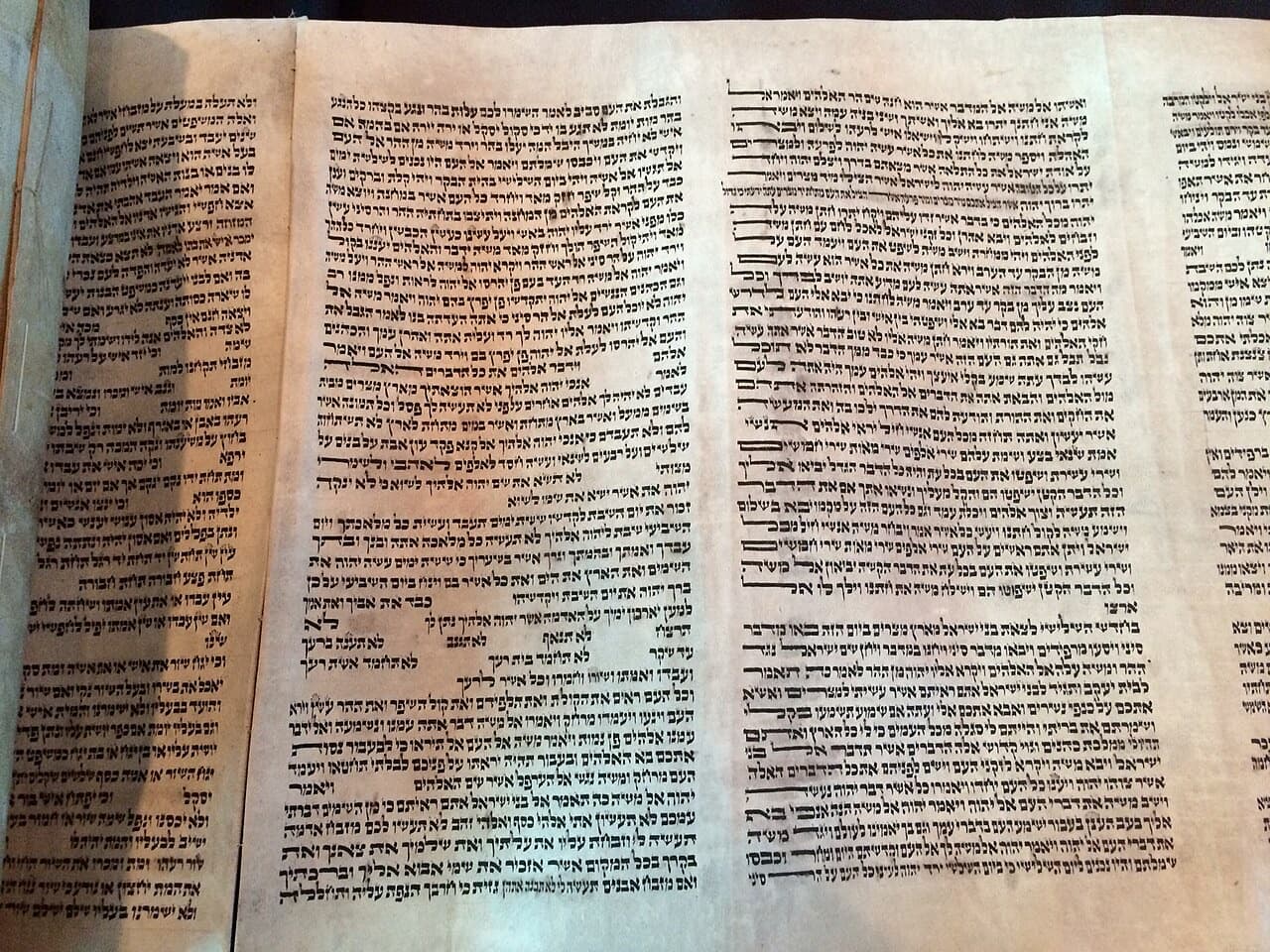
A bar or bat mitzvah is the ceremony marking a Jewish child's entry into religious adulthood — traditionally age 13 for boys, 12 or 13 for girls depending on community — after which they're considered obligated in Jewish commandments in their own right. The ceremony centers on being called to read from the Torah in synagogue for the first time as an adult, usually followed by a festive celebration with family and friends.
What Does "Bar Mitzvah" Actually Mean?
Bar mitzvah (בַּר מִצְוָה) is Aramaic for "son of the commandment"; bat mitzvah (בַּת מִצְוָה) is Hebrew and Aramaic for "daughter of the commandment." The phrase doesn't describe an event so much as a status — it's a label for the person, not the party. A boy technically becomes a bar mitzvah, and a girl a bat mitzvah, automatically upon reaching the relevant age, whether or not any ceremony happens at all; Jewish legal responsibility doesn't wait for an invitation list. The synagogue ceremony and the celebration that usually follows are how that change in status gets marked and shared, not what causes it.
Before that age, according to Jewish law, a minor is not obligated to observe the commandments and isn't held religiously responsible for their own actions in the way an adult is. At bar or bat mitzvah, that shifts: the young person becomes obligated in mitzvot, can be counted in a minyan (the quorum of ten needed for certain communal prayers), and can be called to the Torah for an aliyah in their own right rather than through a parent.
What Age Do You Have a Bar or Bat Mitzvah?
The age is where a lot of the real variation between communities shows up. Boys become bar mitzvah at 13 across essentially every stream of Judaism. Girls' age of religious majority is traditionally 12, a year earlier than boys, reflecting classical rabbinic views on when girls reach physical and intellectual maturity — and in many Orthodox communities, the bat mitzvah is marked at 12 accordingly. Conservative, Reform, and many Reconstructionist congregations, however, generally hold the bat mitzvah ceremony at 13, matching the bar mitzvah age, partly for logistical parity and partly as a deliberate move toward treating the two ceremonies as equivalent milestones.
Neither age is arbitrary. Both track with the Mishnah's general framework (Avot 5:21) laying out an idealized progression of Jewish life stages, in which thirteen is specifically named as the age "for the commandments." Twelve is not explicitly named there for girls, but it's derived elsewhere in rabbinic literature dealing with signs of physical maturity — a reminder that these are old debates, not modern inventions, even where communities today land differently on the details.
What Actually Happens at the Ceremony?
The core of a bar or bat mitzvah ceremony is a Torah service, usually on a Shabbat morning, though weekday Monday or Thursday services (when the Torah is also read, in shorter form) are used by some families for scheduling reasons. The young person is called for an aliyah — literally "going up," the honor of ascending to the bimah, the raised platform where the Torah is read, to recite blessings before and after a designated portion is chanted.
In many communities, the bar or bat mitzvah doesn't just receive the aliyah — they chant the Torah portion themselves, often in the original cantillation trope, a system of musical notation dating back over a thousand years, alongside the week's haftarah, a companion reading from the Prophets. Preparing to chant unfamiliar, unvocalized Hebrew text from memory or from a scroll with no vowels is genuinely difficult, and the months of lessons with a rabbi, cantor, or tutor leading up to the day are usually the most demanding part of the whole process — considerably more demanding, most families will tell you, than picking a party theme.
It's also traditional for the bar or bat mitzvah to deliver a d'var Torah, a short speech or teaching connected to that week's Torah portion, often reflecting on what the text means to them personally. Parents frequently offer their own remarks too, marking the moment publicly with blessings or reflections on watching their child take this step. A widely used blessing recited by parents, "Baruch shepaterani me'onsho shel zeh" ("Blessed is the One who has released me from the responsibility for this child"), acknowledges, somewhat startlingly to modern ears, that the parent is no longer answerable for the child's religious conduct going forward — a formal way of saying: it's genuinely theirs now.
What Ritual Items Does a Bar Mitzvah Take On?
For boys, becoming bar mitzvah traditionally comes with two new ritual obligations: wearing a tallit (prayer shawl) during morning prayers, and laying tefillin — small leather boxes containing scriptural passages, bound to the arm and forehead with leather straps during weekday morning prayer, based on a literal reading of Deuteronomy 6:8's instruction to bind God's words "as a sign upon your hand" and "between your eyes." Many families mark a bar mitzvah boy's first time laying tefillin as its own small, meaningful milestone, sometimes weeks before the synagogue ceremony itself, with a family member or rabbi walking him through the process.
Tallit and tefillin practice for bat mitzvah girls varies considerably by community and by individual family choice; some Orthodox communities don't extend these particular obligations to women in the same form, while many Conservative, Reform, and Reconstructionist congregations do, and it's increasingly common across the spectrum for a bat mitzvah girl to choose to wear a tallit if she wishes to. It's a good example of why asking, rather than assuming, is the safest approach when attending any specific family's ceremony — Jewish practice on this point genuinely differs from one community, and even one family, to the next.
Gifting a tallit or a set of tefillin is itself a meaningful and common bar or bat mitzvah present, often passed down from a grandparent or purchased new and treated as a keepsake for life — the kind of gift that tends to outlast almost everything else on the table that day.
What Is the Significance of Turning 13 in Judaism?
Age 13 shows up repeatedly across the rabbinic tradition as the marker of moral and religious accountability — the point at which a person is considered capable of understanding and choosing right from wrong in a legally meaningful way. It's not treated as a magical transformation; nobody expects a young person's judgment to look dramatically different the day after their bar or bat mitzvah than the day before. What changes is responsibility: from that point on, Jewish law holds the person accountable for their own choices in a way it didn't before, and it credits them with real agency in their own religious life going forward, rather than treating their observance as an extension of their parents'.
How Is a Bat Mitzvah Different From a Bar Mitzvah, Historically?
Bar mitzvah ceremonies have documented roots going back centuries; the bat mitzvah as a public synagogue ceremony is a much newer development. The first widely recorded American bat mitzvah is generally credited to Judith Kaplan, daughter of Rabbi Mordecai Kaplan (founder of Reconstructionist Judaism), who read from the Torah at her father's synagogue in New York in 1922 — a genuinely significant, and at the time controversial, moment in American Jewish life. The practice spread unevenly over the following decades: Reform and Conservative communities adopted public bat mitzvah ceremonies relatively quickly, while Orthodox communities developed their own parallel customs, often marking the occasion with a festive gathering, a d'var Torah delivered outside the main sanctuary service, or a separate ceremony structured around Jewish law's traditional approach to women's participation in public prayer, rather than an aliyah identical to the bar mitzvah's.
Today, the range of bat mitzvah practice across the Jewish world is genuinely wide — from full Torah chanting indistinguishable from a bar mitzvah's, to a d'var Torah and celebratory meal without an aliyah, and everything in between. That range is worth knowing about specifically because it means there's no single "correct" version to expect walking into any given family's celebration.
Where Are Bar and Bat Mitzvahs Celebrated?
Most bar and bat mitzvahs happen at the family's home synagogue, but a meaningful number of families choose to hold the ceremony, or at least the aliyah itself, in Israel — often at the Western Wall in Jerusalem's Old City, a site with obvious resonance for a ceremony about stepping into one's own Jewish adulthood. Groups of families sometimes coordinate these trips together, turning the occasion into both a religious milestone and a first serious visit to Israel for the young person involved. Whether it happens in a hometown sanctuary or halfway around the world, the ritual structure — the aliyah, the Torah portion, the blessings — stays essentially the same; what changes is the backdrop, and for many families, that backdrop becomes as memorable as the ceremony itself.
What Happens After the Synagogue Service?
For most families, the synagogue ceremony is followed by a celebratory meal or reception — sometimes a modest kiddush lunch in the synagogue social hall, sometimes a larger evening party with music, dancing, and a guest list stretching well beyond immediate family. Scale varies enormously by family, community, and budget, and Jewish tradition doesn't prescribe a party size the way it prescribes the ceremony's ritual structure. What's consistent is the impulse to mark the occasion with genuine simcha — joy shared publicly with a community, not just privately within a household.
Many families also use the occasion to formalize a young person's connection to tzedakah, encouraging or requiring a mitzvah project or charitable contribution tied to the celebration, on the logic that becoming obligated in the commandments should mean something beyond a party — that the same day someone takes on responsibility for their own religious life is a fitting day to also take on responsibility for someone else's wellbeing.
Frequently Asked Questions
Do you have to have a big party for a bar or bat mitzvah? No. The religiously required part of a bar or bat mitzvah is the transition in status and, customarily, the Torah service and aliyah. The size and style of any celebration afterward is entirely a matter of family choice, budget, and community custom, ranging from a simple kiddush lunch to a large evening event.
What's the difference between a bar mitzvah and a bat mitzvah? Bar mitzvah refers to a boy's ceremony, traditionally at age 13; bat mitzvah refers to a girl's, traditionally at 12 in many Orthodox communities and 13 in Conservative and Reform communities. The core meaning — becoming obligated in Jewish commandments — is the same for both.
Can adults have a bar or bat mitzvah? Yes. Adult b'nai mitzvah ceremonies are common for people who didn't have one at the traditional age, including many who grew up without access to Jewish education or who are completing a conversion process, and the ceremony follows the same basic Torah-reading structure.
Do you need to give a bar or bat mitzvah gift in multiples of 18? It's a popular custom, not a requirement — 18 corresponds to the Hebrew word chai, meaning "life," since Hebrew letters carry numerical values that add up to 18 in that word. Giving in multiples of 18, like $18 or $180, is a widely loved way to fold that symbolism into a gift. For more ideas, see our bar and bat mitzvah gift guide.
What is a d'var Torah? A d'var Torah, literally "a word of Torah," is a short teaching or reflection connected to a specific Torah portion. Delivering one is a common part of a bar or bat mitzvah ceremony, giving the young person a chance to share their own understanding of that week's text with the congregation.
Whatever the ceremony looks like for your family, it deserves a wardrobe that matches the occasion. Explore Kosher Couture for apparel that carries the day's pride well beyond the party, and see our thoughts on tzedakah if a mitzvah project is part of the plan.


